- Subject Overview: Hippocratic AI Debuts Orchestrator Agents to Streamline Healthcare Voice Coordination — Key developments across AI.
- Technical Context: Detailed analysis of architectural changes, product capabilities, and engineering metrics.
- Industry Impact: Key implications for software developers, startup founders, and enterprise technology adopters.
The Shift to Multi Agent Healthcare
The healthcare industry has long struggled with the implementation of artificial intelligence due to the high-stakes, multi-faceted nature of clinical interactions. A single AI model often fails to capture the nuance required for medication reconciliation, post-operative follow-ups, and chronic disease management simultaneously. Hippocratic AI is addressing this bottleneck with the introduction of its Agentic Orchestrators, a system that moves beyond basic conversational interfaces into a coordinated architecture where specialized agents function as a cohesive medical team.
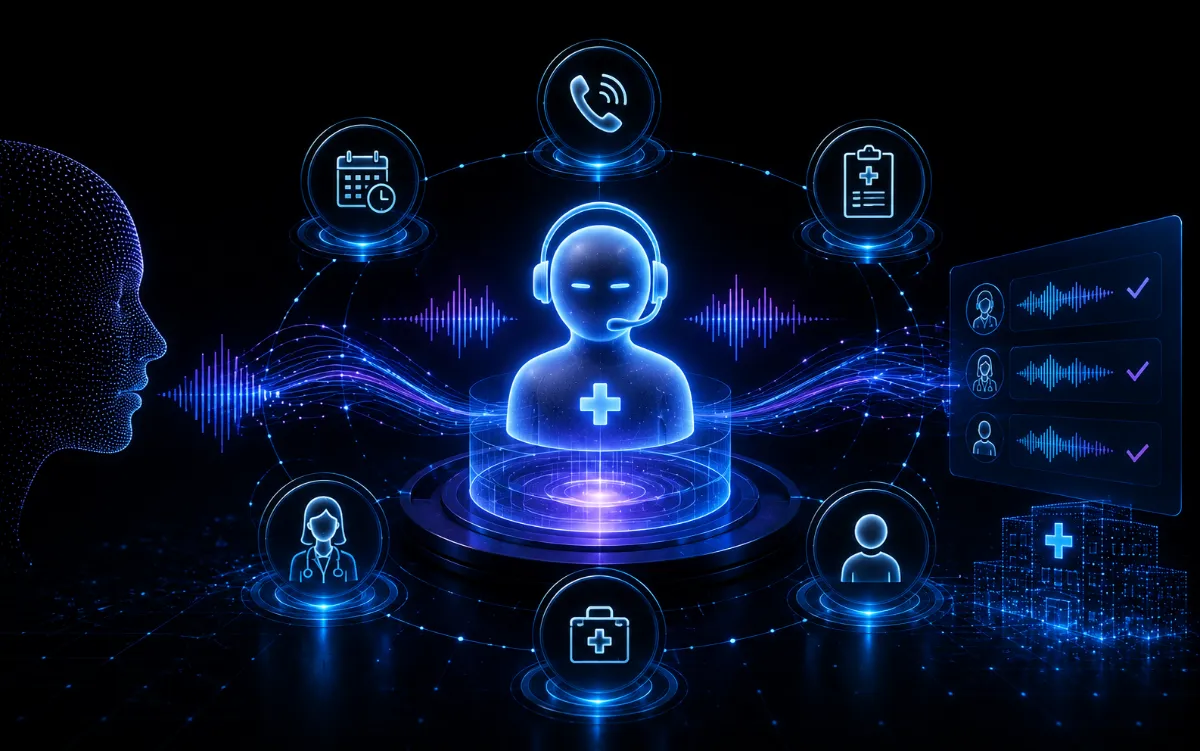
By leveraging an orchestration layer, Hippocratic AI allows healthcare systems to deploy teams of agents that can hand off tasks to one another based on clinical priority and expertise. This mimics the actual structure of a hospital ward, where a primary care nurse, a specialist, and a pharmacist might coordinate care. The orchestrator ensures that no vital piece of patient data is lost in translation during the transition between these specialized synthetic roles.
Architecture of the Orchestration Layer
At the core of this technology lies a sophisticated task distribution engine. Instead of a monolithic model, the orchestrator acts as a traffic controller for synthetic intelligence. Each agent in the cluster is fine-tuned for specific medical competencies, such as insurance verification, symptom triage, or medication adherence counseling. The orchestrator manages the state machine of these interactions, maintaining context across multiple sessions.
| Feature | Legacy Chatbot | Agentic Orchestrators |
|---|---|---|
| Scope | Singular Task | Multi-disciplinary Workflow |
| Context Management | Session-based | Cross-agent Knowledge Sharing |
| Reliability | Low (Hallucination Risks) | High (Verified Clinical Pathways) |
| Handoff Capability | None | Automated Agent-to-Agent Transfer |
Scaling Clinical Efficiency
The primary value proposition for health systems is the reduction of administrative burnout. By offloading routine but critical voice interactions to an orchestrated fleet of agents, human clinicians are freed to focus on high-acuity cases. These agents are designed to communicate with patients via voice, providing a human-like experience that encourages adherence to treatment plans while capturing structured data for the Electronic Health Record.
- Clinical Safety: Every agent operates within strict guidelines defined by medical protocols.
- Temporal Awareness: Orchestrators track patient timelines to ensure follow-ups occur at clinically appropriate intervals.
- Data Integration: Seamless synchronization with existing health IT infrastructure ensures that the voice interaction translates directly into actionable clinical notes.
The Role of Synthetic Specialization
Just as modern medicine relies on specialization, Hippocratic AI builds agents with specific medical personas. An agent tasked with explaining discharge instructions requires a different training corpus and safety guardrails than one tasked with gathering insurance documentation. The orchestration layer ensures that the patient is always speaking to the most qualified agent for the current portion of the interaction.
Key Takeaway: The transition from reactive chatbots to proactive, orchestrated agent teams represents a fundamental evolution in how AI will integrate into the patient care lifecycle, shifting the burden from human staff to validated autonomous workflows.
Addressing Safety and Compliance
Security and HIPAA compliance are non-negotiable in this architecture. The orchestrators operate within a closed-loop system where data inputs are sanitized and audited in real time. Because the orchestration layer maintains strict control over what each agent knows and can report, the system effectively mitigates the risk of unauthorized data leakage.
Furthermore, the system includes an oversight mechanism where human supervisors can intervene or review logs of agent interactions. This hybrid model balances the efficiency of full automation with the necessity of human accountability in high-risk health settings.
The Road Ahead
The future of healthcare delivery will likely rely on these intelligent ecosystems to handle the vast majority of patient touchpoints. As these agents become more sophisticated, they will begin to influence proactive health outcomes rather than simply managing administrative tasks. Hippocratic AI is betting that the key to this transition is not just smarter models, but smarter team structures that mirror the complexity of the medical field itself.