- Subject Overview: Vercel Integrates Grok Build into AI SDK to Accelerate Agentic Workflows — Key developments across AI.
- Technical Context: Detailed analysis of architectural changes, product capabilities, and engineering metrics.
- Industry Impact: Key implications for software developers, startup founders, and enterprise technology adopters.
Executive Overview & Core Hook
The software development lifecycle is undergoing a seismic shift as the industry moves from simple prompt-response interactions to complex, multi-step agentic workflows. As these systems grow in sophistication, the need for a standardized abstraction layer becomes paramount to prevent architectural fragmentation. Vercel has addressed this critical pain point by expanding its AI SDK harness to include native support for Grok Build. This integration is not merely a feature addition but a strategic evolution in how developers build, test, and deploy autonomous agents that require deep context awareness and high-speed reasoning capabilities.
By incorporating Grok Build into the AI SDK, Vercel provides a seamless bridge between high-performance model runtimes and the frontend environments where these agents are ultimately consumed. For enterprise teams, this means the ability to leverage the unique reasoning strengths of Grok while maintaining the developer experience consistency that Vercel is known for. This integration allows engineering teams to focus on the business logic of their agentic workflows rather than the overhead associated with disparate API surface areas, effectively lowering the barrier to entry for building complex, task-oriented AI applications that operate at scale.
Technical Breakdown & Architecture
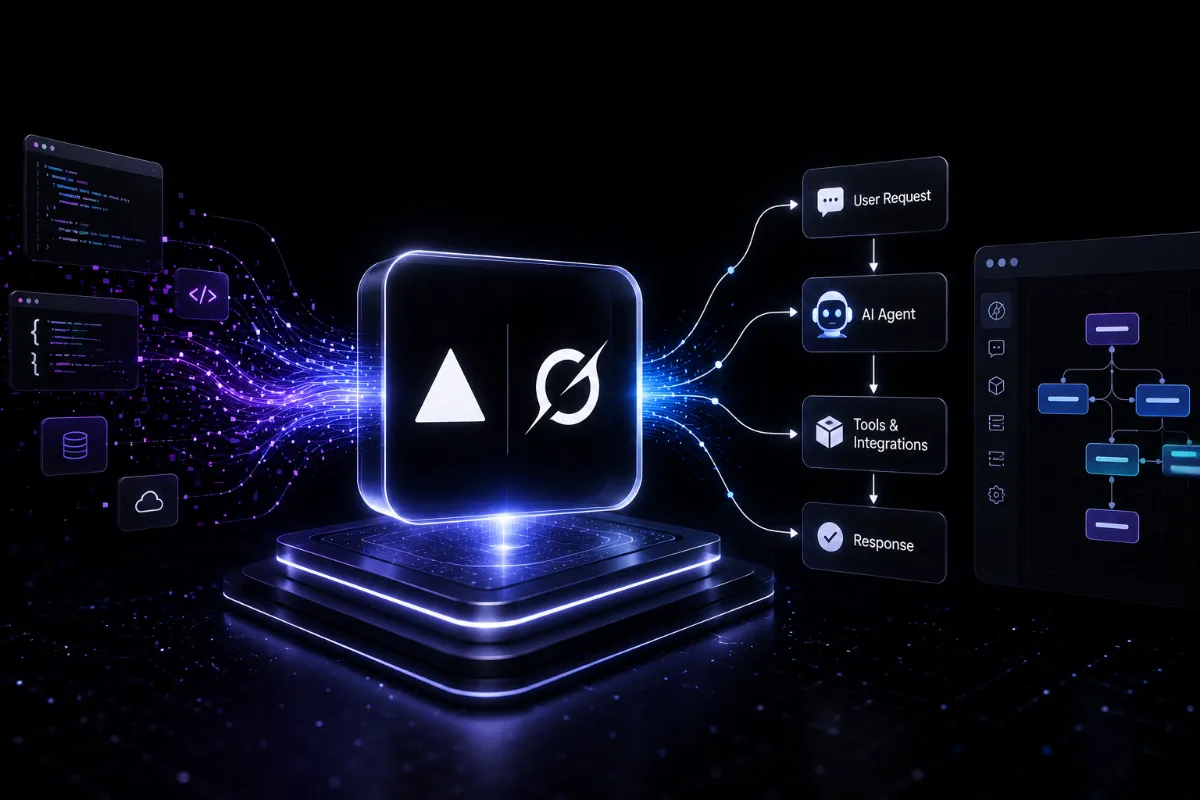
The technical architecture of the Vercel AI SDK harness is built upon the principle of provider-agnosticism. Traditionally, developers have faced significant friction when trying to integrate new models due to inconsistent streaming protocols, authentication mechanisms, and response payloads. The AI SDK resolves this by implementing a unified harness layer that acts as a middleware between the application code and the underlying model provider. With the addition of Grok Build, the SDK exposes a standardized interface that abstracts the unique nuances of Grok’s architecture, such as its real-time information processing and specialized reasoning pathways.
At the core of this integration is the stream-processing engine within the AI SDK. When a developer triggers an agentic workflow through the SDK, the harness layer handles the serialization and orchestration of the requests, ensuring that the interface remains consistent regardless of whether the backend is powered by Grok or other supported models. This allows developers to utilize the same set of hooks and state-management utilities that they are already familiar with. Furthermore, the harness provides native support for structured output parsing, which is essential for agentic tasks where the model must return data in a specific format to trigger subsequent tool calls or API executions. By abstracting the intricacies of Grok Build, Vercel enables developers to invoke complex reasoning chains without needing to write custom wrappers or handle raw HTTP requests, significantly reducing the surface area for potential integration bugs.
Markdown Comparison Table & Key Metrics
| Capability | Traditional Integration | AI SDK with Grok Build |
|---|---|---|
| Protocol Standardization | Manual/Custom | Native/Unified |
| Context Window Management | Complex/Fragmented | Automated/SDK-managed |
| Agentic Runtime Switching | High Refactor Cost | Near-Zero Refactor |
| Stream Processing | Manual Buffer Logic | Built-in Harness Layer |
| Tool Call Orchestration | Custom Middleware | Standardized Schema |
- Latency Optimization: The AI SDK harness reduces overhead by minimizing serialization steps, allowing for lower time-to-first-token in agentic applications.
- Interoperability: Developers can switch between models with a single configuration change, enabling A/B testing of reasoning capabilities at the edge.
- Type Safety: The integration provides strict TypeScript definitions for all Grok-specific response structures, enhancing code reliability during development.
- Tooling Consistency: Standardized event hooks allow for uniform monitoring and telemetry across all agentic workflows, regardless of the underlying model provider.
Developer & Ecosystem Impact
For software engineers, the integration of Grok Build into the Vercel AI SDK represents a significant reduction in cognitive load. When building agentic workflows, developers often struggle with the complexity of state management, error handling, and the maintenance of disparate API clients. By consolidating these concerns into a single harness, Vercel enables teams to build faster and maintain cleaner codebases. Startups, in particular, benefit from this acceleration as they can now pivot between different model providers without needing to rewrite the core logic of their application, thereby minimizing the risk associated with vendor lock-in.
Furthermore, the ecosystem impact extends to the way cloud architectures are designed. With the harness layer, agents can be deployed as serverless functions that consume standardized inputs and produce consistent outputs, making them highly portable across different cloud environments. This modularity is essential for building resilient agentic systems that can scale horizontally as the demand for intelligent automation increases. Developers are no longer forced to choose between the cutting-edge performance of a specific model and the developer experience of their framework; they can now have both, which is a major catalyst for the adoption of more complex, multi-agent architectures in production environments.
Strategic Market Outlook & Analysis
The market for AI-driven software development is rapidly maturing, and the winners will be those who can best balance performance with developer velocity. Vercel’s strategic move to include Grok Build in its SDK signals a transition toward a more integrated, platform-centric approach to AI development. By serving as the connective tissue between advanced model runtimes and web applications, Vercel is positioning itself as an essential layer in the modern AI stack. This creates a competitive moat where the value proposition is not just the infrastructure, but the orchestration capability that makes complex AI accessible to the average web developer.
However, this approach also introduces trade-offs. Relying on an abstraction layer means that while developers gain consistency, they may lose some control over the highly specific, low-level optimizations that certain models offer. For enterprise users, the tradeoff is generally well-received, as the gains in development speed and maintainability far outweigh the marginal losses in fine-grained control. As market competition intensifies among model providers, the ability for platforms like Vercel to integrate these models seamlessly will become a key differentiator. The focus is shifting from simple model access to the ability to build sophisticated, maintainable, and scalable agentic workflows, and this integration is a clear indicator of that trend.