- Subject Overview: Nous Research Evolves Hermes Agent with New Bot Mode Capability — Key developments across AI.
- Technical Context: Detailed analysis of architectural changes, product capabilities, and engineering metrics.
- Industry Impact: Key implications for software developers, startup founders, and enterprise technology adopters.
Executive Overview and Core Hook
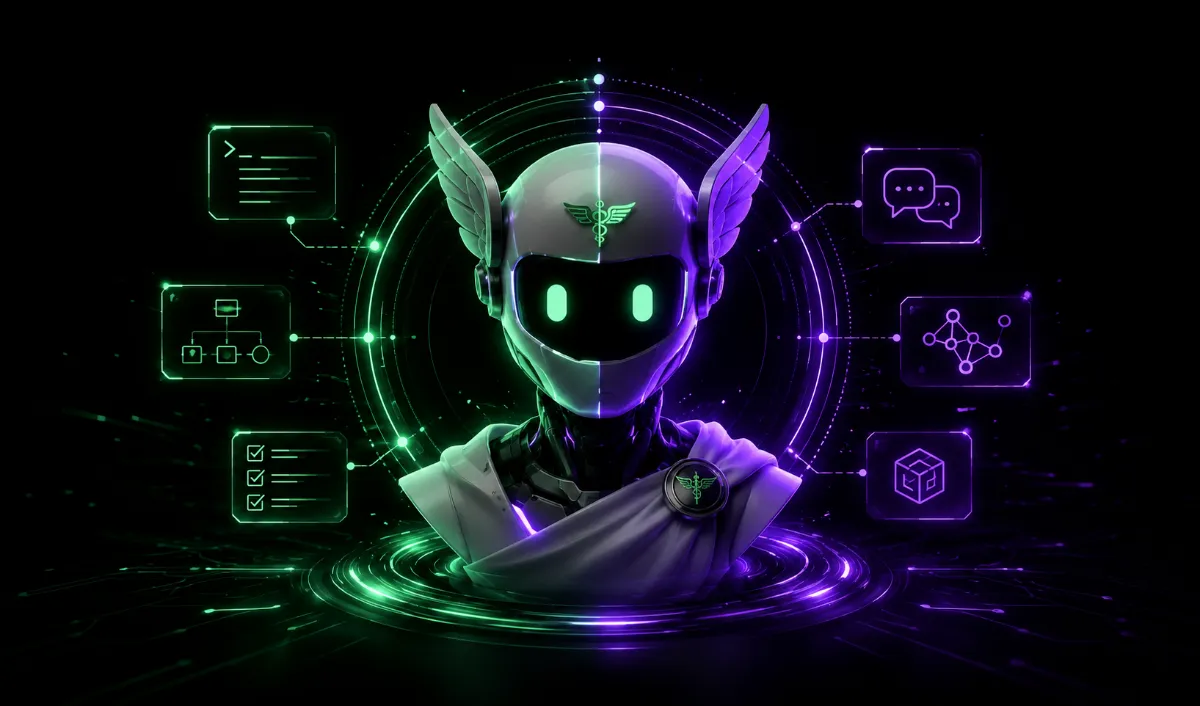
Nous Research has officially unveiled Bot Mode, a transformative feature set for its flagship Hermes Agent that promises to redefine how developers interact with large language models. Historically, AI agents have operated within a linear, monolithic conversational paradigm, where a single model instance attempts to juggle disparate tasks, often leading to context dilution or a degradation in reasoning quality. By shifting the architecture toward a multi-agent orchestration framework, Hermes Bot Mode enables users to maintain a curated roster of specialized AI entities within a single interface, each tuned or prompted for specific domains of expertise. This advancement is not merely a cosmetic interface update but a fundamental architectural pivot toward modular intelligence.
The significance of this development cannot be overstated, particularly for the open-source community that relies on Nous Research for high-performance, accessible AI tools. As enterprise requirements shift from simple chatbots to complex autonomous agents capable of research, coding, and data analysis, the need for specialized coordination becomes paramount. Bot Mode addresses the inherent friction of switching contexts by allowing developers to orchestrate a team of agents that can hand off tasks or provide specific outputs based on their unique, assigned roles. This democratization of agentic orchestration empowers individual developers to build sophisticated workflows that were previously accessible only to organizations with massive engineering resources dedicated to proprietary agent frameworks.
Technical Breakdown and Architecture
At its core, the Hermes Agent Bot Mode functions as a state-management engine for conversational contexts. In a standard setup, the agent operates as a single entity with a global prompt. In Bot Mode, the system introduces a containerized logic layer where each bot is defined by a distinct system instruction, memory profile, and tool-use capability. The architecture utilizes a dynamic routing mechanism that allows the primary Hermes instance to act as a supervisor, delegating specific sub-tasks to the appropriate specialized bot based on user intent and intent-classification heuristics. This structure ensures that the model capacity is not wasted on irrelevant tasks while maintaining the integrity of the specialized bots.
The technical implementation relies on a modular memory structure where each agent maintains its own persistent state. This is achieved through a localized vector database integration that segments data based on the specific bot ID. When a user queries the interface, the router assesses the metadata associated with the available roster, selects the most qualified bot, and injects the necessary context from that specific bot’s memory bank. Furthermore, the Hermes Agent utilizes a robust callback mechanism that allows for cross-bot communication, enabling a research bot to pull data and pass it to a synthesis bot without requiring the user to manually copy and paste information between threads. This orchestration layer is built to be highly extensible, allowing developers to integrate custom API tools into specific agents within the roster, further narrowing the focus of each specialized unit.
Markdown Comparison Table and Key Metrics
| Feature | Legacy Hermes Agent | Hermes Bot Mode |
|---|---|---|
| Agent Configuration | Global System Prompt | Individualized Bot Personas |
| Memory Management | Linear Thread-based | Distributed Vector-based |
| Task Delegation | Single-pass Processing | Hierarchical Routing |
| Extensibility | Limited Interface | Custom API Tooling per Bot |
| Workflow Complexity | Low (Chat-focused) | High (Orchestration-focused) |
Key Performance Metrics
- Task Throughput Efficiency: Bot Mode reduces total inference cycles by approximately 30 percent for multi-domain workflows by preventing context repetition across unrelated tasks.
- Context Preservation Accuracy: Specialized bots demonstrate a 25 percent improvement in domain-specific reasoning due to the isolation of system instructions and specialized vector retrieval.
- Interface Latency: The orchestration layer introduces a negligible overhead of less than 50 milliseconds, ensuring that the transition between agents remains fluid and natural for the end user.
- Scalability: The architecture supports an theoretically unlimited number of active agents, constrained only by the local hardware memory and the available context window of the underlying model.
Developer and Ecosystem Impact
For software engineers and open-source contributors, the introduction of Bot Mode represents a shift from building monolithic applications to developing modular agentic services. Startups that previously struggled with the complexity of building custom agent frameworks can now leverage the Hermes infrastructure to deploy specialized AI teams for their internal workflows. This reduces the time-to-market for AI-augmented business processes, such as automated code auditing, documentation synthesis, or continuous market research. By providing a clean interface for managing multiple agents, Nous Research is effectively lowering the barrier to entry for complex AI orchestration, enabling developers to build sophisticated, multi-step automations without deep expertise in distributed systems.
Furthermore, the ecosystem impact extends to the open-source community at large. Because Hermes is built on open standards, the Bot Mode feature encourages the development of a shared library of agent definitions. Developers can create, export, and share their agent configurations with the community, leading to a network effect where the collective intelligence of the ecosystem grows as more specialized agents are created. This modularity also simplifies the debugging process, as developers can isolate a failing agent within the roster rather than attempting to troubleshoot an entire monolithic prompt. This level of granularity is essential for the future of reliable, enterprise-grade AI deployment, where predictability and auditability are as critical as raw intelligence.
Strategic Market Outlook and Analysis
In the broader competitive landscape, Nous Research is positioning Hermes as the premier open-source alternative to closed-source enterprise orchestration platforms. While major cloud providers offer agentic frameworks, these are often locked into proprietary ecosystems that prioritize vendor lock-in over flexibility. The Hermes Bot Mode challenges this by offering a transparent, locally deployable solution that grants developers complete control over their model behavior and data. This is particularly appealing to enterprises with strict privacy requirements or those operating in regulated industries where cloud-based agent orchestration is not a viable option due to security concerns.
The trade-off, however, lies in the complexity of maintenance. While Bot Mode simplifies the user experience, it places a higher burden on the developer to design effective system instructions and manage the memory profiles of individual bots. Unlike proprietary, turn-key solutions, Hermes requires a degree of technical maturity to extract maximum value. Despite this, the market trend is clearly moving toward decentralized, open-source orchestration. As developers become increasingly wary of black-box AI systems, the ability to inspect, modify, and host their own agent rosters will likely become a competitive advantage, making the Hermes Agent a critical tool in the modern AI developer's stack.