
- Subject Overview: Linkdaze Challenges Traditional Calendar Apps with Household Focused AI Orchestration — Key developments across AI.
- Technical Context: Detailed analysis of architectural changes, product capabilities, and engineering metrics.
- Industry Impact: Key implications for software developers, startup founders, and enterprise technology adopters.
Beyond Time Blocking and Reminders
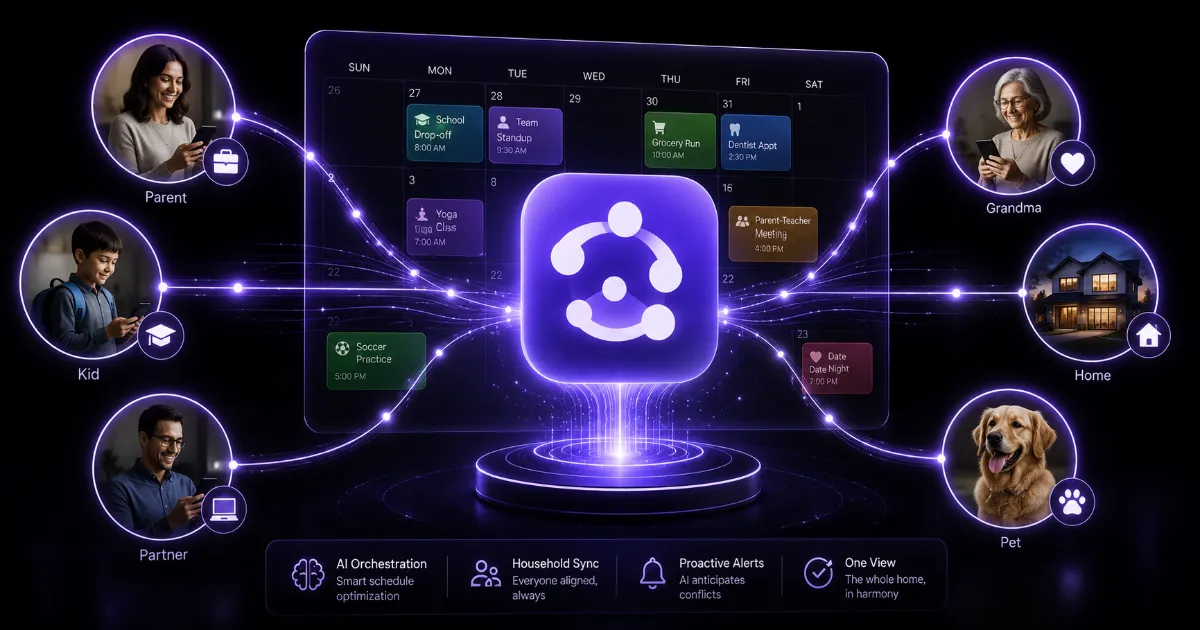
For decades, digital calendars have remained largely unchanged, serving primarily as static interfaces for tracking appointments and deadlines. Linkdaze, however, is disrupting this stagnant space by introducing a smart calendar specifically designed to manage the multifaceted logistics of modern household life. By shifting the focus from individual professional scheduling to collective family and household management, the platform addresses a critical gap in the current app ecosystem where communication often fragments across dozens of different tools.
The core of the Linkdaze experience is its ability to centralize data that is usually scattered across sticky notes, text threads, and disparate apps. Whether it is tracking school events, synchronizing family members' schedules, or managing household chores, the platform aims to provide a singular, high-visibility view of what is happening under one roof. This orchestration layer is not merely passive; it actively suggests improvements and creates a more cohesive domestic environment.
The AI Powered Meal Planner Integration
Perhaps the most compelling feature of the Linkdaze platform is its integrated AI meal planner, which operates without the common practice of locking advanced functionality behind a premium paywall. This tool analyzes family preferences, dietary restrictions, and existing household inventory to suggest meal plans that actually match the family’s schedule. By linking meal preparation directly to a shared calendar, the system ensures that grocery shopping and cooking become part of the structured day rather than an afterthought.
- Dynamic Scheduling: Meal plans adjust automatically if a scheduled meeting runs late or an event is added to the calendar.
- Inventory Awareness: The system provides reminders for restock cycles, helping to maintain a consistent flow of essentials.
- Preference Personalization: The AI learns over time what dishes are hits or misses, refining its recommendations to reduce household friction.
Democratizing Advanced Productivity Tools
The choice to offer these sophisticated AI features for free is a significant strategic move that challenges the subscription-heavy models favored by legacy productivity suites. In a market where users are increasingly suffering from 'subscription fatigue,' Linkdaze is betting that providing high-value utility at no cost will build a deeper, more loyal user base that ultimately drives network effects. By lowering the barrier to entry, they are positioning themselves to become the default operating system for the home.
| Feature Set | Traditional Calendar | Linkdaze Platform |
|---|---|---|
| Scheduling | Manual / Static | AI-Driven Automation |
| Household Tasks | Not Supported | Integrated Workflow |
| Meal Planning | Manual / None | Intelligent Suggestion Engine |
| Pricing Model | Tiered Subscription | Freemium/Open Access |
Key Takeaway: By prioritizing accessibility and integrating lifestyle management directly into the calendar, Linkdaze is transforming the way families perceive their digital infrastructure, proving that productivity software can be both powerful and communal.
Architectural Simplicity and User Experience
From a technical perspective, the platform is built on an architecture that prioritizes real-time synchronization across multiple devices. This is essential for a household tool where different family members might be accessing the data from their own mobile phones, tablets, or desktop computers. The backend infrastructure ensures that updates to the calendar or the meal planner are propagated instantly, preventing the dreaded 'who is in charge of dinner' conflict that plagues many busy families.
The UI design follows a philosophy of low friction. By avoiding the clutter found in enterprise-grade project management tools, Linkdaze maintains a clean, intuitive interface that is accessible to all family members, regardless of their technical proficiency. This balance of advanced AI capabilities hidden under a simple user experience is the hallmark of modern consumer-facing AI applications.
The Big Picture
As AI continues to proliferate into our daily lives, its most successful applications will likely be those that quietly remove the cognitive load of routine decision-making. Linkdaze is effectively acting as a personal assistant for the household, handling the logistics that we often find draining. Whether it is optimizing a weekly shopping list or managing a complex family schedule, the application acts as a stabilizing force in an increasingly chaotic world. The success of this approach highlights a broader trend: the future of AI is not just in enterprise search or coding assistants, but in the mundane, essential tasks of human life.
The Road Ahead
As the company continues to refine its models, we can expect deeper integrations with other smart home ecosystems and broader collaborative features. The potential for the platform to expand into budgeting, home maintenance, and other domestic domains is clear. For now, Linkdaze is proving that when you remove the paywalls that gatekeep helpful technology, you can fundamentally change the daily habits of a massive user base.