
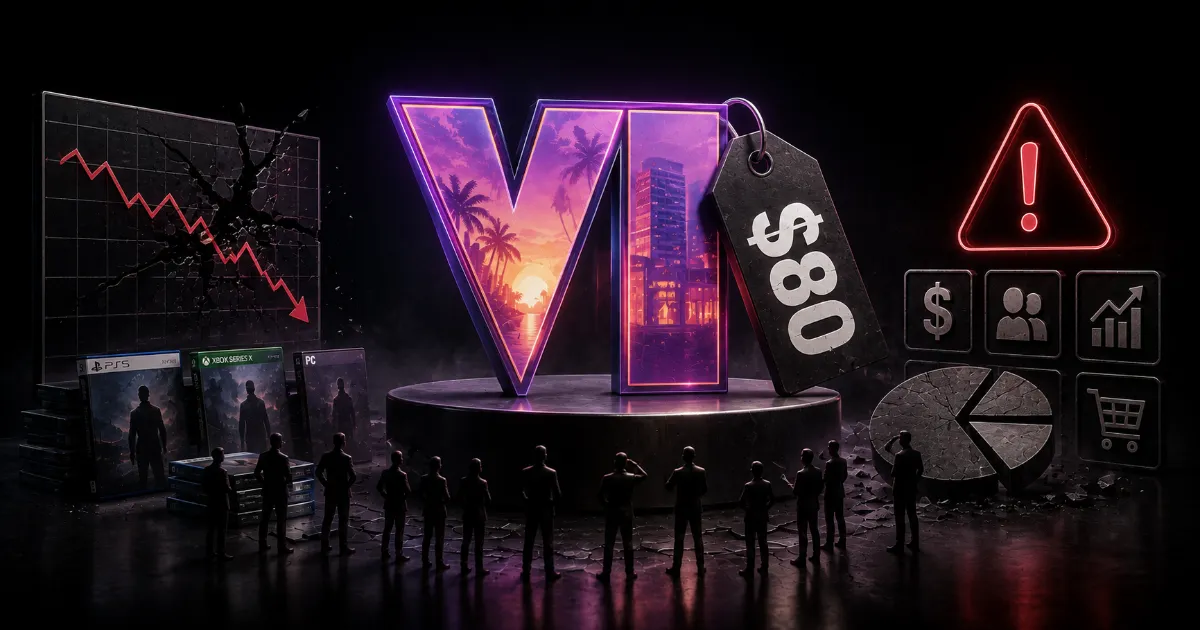
- Subject Overview: Why The Industry Is Wary Of GTA 6 Setting A New $80 Price Benchmark — Key developments across Gaming.
- Technical Context: Detailed analysis of architectural changes, product capabilities, and engineering metrics.
- Industry Impact: Key implications for software developers, startup founders, and enterprise technology adopters.
Executive Overview and Core Hook
For nearly two decades, the video game industry operated under a predictable, albeit slowly creeping, pricing model. After the transition from the sixty-dollar standard to the seventy-dollar benchmark, many analysts believed the market had reached a sustainable equilibrium. However, the announcement that Grand Theft Auto 6 is poised to debut at an eighty-dollar price point has sent shockwaves through the gaming sector. This development is not merely a localized adjustment for a single franchise; it represents a potential paradigm shift that threatens to redefine the baseline cost of entry for blockbuster interactive entertainment.
At its core, this pricing strategy attempts to address the unsustainable escalation of development budgets. With modern AAA projects frequently exceeding hundreds of millions of dollars in production costs—often rivaling the budgets of global cinematic blockbusters—publishers are struggling to achieve the margins expected by public shareholders. By testing an eighty-dollar threshold, industry leaders are effectively placing the burden of these ballooning costs squarely on the consumer. The industry is currently watching this move with a mix of anticipation and trepidation, as the success or failure of this premium pricing will determine whether eighty dollars becomes the industry-wide standard for all major releases in the coming decade.
Technical Breakdown and Architecture
The economics behind the eighty-dollar price tag are rooted in the complex architecture of modern game development. Contemporary AAA titles, particularly those in the open-world genre like Grand Theft Auto, require massive, highly specialized teams comprising hundreds of developers, technical artists, sound engineers, and data scientists. The shift from seventy to eighty dollars is largely a reactionary fiscal policy designed to combat the erosion of purchasing power caused by persistent global inflation. When adjusted for inflation, the traditional sixty-dollar game price established in the early 2000s would actually be significantly higher today; thus, publishers argue that they are simply correcting a long-standing devaluation of their intellectual property.
Technologically, the increased cost is driven by the demand for higher fidelity assets, complex physics simulations, and the requirement to support multiple hardware platforms simultaneously. Developing a title that functions across high-end PCs, next-generation consoles, and cloud-streaming services necessitates a significant investment in optimization and middleware licensing. Furthermore, the modern gaming ecosystem demands continuous content updates, live-service components, and robust anti-cheat infrastructure, all of which contribute to the total cost of ownership. The eighty-dollar price point is intended to act as a hedge against the high risk of failure inherent in such massive projects, where a single underperforming title can jeopardize the financial stability of an entire publishing studio.
Markdown Comparison Table and Key Metrics
| Pricing Metric | Legacy Standard | Current Standard | Proposed Premium |
|---|---|---|---|
| Baseline Cost | $59.99 | $69.99 | $79.99 |
| Development Cycle | 2-3 Years | 4-6 Years | 6-8+ Years |
| Production Budget | $50M - $100M | $150M - $250M | $300M+ |
| Target Demographic | Broad/Casual | Core Enthusiast | High-Value/Loyalist |
Key Market Indicators and Observations
- Consumer Sensitivity: Early data suggests that while premium pricing is accepted for "must-have" tentpole franchises, it results in a sharp decline in day-one sales for mid-tier titles.
- Digital Distribution Advantage: By bypassing physical manufacturing and retail logistics, digital-only pricing models are intended to capture higher margins, yet these savings are rarely passed to the consumer.
- Market Bifurcation: The industry is witnessing a split where indie titles and "AA" games maintain lower price points, while AAA titles aggressively target the higher end of the spectrum to signal prestige.
- Subscription Fatigue: As the cost of individual games rises, consumers are increasingly pivoting toward monthly subscription services, which effectively lowers the per-game cost but creates a long-term dependency on specific platform ecosystems.
Developer and Ecosystem Impact
The implications for software engineers and development teams are profound. As the price of games increases, so too does the pressure to deliver a flawless, high-value experience upon release. Developers are now tasked with creating content that justifies an eighty-dollar investment, which leads to longer, more grueling production cycles and a culture of perfectionism that can lead to burnout. For smaller independent studios, this shift creates a difficult competitive environment. If consumers reach their monthly spending limit on one or two eighty-dollar titles, they have less disposable income to spend on smaller, innovative games, effectively suffocating the "middle class" of the gaming industry.
Furthermore, the impact on cloud architectures and distribution platforms is significant. As games increase in size and complexity, the server-side infrastructure required to support concurrent users, global leaderboards, and persistent worlds becomes increasingly expensive. Developers are being forced to integrate more sophisticated cloud-based backend solutions to maintain game performance, further driving up the operational costs that ultimately dictate retail pricing. This creates a feedback loop where higher prices are required to maintain the servers necessary for the high-fidelity experiences that the higher prices are meant to fund.
Strategic Market Outlook and Analysis
The industry is at a crossroads regarding its perception of value. While Take-Two Interactive may successfully leverage the massive cultural cachet of its primary franchise to sustain an eighty-dollar price point, the broader market may not be as resilient. If every publisher follows suit, the industry risks a significant wave of consumer churn. Casual audiences, already facing economic headwinds and the rising cost of living, may find themselves priced out of the hobby entirely, leading to a contraction of the overall player base.
The transition to an eighty-dollar price point is a high-stakes gamble. If it succeeds, it will stabilize the financial model for massive, long-term development cycles. If it fails, it could trigger a market correction where publishers are forced to scale back production ambitions to reach a more sustainable, consumer-friendly price point.
There is also the risk of trade-offs regarding game design. To justify the increased cost, publishers may feel pressured to inflate the length of their games artificially, leading to "bloated" experiences that prioritize quantity over quality. Conversely, this move might accelerate the adoption of hybrid models where games are released at a premium but include integrated microtransactions, creating a double-edged sword for the consumer. In the coming years, we expect to see a clear divergence in the market: premium, high-priced blockbusters that occupy the prestige space, and a thriving, lower-cost alternative market driven by indie developers who offer innovation and accessibility at a fraction of the price.