
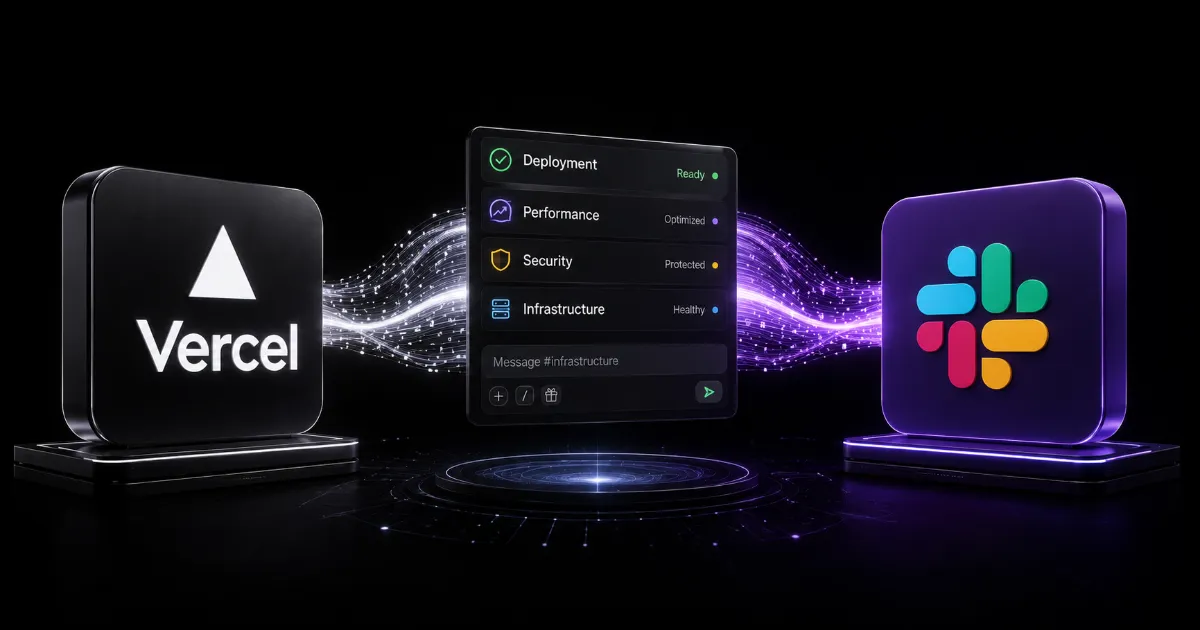
- Subject Overview: Vercel Brings Intelligent Infrastructure Management Directly into Slack Workflows — Key developments across Infrastructure.
- Technical Context: Detailed analysis of architectural changes, product capabilities, and engineering metrics.
- Industry Impact: Key implications for software developers, startup founders, and enterprise technology adopters.
The Evolution of Developer Operations
Modern software development has become increasingly fragmented, with developers jumping between command-line interfaces, browser-based dashboards, and communication platforms like Slack. This context switching creates significant cognitive overhead, often leading to delayed response times during critical incidents or deployment monitoring. Vercel is attempting to mitigate this friction by introducing an AI agent that lives where the conversation happens.
By integrating directly into Slack, the Vercel agent functions as a virtual teammate. Instead of manually auditing deployment logs in a web portal, engineers can now pull the Vercel bot into a conversation to request analysis. This capability represents a shift toward more conversational, context-aware DevOps, where infrastructure monitoring is treated as an active part of the development lifecycle rather than a passive observation task.
Intelligent Contextual Awareness
One of the standout features of this integration is the agent's ability to ingest the context of the platform running the application. When a developer tags the Vercel bot in a thread, it does not merely parrot back static logs. It analyzes the discussion context, understands the specific branch or deployment being referenced, and synthesizes information regarding current performance, errors, or build statuses.
This level of awareness effectively reduces the time required to diagnose issues. By linking infrastructure intelligence to specific human conversations, the system ensures that decisions regarding production deployments are made with full visibility. The agent operates as a bridge between the high-level operational status of an application and the granular technical details required to fix issues.
Strategic Benefits for Engineering Teams
Integrating Vercel with Slack offers several immediate benefits for distributed engineering teams. The primary advantage is the unification of the incident response process. When a deployment fails or a performance threshold is breached, the relevant data is already visible to the entire team in the Slack thread, preventing the siloed knowledge that often occurs during fire-fighting sessions.
| Metric | Manual Infrastructure Workflow | Vercel for Slack Workflow |
|---|---|---|
| Context Switching | High (Browser to IDE) | Low (Stay in Slack) |
| Information Latency | Minutes | Seconds |
| Team Visibility | Limited (Email alerts) | High (Threaded updates) |
| Technical Barrier | Requires Dashboard Access | Natural Language Queries |
- Faster Triage: Engineers can identify faulty deployments without leaving their messaging client.
- Democratized Access: Non-technical stakeholders can receive updates on status without needing platform administrative permissions.
- Enhanced Collaboration: Discussions surrounding infrastructure changes become persistent, searchable records within Slack.
Security and Access Control Parameters
Security remains a top-tier concern for any tool that provides deep access to production environment data. Vercel has designed this integration to respect the existing team-based permission structures of their cloud platform. The agent only responds with data that the querying user would have access to through the primary Vercel dashboard.
Key Takeaway: By centralizing infrastructure intelligence within communication channels, Vercel is effectively turning Slack into a command-and-control center for modern software delivery, drastically shortening the feedback loop for global engineering teams.
Architectural Implications
This integration points toward a future where infrastructure management is increasingly modular and conversational. As AI models become better at parsing complex system logs, we can expect future iterations of this tool to not just report issues, but suggest architectural optimizations or automatically propose pull requests to address performance bottlenecks identified in production. By leveraging Slack as the surface layer for this intelligence, Vercel is betting on the trend of developer-centric tools moving away from rigid dashboards toward more flexible, event-driven interfaces.