Earth May Survive the Solar Expansion
Fresh astrophysical simulations suggest our planet could escape incineration during the Sun's final death throes.
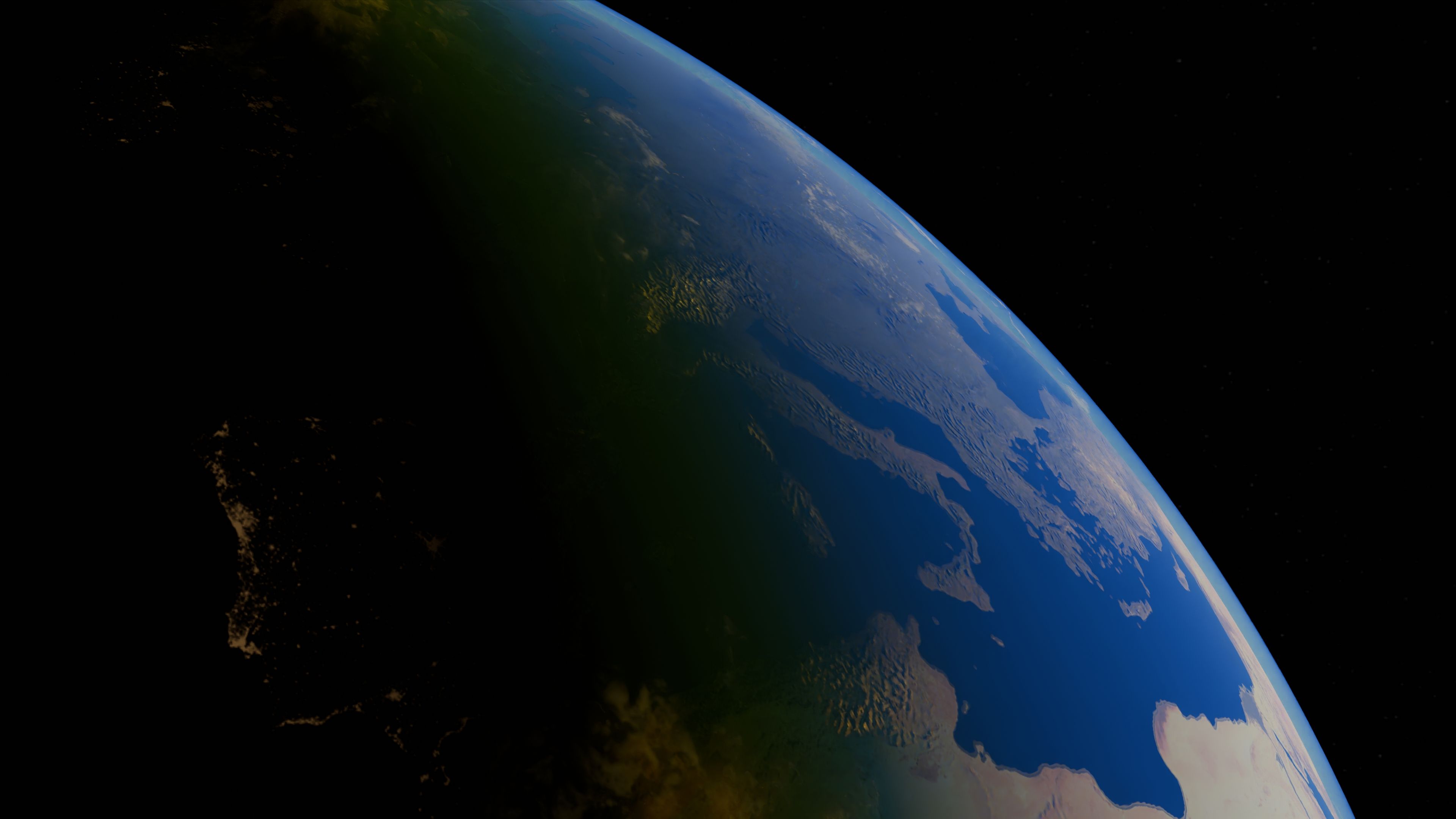
A Stay of Execution for Earth
For decades, the standard scientific consensus regarding the fate of the solar system centered on a grim inevitable conclusion. As the Sun exhausts its hydrogen fuel in roughly five billion years, it is expected to swell into a red giant, expanding far beyond its current dimensions. The long-held assumption was that this expansion would inevitably reach the orbits of the inner planets, effectively vaporizing Earth in the process.
Recent computational modeling complicates this narrative, offering a more nuanced view of planetary survival. Researchers observing similar stellar systems have noted that as stars lose significant mass during their transition to red giants, their gravitational hold on orbiting bodies weakens. This mass loss forces planets to drift into wider, more distant orbits, potentially pushing them outside the path of the star’s encroaching atmosphere.
Rethinking Orbital Dynamics
The survival of Earth depends on the precise intersection of solar mass loss and orbital migration. Current simulations indicate that the Sun will shed a substantial portion of its mass as it transforms. While the star grows, the corresponding reduction in gravitational tension allows Earth to migrate further away. If the expansion occurs at a rate that allows the planet to maintain a safe distance, the Earth might remain intact even as the Sun completes its transformation into a white dwarf.
This finding does not imply that Earth will remain habitable. Even if the planet avoids being swallowed, the drastic increase in solar luminosity would render the surface environments hostile to life long before the final stellar expansion. The oceans would evaporate and the atmosphere would likely be stripped away, leaving behind a scorched, barren rock.
Why It Matters
Understanding the terminal phases of stellar evolution is not merely an academic exercise in distant futures; it refines our predictive capabilities regarding planetary systems across the galaxy. As astronomers continue to catalog exoplanets orbiting older, unstable stars, recognizing that orbital migration can shield planets from stellar expansion provides a clearer picture of how many terrestrial worlds might survive their host stars. This insight alters our search parameters for surviving planetary remains in deep space, pushing researchers to look for signs of life or remnants in zones once thought to be totally incinerated.