Deep Space Pulse: Chandra and IXPE Unveil Lighthouse Nebula Dynamics
New observational data from the Chandra X-ray Observatory and IXPE provides a clearer picture of the high-speed pulsar residing within the Lighthouse Nebula.
Mapping High-Energy Neutron Stars
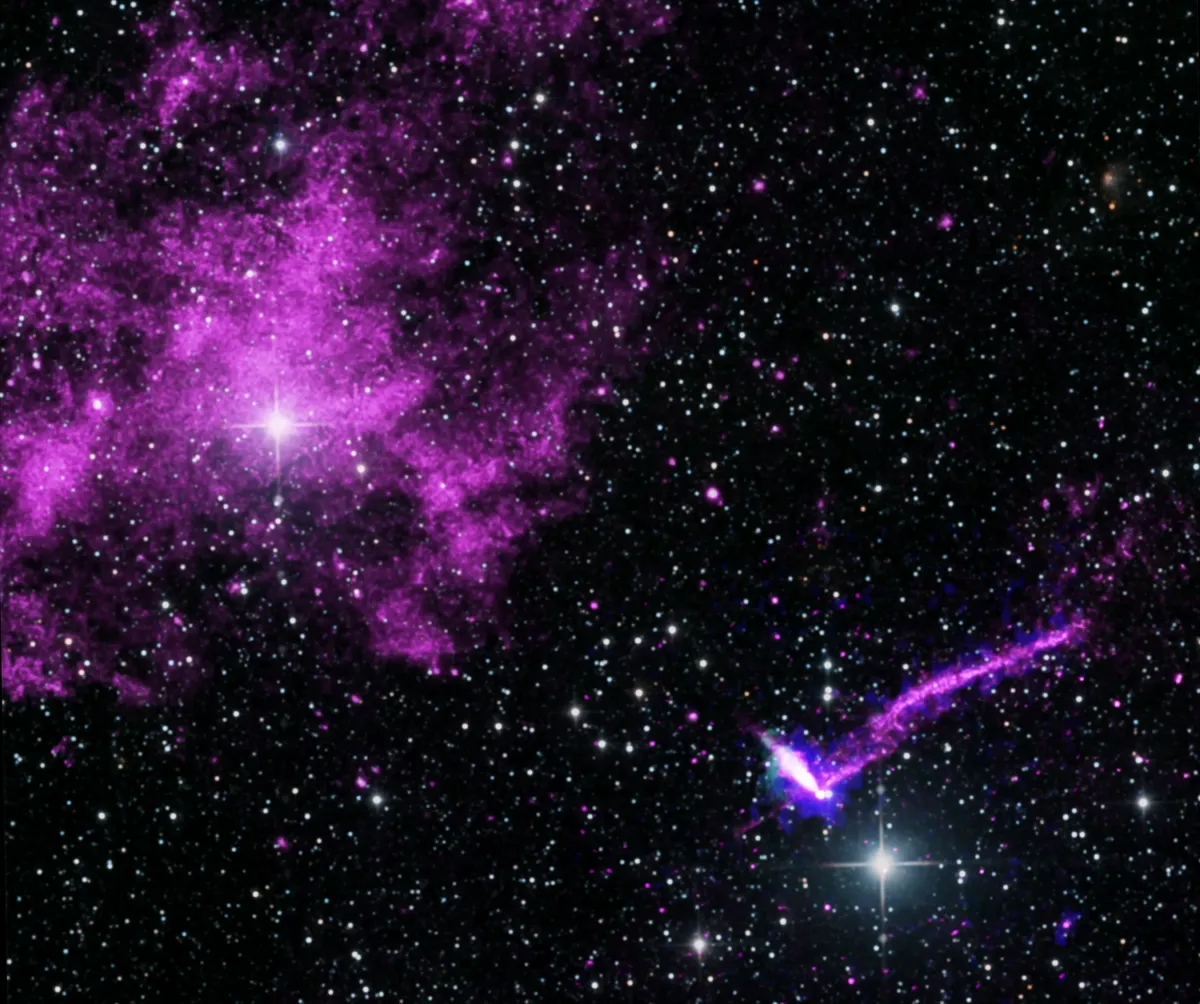
New imaging data released by NASA highlights a sophisticated multi-instrument study of the Lighthouse Nebula. By combining the high-resolution imaging capabilities of the Chandra X-ray Observatory with the specialized polarimetry of the Imaging X-ray Polarimetry Explorer (IXPE), researchers have successfully mapped the environmental interactions surrounding a rapidly rotating pulsar. This neutron star, characterized by an exceptionally strong magnetic field, serves as a natural laboratory for testing extreme physics in environments impossible to replicate on Earth.
Understanding Pulsar Magnetic Mechanics
Neutron stars like the one found in the Lighthouse Nebula represent the remnants of massive stellar collapses. As they rotate, these objects emit beams of radiation across the electromagnetic spectrum. The recent data provides insight into how the pulsar’s magnetic field interacts with the surrounding nebula material, creating the signature 'lighthouse' effect. Analyzing these spectral signatures is crucial for developing refined models of magnetohydrodynamics in deep-space conditions.
Technical Insights and X-Ray Polarimetry
What sets this observation apart is the application of IXPE, which measures the polarization of X-rays. This data helps astronomers deduce the orientation and intensity of the pulsar’s magnetic field lines as they interact with the interstellar medium. By synchronizing this with Chandra’s spatial resolution, the team is identifying specific acceleration zones where particles are energized to relativistic speeds. This process is essential for understanding how energy is transferred from the rotating neutron star into the wider galactic environment.
The Road Ahead
These findings serve as a cornerstone for future research into stellar evolution and the lifecycle of compact objects. By documenting the behavior of the Lighthouse Nebula’s pulsar, NASA continues to build a comprehensive atlas of cosmic radiation sources, enabling more accurate predictions for how magnetic fields influence high-energy phenomena across the universe.