Decoding LHS 1140b: Atmospheric Spectroscopy and the Hunt for Habitable Exoplanets
New spectral analysis of exoplanet LHS 1140b provides a roadmap for identifying volatile-rich atmospheres in the search for extraterrestrial life.
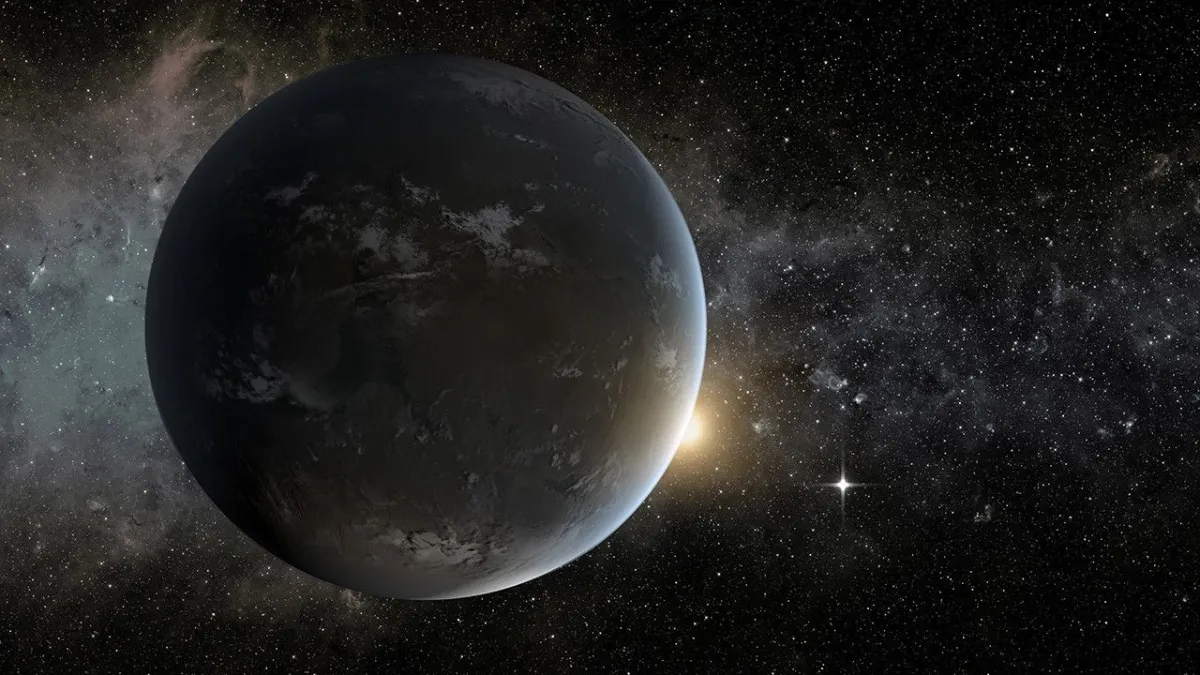
Spectroscopic Insights from LHS 1140b
Recent observations of the exoplanet LHS 1140b have provided a breakthrough in our understanding of planetary habitability. By analyzing the light filtering through the planet's periphery as it transits its host star, scientists have detected the telltale signature of escaping helium. This suggests the presence of a robust, potentially thick atmosphere, differentiating it from the barren, airless rocks that dominate early exoplanetary data.
LHS 1140b orbits within the habitable zone of its M-dwarf star, making it a primary candidate for deeper atmospheric scrutiny. The presence of helium is a critical indicator of atmospheric retention; it suggests that the planet’s gravitational well is sufficiently strong to prevent rapid atmospheric stripping, a common fate for worlds orbiting active M-dwarfs. This finding serves as a proof-of-concept for next-generation orbital telescopes designed to characterize the chemical composition of Earth-like exoplanets.
The Technical Roadmap
The methodology used here—transit spectroscopy—is becoming the standard for modern astrobiology. By measuring the variance in light intensity across specific wavelengths during a transit event, researchers can infer the existence of nitrogen, water vapor, and methane. For a world like LHS 1140b, the challenge now is to filter out the noise created by stellar activity and focus on identifying potential biosignatures.
- Mass determination: Establishing density profiles to confirm a rocky vs. gaseous composition.
- Spectral fingerprinting: Isolating biomarkers like oxygen or ozone within the transmission spectrum.
- Atmospheric modeling: Simulating the climate potential based on the detected molecular species.
We are moving beyond the era of simply counting planets to a phase of deep-tissue diagnostic analysis. As instrumentation like the James Webb Space Telescope and its successors continue to refine their sensitivity, the probability of detecting complex atmospheric chemistry increases. The data from LHS 1140b is not just a single observation; it is a template for the future of comparative planetology.
Real-World Impact
While the discovery of an atmosphere does not guarantee life, it confirms that habitable environments are physically possible outside our solar system. This reinforces the investment in deep-space observational infrastructure and keeps the hunt for cosmic neighbors at the forefront of modern scientific enterprise.