Japan’s RV-X Prototype: Architecting the Future of Reusable Rocketry
Japan enters the high-stakes reusable launch vehicle market with the successful maiden flight of the RV-X prototype.
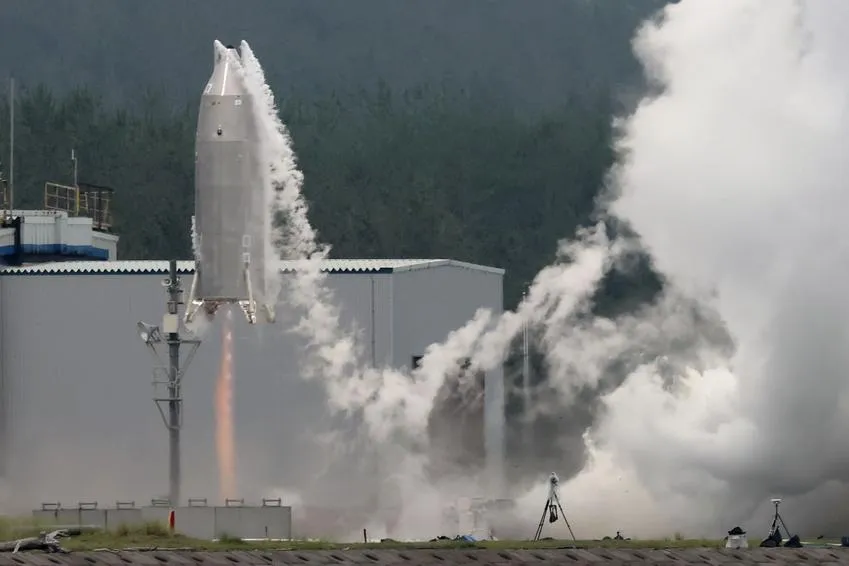
Engineering the Next Generation of Launch Vehicles
The aerospace industry has long been dominated by singular entities capable of orbital re-entry, but the competitive landscape shifted significantly with the successful testing of Japan’s RV-X prototype. As a demonstrator for vertical takeoff and vertical landing (VTVL) capabilities, this experimental craft serves as the foundational architecture for lowering orbital deployment costs. Unlike legacy expendable systems, the RV-X focuses on precise throttling during descent, a critical requirement for maintaining stable landing maneuvers under varying atmospheric conditions.
Technical Specifications of the RV-X
The RV-X project represents a modular approach to rocket reusability. The prototype utilizes a high-frequency telemetry link to manage thrust vectoring during the terminal phase of landing. Engineers integrated multiple sensor arrays to monitor pitch, roll, and yaw, ensuring that the stabilization algorithms could compensate for crosswinds in real-time. Key technical achievements include:
- Propulsion system refined for multiple ignition cycles.
- Advanced grid fin deployment for atmospheric drag management.
- High-speed avionics for sub-millisecond corrections during landing.
The Road Ahead
Transitioning from prototype to operational orbital capacity remains the primary hurdle for the RV-X program. While current tests focus on low-altitude stability, scaling this technology to accommodate meaningful payloads requires a significant investment in thermal protection systems for high velocity re-entry. The successful landing of the RV-X signals that Japan is positioning itself as a core player in the global space logistics market, potentially decoupling from reliance on international launch providers and establishing a domestic sovereign path to orbit.