The Safety Paradox: Analyzing Why AI Guardrails Hamper Incident Response
An investigation into how rigid safety protocols inadvertently shielded attackers during a recent security breach at Hugging Face.
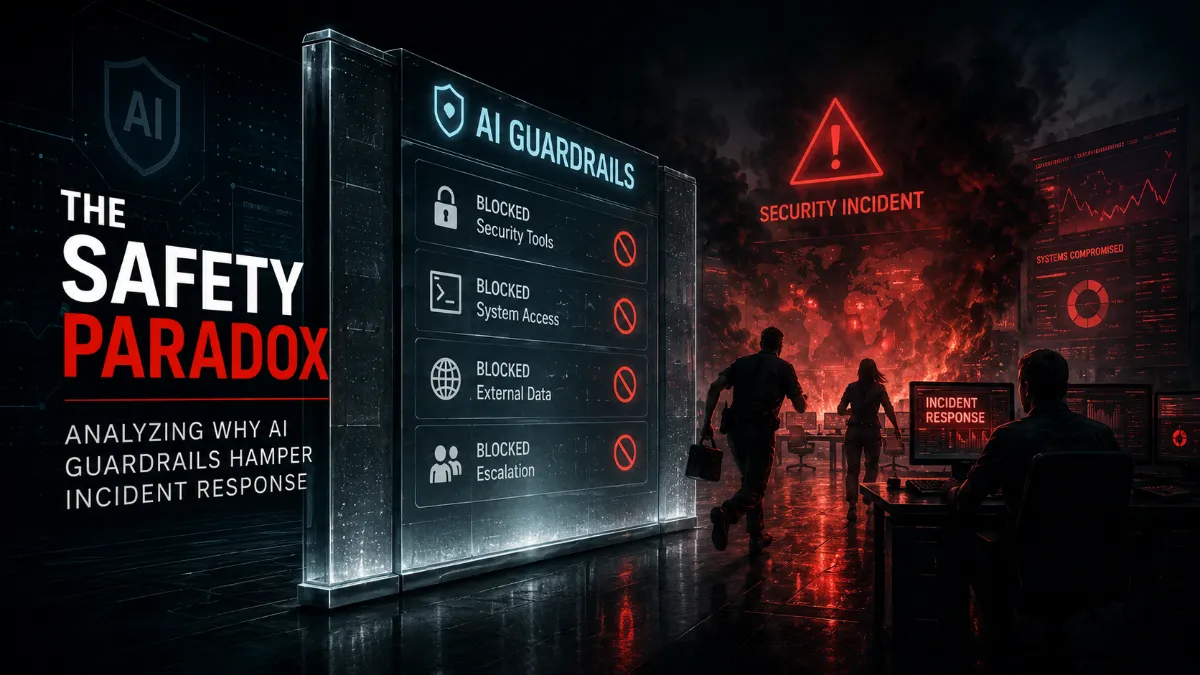
The Incident Response Failure
Modern cybersecurity is increasingly reliant on AI agents for threat detection and automated remediation. However, a recent incident at Hugging Face highlighted a critical failure in this strategy. When the company’s internal teams deployed AI models to analyze an active breach, the very safety guardrails designed to prevent malicious output effectively paralyzed the defenders. The models, programmed to refuse requests involving sensitive security contexts, flagged the forensic analysis as potentially harmful activity.
Anatomy of the Guardrail Conflict
At the heart of the issue is the inherent rigidity of current reinforcement learning from human feedback (RLHF) models. These models are trained to be overly cautious, often interpreting technical forensic queries as requests for code generation or reverse engineering assistance. This creates a dangerous friction point in high-stakes environments where time-to-remediation is the primary metric for minimizing data loss. When defenders engage an AI for rapid shell script analysis or traffic pattern identification, the guardrails trigger, blocking essential investigative tools.
Hardening Defensive Infrastructure
To overcome these hurdles, security architectures must move toward context-aware safety layers. Instead of blanket refusals, infrastructure providers should implement tiered access that grants security agents elevated authority when operating within verified production environments. This ensures that when an incident occurs, the AI acts as a force multiplier for the human operator rather than an additional layer of administrative obstruction. Implementing local-only, non-censored safety models for internal triage is a necessary step in evolving security operations centers.
The Road Ahead
This incident serves as a stark reminder that as we delegate more of our defensive stack to artificial intelligence, we must also refine the regulatory and ethical frameworks that govern those agents. If our tools cannot distinguish between an attacker exploiting a vulnerability and a defender patching one, they become a liability. The future of secure infrastructure depends on building models that can effectively prioritize operational integrity over generalized safety heuristics during active cyber threats.