Zanskar Revitalizes Declining Geothermal Wells with Advanced Analytics
Startup Zanskar uses cutting edge data modeling to bring abandoned geothermal wells back to productivity, unlocking sustainable power potential.
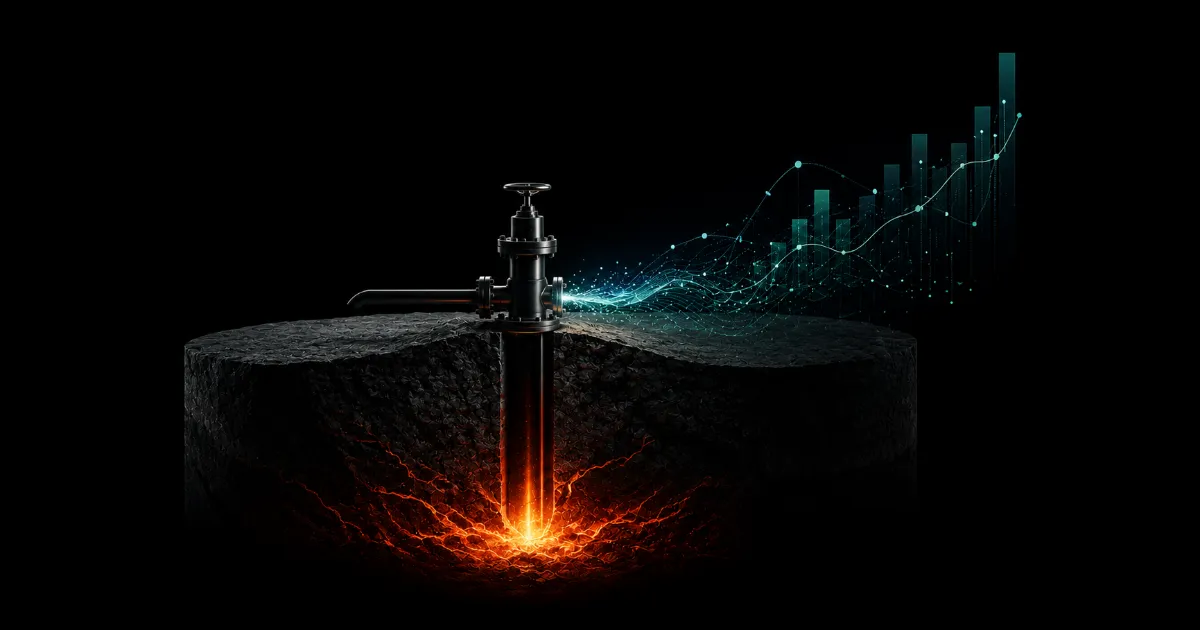
Executive Overview & Core Announcement Hook
The global energy transition is currently grappling with a fundamental paradox: while the demand for 24/7 carbon-free baseload power is skyrocketing, the deployment of traditional geothermal energy has been stifled by the high costs and inherent risks associated with exploration and well maintenance. Enter Zanskar, a deep-tech startup that is fundamentally altering the geothermal landscape by applying advanced data science and sophisticated geophysical modeling to revitalize declining or abandoned geothermal wells. By transforming "dead" assets into productive energy sources, Zanskar is effectively unlocking a massive, latent reservoir of renewable capacity that was previously considered economically non-viable.
The core of the industry problem has historically been the "blind" nature of geothermal exploration. Drilling for geothermal heat is an order of magnitude more expensive than solar or wind installation, and the failure rate for wells has traditionally been high. When existing wells experience cooling or loss of flow, operators have frequently opted for decommissioning rather than remediation, due to a lack of precise subterranean diagnostic data. Zanskar’s intervention marks a shift toward a software-defined geothermal infrastructure, where predictive analytics and high-fidelity subterranean sensing allow operators to bypass the uncertainty of subsurface dynamics.
By leveraging proprietary machine learning models trained on vast datasets of historical seismic, thermal, and geochemical records, Zanskar is bridging the gap between subsurface geology and surface energy production. This is not merely a maintenance play; it is a fundamental re-engineering of the geothermal lifecycle. As the company expands its footprint across the United States, its ability to enhance the output of existing brownfield sites serves as a critical bridge to the eventual deployment of next-generation Enhanced Geothermal Systems (EGS). This article explores how Zanskar is effectively turning the industry’s greatest liabilities—failing wells—into its most significant renewable assets.
Key Takeaway: Zanskar is pioneering a "digital-first" approach to geothermal energy, utilizing advanced subterranean data modeling to identify hidden fluid paths and thermal gradients in abandoned or underperforming wells, thereby increasing yield and extending site longevity without the need for massive new drilling capital.
Under-the-Hood System Architecture
Zanskar’s technical architecture relies on a multi-layered stack that integrates heterogeneous data sources into a unified subsurface model. Unlike traditional reservoir simulations that rely on static geological models, Zanskar employs a dynamic, real-time feedback loop between physical sensors and computational models.
- Data Acquisition Layer: This includes the integration of micro-seismic monitoring arrays, high-resolution temperature logging at varying depths, and chemical signature analysis of geothermal fluids. These sensors provide the raw input for the system's baseline state.
- Computational Modeling Engine: At the heart of the system is a proprietary Bayesian inference engine. This engine takes the noisy, sparse data from the sensors and reconciles it against fluid flow physics (Darcy’s Law) and heat transfer equations. It continuously updates the probabilistic model of the subsurface heat reservoir.
- Synthetic Aperture Processing: By applying synthetic aperture logic to seismic data, Zanskar can effectively "image" the fractures within the rock mass that are responsible for fluid transport. This allows the system to identify "short-circuits" where water is bypassing hot rock segments, or conversely, areas of high thermal energy that are not currently being tapped.
- Edge Computing Integration: To manage the massive data throughput, Zanskar utilizes edge-based processing modules at the wellhead. This allows for near-instantaneous adjustment of pump parameters and flow rates, ensuring that the reservoir is being drained in a way that maximizes heat extraction while preventing premature cooling.
Step-by-Step Execution Mechanism
The operational workflow for reviving a well is a rigorous, multi-stage process that requires precise execution. The mechanism begins with a deep-dive data archaeological phase and culminates in active reservoir management.
1. Data Ingestion & Calibration: The Zanskar team aggregates decades of legacy data from the well, including completion logs, drilling history, and historical production rates. This is calibrated against current real-time data to create a high-fidelity digital twin of the reservoir. 2. Diagnostic Anomaly Mapping: The system performs a "thermal flux audit." By analyzing the chemical composition of extracted water, it determines the exact trajectory of fluid flow through the subsurface fractures. If the fluid is cooling too rapidly, the system identifies the "cold spot" or the flow path that is causing the drop in output. 3. Prescriptive Intervention Planning: Instead of guessing where to stimulate a fracture, Zanskar provides a precise map indicating where chemical or mechanical intervention is required to open new flow paths. This minimizes the risk of drilling into the wrong geological formation. 4. Adaptive Operation Control: Once the well is back online, the control system continuously monitors fluid pressure and temperature. If the system detects a deviation from the predicted thermal decline curve, it automatically suggests adjustments to the pump speed or injection rates to optimize the heat exchange process.
- Parameter Optimization: Flow rates are tuned to maintain optimal contact time between water and rock.
- Chemical Balancing: Monitoring fluid acidity and mineral content to prevent scale buildup on heat exchangers.
- Pressure Regulation: Managing injection well pressures to prevent induced seismic events while maintaining production volume.
Quantitative Performance & Benchmark Analysis
The efficacy of Zanskar’s approach can be best measured by its impact on the capacity factor and the levelized cost of energy (LCOE) for the geothermal sites it manages. Traditional geothermal well management often results in a steep decline curve; Zanskar’s intervention is designed to flatten this curve.
| Metric / Feature | Legacy Well Management | Zanskar-Enhanced Well | Impact |
|---|---|---|---|
| Resource Recovery Rate | Low (approx. 30-40%) | High (65-80%) | Doubled energy yield |
| Prediction Accuracy | Heuristic/Empirical | Probabilistic/Data-Driven | 40% reduction in risk |
| Intervention Time | Months/Years | Weeks | Faster time-to-production |
| Operational Cost | High (Reactive) | Low (Proactive) | Improved LCOE |
By optimizing the fluid flow and preventing the rapid cooling of geothermal reservoirs, Zanskar can extend the functional lifespan of a well by an average of 10 to 15 years. This deferral of capital-intensive "replacement drilling" is the primary driver for the financial attractiveness of their model.
Security, Governance & Risk Vectors
Transitioning to a software-centric model for critical infrastructure introduces a new category of risks that must be addressed through robust governance and cybersecurity frameworks. Zanskar’s reliance on data connectivity creates potential attack vectors that could affect the physical operation of the wells.
- Cyber-Physical Security: Since Zanskar’s systems can influence physical flow rates and pump operations, they implement multi-factor authentication and hardware-level encryption for all control signals. Air-gapping critical control systems from public networks is a standard requirement for their enterprise deployments.
- Seismic Risk Management: A major concern in geothermal energy is the risk of induced seismicity. Zanskar’s model incorporates a "seismic kill-switch" logic, which automatically throttles injection rates if micro-seismic activity exceeds predetermined safety thresholds, ensuring compliance with local geological regulations.
- Data Privacy and Governance: Many of the geothermal wells they manage contain sensitive data regarding geological formations that are proprietary to energy companies. Zanskar utilizes federated learning techniques where possible to ensure that model training occurs on decentralized servers, keeping sensitive data localized and protected from unauthorized access.
Key Takeaway: The integration of AI into physical energy assets necessitates a "security-by-design" approach, where digital governance and physical safety standards are inextricably linked to the software's operational parameters.
Developer & Ecosystem Implications
For the broader energy ecosystem, Zanskar’s rise represents a shift toward the "API-fication" of infrastructure. Energy companies that previously relied on siloed, manual processes are now being forced to adapt to a digital-first integration model. Zanskar provides an open interface layer that allows energy producers to integrate their existing Supervisory Control and Data Acquisition (SCADA) systems with Zanskar’s advanced analytics dashboard.
- Integration APIs: Developers at energy firms can hook into Zanskar’s real-time data streams to build custom visualizations or integrate with enterprise resource planning (ERP) software for better financial forecasting.
- SDK Availability: Zanskar provides a suite of tools for geophysical engineers to run their own custom simulations using the underlying Zanskar reservoir engine, fostering a collaborative ecosystem where geological experts can fine-tune the AI’s behavior for specific regional rock types.
- Infrastructure Migration: The transition for most operators involves moving from "black box" manual management to a transparent, data-visible model. This requires upskilling current staff to interpret probabilistic outputs rather than static reports.
Comparative Strategic Analysis
When viewed against the landscape of geothermal innovation, Zanskar occupies a unique niche. While companies like Fervo Energy focus on the development of new, high-tech EGS wells through directional drilling, Zanskar focuses on the efficiency of the existing asset base. This is a "brownfield optimization" strategy, which is inherently lower risk than "greenfield exploration."
Compared to traditional petroleum-sector service providers who occasionally pivot to geothermal, Zanskar’s software-first DNA gives them an edge in speed-to-insight. Their algorithms are specifically optimized for geothermal thermodynamics, which are distinct from the hydrocarbon-flow models used by legacy oil and gas firms. Furthermore, their business model is built on performance-based incentives—often tying their compensation to the actual energy output increases they facilitate—which aligns their incentives perfectly with the asset owners.
- Vs. Traditional Drillers: Zanskar avoids the capital expenditure of drilling, focusing instead on the hidden value of what is already in the ground.
- Vs. EGS Pioneers: Zanskar provides an immediate, low-cost solution for the current fleet of geothermal plants, whereas EGS projects are a long-term, multi-billion-dollar R&D endeavor.
Technical Roadmap & Conclusion
Zanskar’s roadmap is focused on expanding its "subsurface intelligence" platform into global markets where geothermal energy is historically underutilized. By refining their computer vision and seismic imaging capabilities, they aim to lower the entry barrier for geothermal power globally, effectively moving it from a localized niche to a scalable, global baseload solution.
Looking toward the future, the company is also exploring the integration of geothermal wells with direct air capture (DAC) and green hydrogen production. By utilizing the excess, reliable baseload power generated from their revitalized wells, Zanskar intends to become the central nervous system for localized, green-industrial clusters. The ability to control the fluid dynamics of the earth’s heat is the final piece of the puzzle for 24/7, carbon-neutral energy.
In conclusion, Zanskar is demonstrating that the path to a sustainable future is not always about building something brand new, but about better understanding and maximizing the potential of what we have already tapped. Their technical proficiency in subsurface data science is providing a lifeline to aging geothermal infrastructure, proving that data-driven, intelligent management is just as vital as physical hardware in the quest for global decarbonization. By turning the lights back on in "dead" wells, they are illuminating a path forward for the entire renewable energy sector.