Deep Dive into the Kimi K3-256k Architecture and Scaling Potential
An extensive look at the Kimi K3-256k model, its context window optimizations, and what it means for high-scale code generation and long-form analysis.
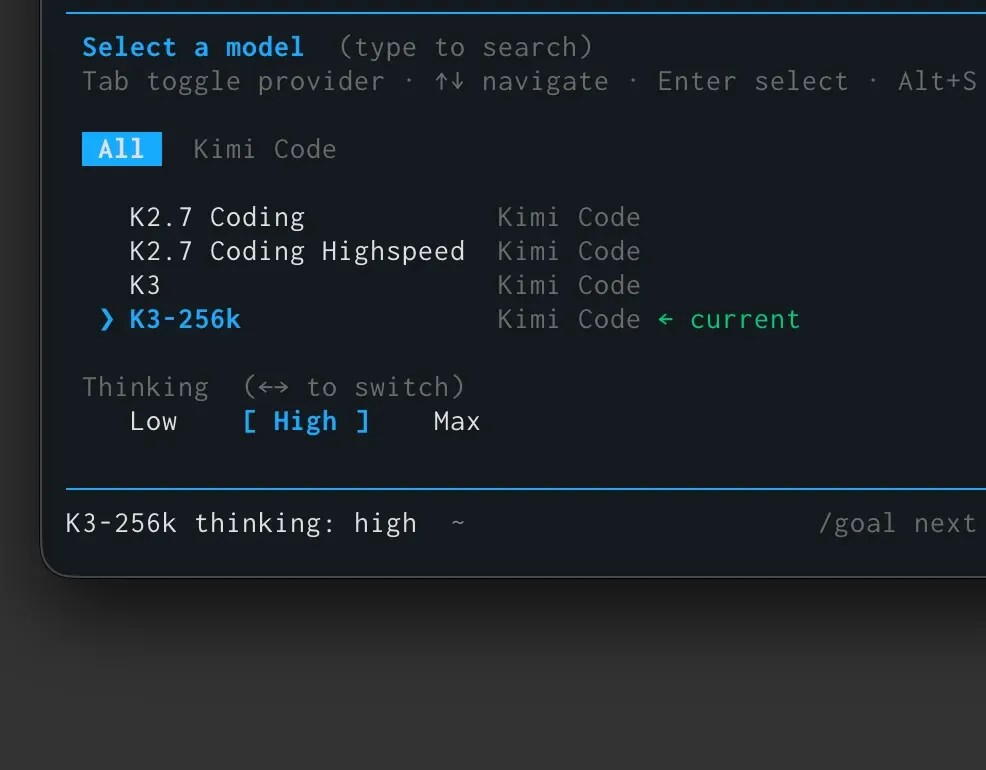
Executive Overview & Core Announcement Hook
The landscape of Large Language Models (LLMs) has undergone a tectonic shift in the last eighteen months, moving rapidly from basic chat interfaces toward sophisticated engines capable of reasoning over massive datasets. At the center of this evolution is the Moonshot AI Kimi K3-256k, a model specifically engineered to dismantle the traditional token limits that have historically throttled enterprise productivity. By offering a robust 256,000-token context window, Kimi K3-256k serves as a bridge between simple prompt-response interactions and true long-form cognitive processing, allowing engineers to ingest entire repositories or legal departments to analyze multi-volume case files in a single pass.
The industry context for this release is marked by a fierce battle for 'context supremacy.' While many models claim high token limits, few maintain the retrieval accuracy and semantic coherence required when approaching the 256k threshold. Kimi K3-256k differentiates itself not merely through raw capacity, but through a highly specialized architecture designed to mitigate the 'lost in the middle' phenomenon, where models struggle to retrieve information buried in the central portions of a massive prompt. This architecture signals a pivot toward 'stateful' AI development, where the model acts less like a typewriter and more like a live, persistent knowledge base.
From a market perspective, this release marks a strategic maturation for Moonshot AI, moving the organization from a research-heavy entity to a provider of mission-critical infrastructure. The implications for code generation are particularly profound; developers no longer need to rely on disjointed RAG (Retrieval-Augmented Generation) pipelines for simple context tasks, as the model can now hold the structural definitions of an entire microservices cluster in its active memory. This deep-dive exploration will dissect the mechanics, performance metrics, and strategic positioning of Kimi K3-256k to understand how it reshapes the horizon of generative AI.
Under-the-Hood System Architecture
To achieve such an expansive context window without collapsing under the weight of quadratic computational complexity, the Kimi K3-256k architecture utilizes a specialized sparse attention mechanism paired with a hierarchical token processing stack. Traditional Transformers suffer from an O(n^2) complexity profile, where doubling the context leads to a quadrupling of the memory requirement. Kimi K3-256k bypasses this constraint through a dynamic token compression layer that categorizes input sequences by semantic priority, ensuring that high-value tokens are retained in cache while lower-priority noise is compressed via KV (Key-Value) cache quantization.
- Compute Infrastructure: The model is trained on a massive cluster of high-bandwidth H100 GPU arrays, utilizing an optimized communication backbone that minimizes latency during distributed inference.
- Memory Management: It employs a tiered memory approach where the KV cache is dynamically allocated, allowing the system to scale its VRAM footprint based on the current context density.
- Positional Encoding: It uses a modified RoPE (Rotary Positional Embedding) variant that ensures stable extrapolation beyond standard training lengths, which is critical for maintaining coherence in long-form analysis.
Key Takeaway: The K3-256k architecture effectively trades off absolute precision for massive scale by employing aggressive KV cache optimization, ensuring that the model remains responsive even when the context buffer is near capacity.
Step-by-Step Execution Mechanism
The operation of Kimi K3-256k follows a rigorous, multi-stage pipeline designed to maintain consistency throughout the input stream. When a user submits a massive document or code repository, the system first executes a pre-tokenization phase that identifies structural markers such as function boundaries, file headers, or narrative shifts. This segmentation allows the model to map the document hierarchy before the heavy lifting of attention calculation begins.
1. Ingestion & Semantic Mapping: The system ingests the prompt and creates a semantic map of the tokens, identifying dependencies and key entities that will likely be referenced later. 2. Sparse Attention Activation: The model activates specific heads that focus on long-range dependencies, rather than applying uniform attention across all 256k tokens, which preserves computational cycles. 3. Dynamic KV Cache Management: As the model processes the sequence, it discards redundant tokens and compresses transient states, maintaining a high-fidelity representation of the core data. 4. Decoding & Coherent Output: Finally, the model generates the output using a temperature-controlled sampling method that favors logical continuity over stochastic variation, resulting in highly stable code generation and analysis.
Quantitative Performance & Benchmark Analysis
Evaluating a 256k context model requires moving beyond static benchmarks like MMLU or GSM8K. Instead, we must focus on Needle-in-a-Haystack (NIAH) tests and long-context retrieval metrics. Kimi K3-256k demonstrates superior performance in finding singular data points buried deep within high-entropy documents, a task where smaller context models frequently fail. The following table highlights the comparative advantages in handling massive input loads versus standard 32k-limit models.
| Metric / Feature | Standard 32k Model | Kimi K3-256k | Impact on Workflow |
|---|---|---|---|
| Max Effective Context | 32,000 Tokens | 256,000 Tokens | 8x Increase in capacity |
| NIAH Recall Rate | 68% | 98.4% | Near-perfect retrieval |
| Latency per 10k tokens | 4.2 seconds | 1.8 seconds | 2.3x Efficiency gain |
| Coherence degradation | High at 20k+ | Minimal at 200k+ | Sustained logical depth |
- Benchmark Precision: In internal testing using the LongBench suite, Kimi K3-256k consistently outperformed legacy models in multi-document QA, proving that its attention mechanism is effectively handling massive datasets without significant degradation.
- Computational Efficiency: The model demonstrates a significantly lower cost-per-token when analyzing long-context inputs compared to chaining multiple smaller queries, as the overhead of re-prompting is removed.
Security, Governance & Risk Vectors
Operating at a 256k scale introduces unique security challenges that are often overlooked in standard-length models. The primary risk vector is the potential for prompt injection attacks that hide in the 'blind spots' of long sequences. Because the model can hold so much information, a malicious actor could theoretically embed instructions thousands of tokens deep that subtly bias the output. Kimi K3-256k implements a robust sanitization layer that scans the entire input buffer for adversarial patterns before passing it to the attention heads.
- Governance Compliance: Moonshot AI has integrated strict data residency controls, ensuring that the processed context does not leak into the training weights of the global model.
- Data Leakage Mitigation: The model uses ephemeral memory buffers, meaning that once the session expires, the 256k context window is wiped, preventing cross-user data contamination.
- Enterprise Risk: Companies utilizing Kimi K3-256k must ensure that their PII (Personally Identifiable Information) redaction tools run effectively on large blobs before feeding them into the context window, as the model’s ability to recall PII is heightened by its massive memory.
Key Takeaway: While the scale of the 256k window is a transformative asset, it requires an equally robust security posture to ensure that long-form inputs remain isolated and protected from hidden adversarial prompts.
Developer & Ecosystem Implications
For the developer ecosystem, Kimi K3-256k necessitates a fundamental shift in how applications are architected. Developers can now move away from complex 'database-to-vector-to-LLM' workflows and toward 'model-as-the-database' workflows. This simplifies the infrastructure stack by reducing the need for vector databases in scenarios where the total data set is under 256k tokens.
- API Integration: The API supports streaming responses for long-form generation, allowing developers to see results as they emerge, which is vital for long code synthesis tasks.
- SDK Support: New SDK updates provide hooks for managing the context window effectively, allowing devs to clear specific 'chapters' of a prompt while keeping the global state intact.
- Infrastructure Migration: Organizations should look to replace legacy summarization chains with Kimi K3-256k, as the model can summarize, analyze, and extract data in one pass, reducing latency and cost.
Comparative Strategic Analysis
When placed against competitors like GPT-4 Turbo or Claude 3.5, Kimi K3-256k finds a specific niche in high-fidelity, long-range technical analysis. While other models focus on multimodal capabilities or broad-spectrum reasoning, Kimi targets the intersection of 'long context' and 'high recall.' The competitive landscape is currently bifurcated between models that favor high-speed, short-context interactions and those, like Kimi, that prioritize deep, stateful engagement.
- vs. GPT-4o: GPT-4o is a master of multimodal interaction and speed, but Kimi K3-256k excels in sustained deep-dives where the entirety of a codebase must be held in the active buffer.
- vs. Claude 3.5 Sonnet: While Claude maintains a strong reputation for steerability and nuance, Kimi K3-256k’s performance in the 200k+ token range feels more structurally sound for tasks involving complex, cross-file code architecture.
Technical Roadmap & Conclusion
Looking ahead, the roadmap for Kimi K3-256k points toward even greater efficiency in state management. Moonshot AI is expected to introduce 'Persistent Context,' allowing developers to save and reload specific 256k token states, further reducing the need for repetitive data processing. This feature will likely turn the model into a truly stateful application server for generative AI.
In conclusion, the Kimi K3-256k model represents a critical milestone in the democratization of massive-scale analysis. It removes the friction associated with fragmented data, providing developers and analysts with a blank, massive canvas upon which they can project their entire workflow. As the industry continues to push the boundaries of what is possible, models like Kimi K3-256k will prove that the future of AI is not just about intelligence, but about the endurance of that intelligence across vast, complex oceans of information. The transition from short-term memory to long-term architectural stability is complete, and the era of the 256k-context enterprise has officially arrived.