Industry Veteran Questions The Hype Cycle Surrounding Grand Theft Auto 6
Naughty Dog alum Bruce Straley prompts a debate on the gaming industry's obsession with massive franchise sequels and the loss of smaller creative voices.
The Burden Of Expectations
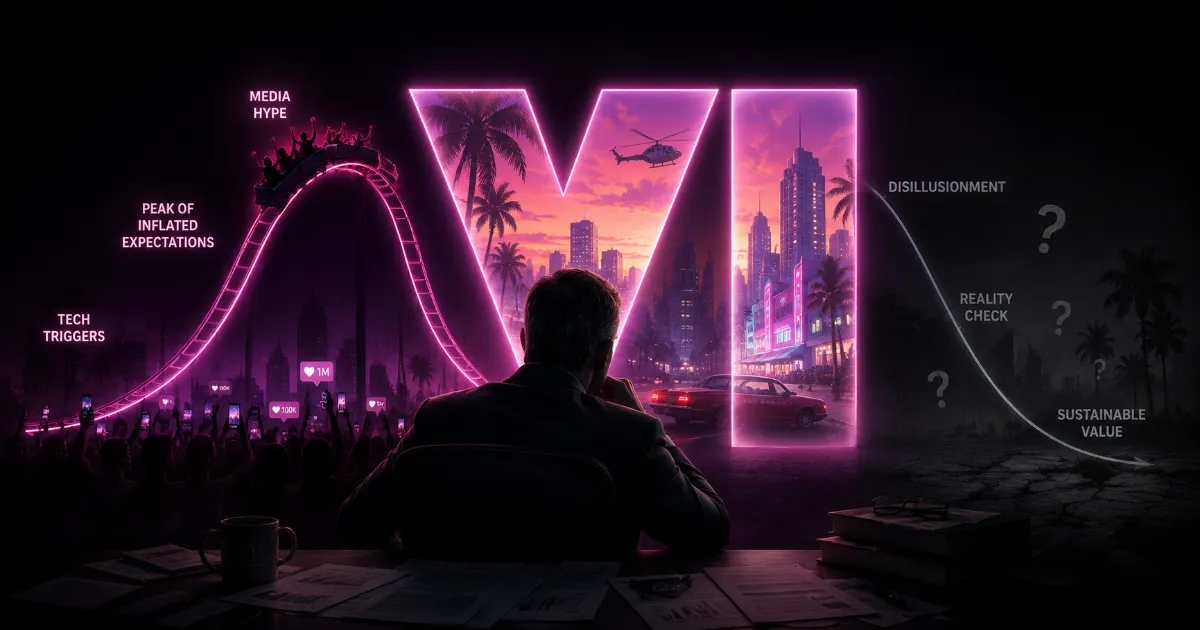
In an industry defined by its cycles of hype, few titles command as much attention as the upcoming Grand Theft Auto 6. However, Bruce Straley, co director of The Last of Us and a veteran of the Naughty Dog studio, has raised a provocative question: why is the community so fixated on a single blockbuster sequel when the industry has so much more to offer? His inquiry has sparked a wide ranging debate on social media about the current state of game development, marketing, and the role of players in perpetuating an industry obsessed with scale over innovation.
Analyzing The Industry Hype Machine
Straley's perspective highlights a common concern among creative professionals in the gaming space. When the industry focuses almost exclusively on a small handful of massive titles, it creates an environment where smaller, more experimental projects struggle to gain traction. The sheer volume of discourse surrounding high profile releases creates a monoculture that can stifle creativity and limit the diversity of games that reach a mass audience. This is not just a critique of the game itself, but of the media environment that surrounds it.
Key Takeaways From The Debate
- Resource Allocation: The focus on mega projects often diverts talent and funding away from diverse, smaller scale efforts.
- Community Fatigue: Continuous hype cycles can lead to unrealistic player expectations and contribute to burnout within development studios.
- Creative Stagnation: A reliance on proven formulas for massive franchises can limit the risks that studios are willing to take.
The Value Of Originality
Straley's career is built on delivering high quality experiences that prioritize narrative and character depth. From his work on Uncharted to The Last of Us, he has consistently advocated for games that offer something new. His question is ultimately a plea for balance. While there is certainly room for massive, open world experiences like those offered by Rockstar Games, he argues that the gaming ecosystem becomes poorer if these titles are the only ones that people care about. The industry requires a healthy mix of blockbuster entertainment and bold, smaller works to remain vibrant.
Addressing The Backlash
Predictably, the internet responded with a mix of support and vitriol. Many fans view the anticipation for a new entry in a beloved franchise as a natural expression of passion. However, the substance of Straley's argument remains valid. The industry's current trajectory, where development costs for major games have exploded to hundreds of millions of dollars, makes the risk of failure catastrophic. This reality forces studios to stick to safe, established properties, leaving little room for the kind of risk taking that defined earlier eras of gaming.
The Road Ahead
As we look to the future of the medium, the tension between commercial juggernauts and indie creativity will likely continue to intensify. Straley's intervention serves as a necessary check on the industry's collective enthusiasm. Whether or not his questions change the conversation, they emphasize the importance of looking beyond the next big release to support the creators who are pushing the medium forward in less visible ways. The gaming landscape is expansive, and there is more to discover than just the next big franchise sequel.



