Why Open Weight AI Models Are Narrowing the Gap to Frontier Performance
As open weight models like GLM 5.2 reach frontier levels of capability, the industry faces a critical reckoning regarding safety guardrails and deployment risks.
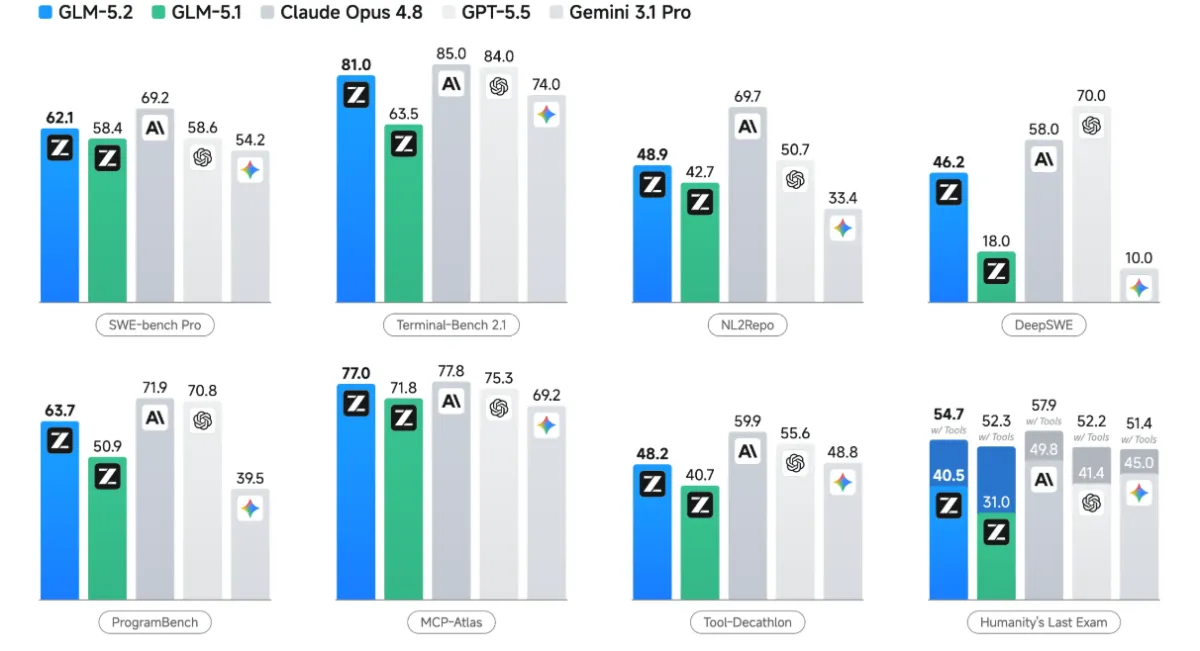
The landscape of artificial intelligence is currently undergoing a structural shift as open weight models begin to rival the performance metrics of proprietary closed source systems. With the emergence of GLM 5.2, researchers and developers have found that the performance delta between institutional frontier models and community accessible weight distributions is shrinking at an unprecedented rate. This evolution suggests that the barrier to entry for deploying high capacity intelligence is effectively vanishing, but this efficiency comes with significant architectural challenges concerning safety and alignment.
The Technical Mechanics of Model Scaling
At the core of the recent performance jump is the refinement of training pipelines and data curation strategies. The architecture behind GLM 5.2 leverages optimized transformer blocks that prioritize parameter efficiency while maintaining the broad context window requirements necessary for complex reasoning. By utilizing a decentralized training approach, developers have managed to compress the instruction tuning phase, allowing these models to achieve peak performance with lower compute overhead than traditional large scale enterprises previously required.
Unlike traditional models that gate access through restrictive application programming interfaces, open weight distributions provide direct access to the model weights. This allows researchers to perform fine tuning on specific domains, effectively creating specialized agents that can outperform generalist frontier models in vertical tasks. The shift toward smaller, high density parameter counts has facilitated this democratization, enabling high performance execution on hardware that would have been considered insufficient just two years ago.
Architecture and Safety Constraints
Safety in the context of open models operates differently than in closed systems. In a closed ecosystem, safety is enforced through output filtering and latent space restrictions monitored by the provider. In an open weight paradigm, once the model is released, the provider loses the ability to gate its usage. This forces safety into the training phase, where reinforcement learning from human feedback or constitutional alignment is baked directly into the neural network architecture.
| Feature | Closed Frontier Model | Open Weight GLM 5.2 | Impact on Safety |
|---|---|---|---|
| Model Weights | Encrypted/Hidden | Accessible/Downloadable | High |
| Inference Control | API Filtered | Local Runtime | Massive |
| Fine Tuning | Restricted | Unrestricted | High |
| Safety Layer | External/Dynamic | Internal/Static | Medium |
Key Takeaway: The democratization of frontier performance forces a transition from external filtering to intrinsic, architecture based safety protocols.
The Challenge of Intrinsic Safety
Embedding safety directly into weights requires a fundamental restructuring of the loss functions used during the fine tuning process. If a model is not trained to refuse malicious instructions before its release, no amount of post hoc wrappers will be sufficient to contain it. The current debate centers on whether it is technically possible to create a model that is both highly capable and fundamentally unable to assist in dangerous activities without sacrificing its intelligence.
Engineers are currently experimenting with adversarial training loops that expose models to simulated harmful scenarios during the training phase. By forcing the model to optimize against these scenarios, the internal representations of potential risks are hardened. However, this often leads to a phenomenon known as alignment tax, where the model becomes less useful for benign tasks because it is overly cautious or prone to false refusals.
Mitigating Risks in Open Ecosystems
To bridge the safety gap, the industry is moving toward modular security architectures. This involves separating the base model from specialized safety modules that can be updated independently of the core neural network. By maintaining these modules as distinct, pluggable components, researchers can patch safety vulnerabilities without retraining the entire massive parameter set, which is both expensive and time consuming.
Another approach involves the implementation of cryptographic signing of model outputs, which allows downstream platforms to verify that a specific instance of a model is operating within sanctioned parameters. This creates a chain of custody for generated content, reducing the likelihood of misuse while still allowing the flexibility that open weights provide. These technical interventions are essential to maintaining a balance between accessibility and security.
Evaluating Deployment Strategies
When deploying models of this caliber, developers must consider the hardware footprint. The optimization of these models for lower precision arithmetic has enabled them to run on consumer grade graphics hardware. While this reduces the cost of deployment, it also increases the surface area for unauthorized modifications. Developers must therefore build robust local runtime environments that monitor for tampering and ensure that the integrity of the weight file remains intact throughout the execution flow.
- Weight Integrity: Utilizing secure hash verification to ensure no unauthorized layers have been introduced.
- Input Sanitization: Implementing hardware level filters that intercept prompts before they reach the inference engine.
- Output Verification: Using secondary small scale models to validate the safety of generated output in real time.
- Resource Quotas: Managing compute allocation to prevent the runaway execution of autonomous agents.
The Big Picture
The trajectory of open weight models suggests that the frontier is not a fixed point, but a moving target. As smaller teams and individual researchers gain access to the same tools that were once the exclusive domain of large research labs, the emphasis must shift from restricting access to improving the inherent robustness of the systems themselves. The challenge for the next decade is not preventing the development of powerful intelligence, but ensuring that this intelligence is architected to remain within human defined bounds regardless of the deployment environment.