Pentagon Moves Directed Energy Systems into Active Deployment
The US Army is formalizing the integration of high energy laser systems to neutralize drone threats on the modern battlefield.
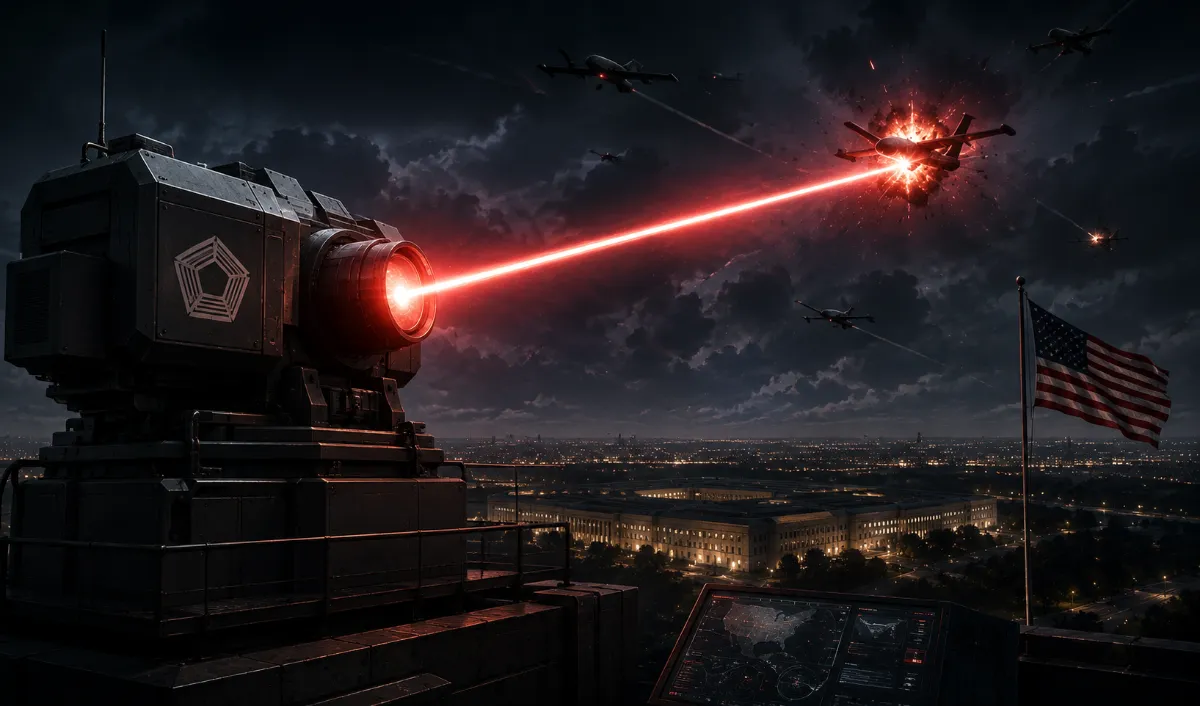
The battlefield of the future has arrived and it is significantly quieter than previous eras of warfare. As autonomous drone swarms become a common fixture in international conflicts, military planners are pivoting away from traditional kinetic interceptors which rely on expensive projectiles that are often harder to replenish. Instead, the focus has shifted toward speed of light defense mechanisms. The impending contract for Enduring High Energy Lasers represents a monumental transition in how ground forces will maintain air superiority against low cost aerial threats.
The Strategic Shift to Photonic Defense
For decades, the standard response to incoming munitions or surveillance assets involved radar guided missiles or anti aircraft artillery. These systems are highly effective but carry significant logistical burdens. A single missile can cost hundreds of thousands of dollars, making it economically unsustainable to use them against cheap, mass produced hobbyist drones. Directed energy weapons fundamentally change this cost exchange ratio. By utilizing electrical power to generate a beam, the cost per engagement drops to pennies on the dollar, provided the system has access to a consistent energy source.
Technical Capabilities of High Energy Systems
Modern high energy laser platforms function by focusing a high intensity beam onto a target for a sustained duration. This heat transfer causes structural failure, lens damage to sensors, or combustion of onboard electronics. Unlike explosive projectiles, lasers require precise tracking and beam control to ensure the energy stays locked on the target. The current generation of military lasers features advanced adaptive optics that mitigate atmospheric interference, allowing for precise strikes at ranges that previously required physical ordnance.
| Feature | Traditional Missile | Laser Weapon System |
|---|---|---|
| Engagement Cost | High | Negligible |
| Magazine Depth | Finite | Unlimited while powered |
| Speed of Engagement | Supersonic | Speed of Light |
| Collateral Risk | High | Low |
Operational Challenges and Deployment
Fielding these systems requires more than just the laser array. The hardware demands massive thermal management systems to dissipate the byproduct heat generated during operation. Furthermore, the power requirements necessitate integrated battery or generator arrays that can handle the burst loads required for multiple engagements in rapid succession. The integration process is currently focused on mobile platforms, allowing ground units to move with maneuver forces rather than remaining static at fixed bases.
The integration of directed energy into the army arsenal marks a departure from traditional ballistics. We are effectively shifting the defense paradigm from reactive intercept to active suppression.
The Road Ahead
Moving forward, the primary hurdle is not the physics of the laser but the integration of these systems into existing Command and Control frameworks. Effective use of directed energy requires seamless communication between existing radar detection grids and the firing systems. As the US Army refines its tactical procedures, we can expect to see these units deployed in various theaters to serve as a persistent deterrent against unconventional aerial incursions. The era of high speed photonic defense is no longer a distant theoretical goal but a present operational reality.