Cloudflare Computer Challenges Traditional Containers for Agent Workloads
Cloudflare introduces a novel agent runtime designed to bridge the gap between lightweight isolates and full Linux containers for scalable AI agents.
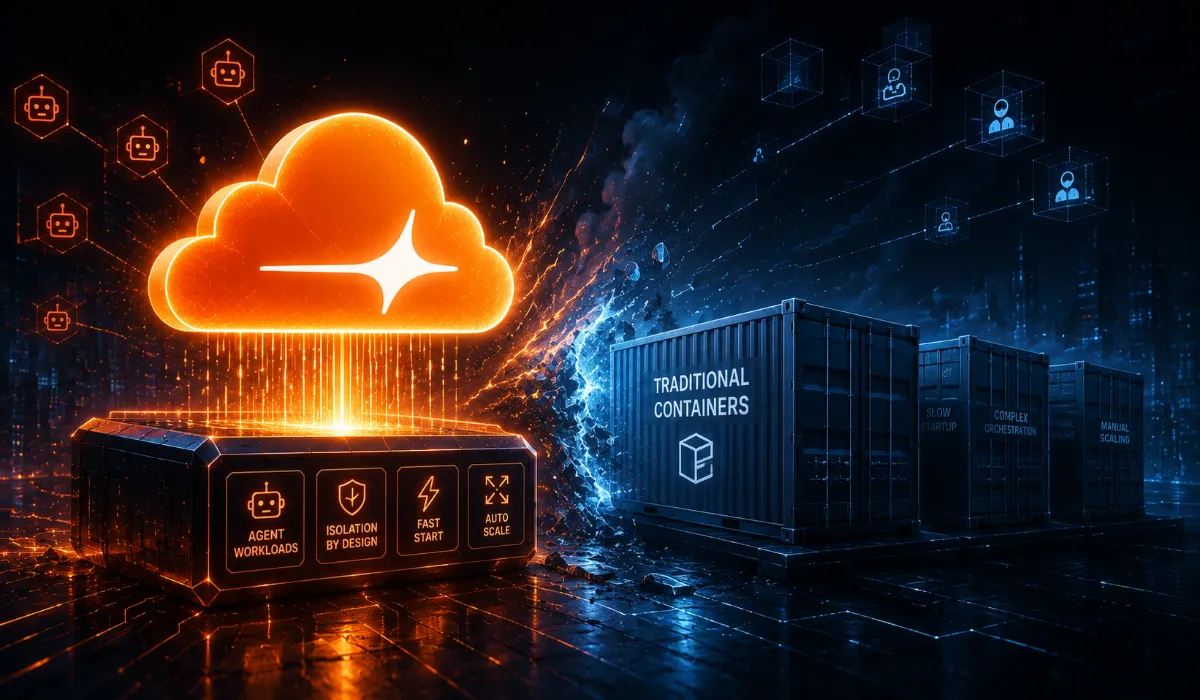
Rethinking Compute for Intelligent Agents
The current generation of autonomous AI agents faces a significant infrastructure mismatch. Most agent runtimes are shackled to heavy container environments that struggle to scale rapidly, leading to high latency and inefficient resource utilization. Cloudflare is aiming to disrupt this status quo with the introduction of their new agent runtime, a platform engineered to orchestrate seamlessly between high performance isolates and traditional containerized execution environments. This approach promises to unlock a new level of responsiveness for agents that require both low latency and full system access.
The Limitations of Current Architectures
Traditional containerization has served as the backbone of modern web infrastructure, but it was never designed for the volatile, bursty workloads of modern AI agents. Containers carry significant cold start penalties and resource overheads that inhibit the ability to spin up thousands of concurrent agents on demand. By contrast, lightweight isolates offer exceptional speed but often lack the system level depth required for complex agentic tasks. The industry has been forced to choose between performance and capability, a compromise that the new runtime seeks to eliminate entirely.
Dynamic Orchestration explained
The secret to this new architecture lies in its ability to dynamically select the ideal execution context based on the task at hand. When an agent performs a simple, stateless request, the runtime utilizes an isolated execution environment, ensuring near instantaneous startup times and minimal resource consumption. However, when the agent requires state persistence, complex file system interactions, or full Linux compatibility, the system intelligently migrates or provisions a containerized environment to accommodate those needs. This transparent handover allows developers to write code as if they were targeting a single runtime while benefiting from the performance characteristics of both paradigms.
Key Architectural Benefits
- Intelligent Resource Allocation: The runtime automatically determines whether a task requires an isolate or a container, maximizing density without compromising reliability.
- Reduced Cold Starts: By defaulting to lightweight isolates, agents can react to triggers in milliseconds rather than seconds.
- Seamless Developer Experience: Developers interface with a single API, abstracting away the underlying infrastructure complexity.
Executive Perspective
The transition from monolithic container stacks to dynamic, multi tiered runtimes is the next logical step in the evolution of cloud infrastructure. By separating the definition of the agent from the specific execution hardware, we enable a level of scalability that was previously impossible to achieve at a price point that supports mass adoption.
The Bottom Line
This technology represents a fundamental pivot in how we conceive of edge compute for the AI era. Instead of forcing developers to pack every function into a heavy container, the industry is moving toward a model where compute is treated as a fluid, reactive commodity. For organizations building the next generation of autonomous agents, this provides a clear path to production scale without the traditional overhead associated with massive infrastructure deployments. As the demand for highly responsive AI grows, this model will likely become the standard for any service that requires both intelligence and speed.