
- Subject Overview: Alteon Secures Seed Backing to Build Ultra-Endurance Autonomous Wind Harvesting Aircraft — Key developments across Startups.
- Technical Context: Detailed analysis of architectural changes, product capabilities, and engineering metrics.
- Industry Impact: Key implications for software developers, startup founders, and enterprise technology adopters.
The Frontier of High Altitude Long Endurance Aviation
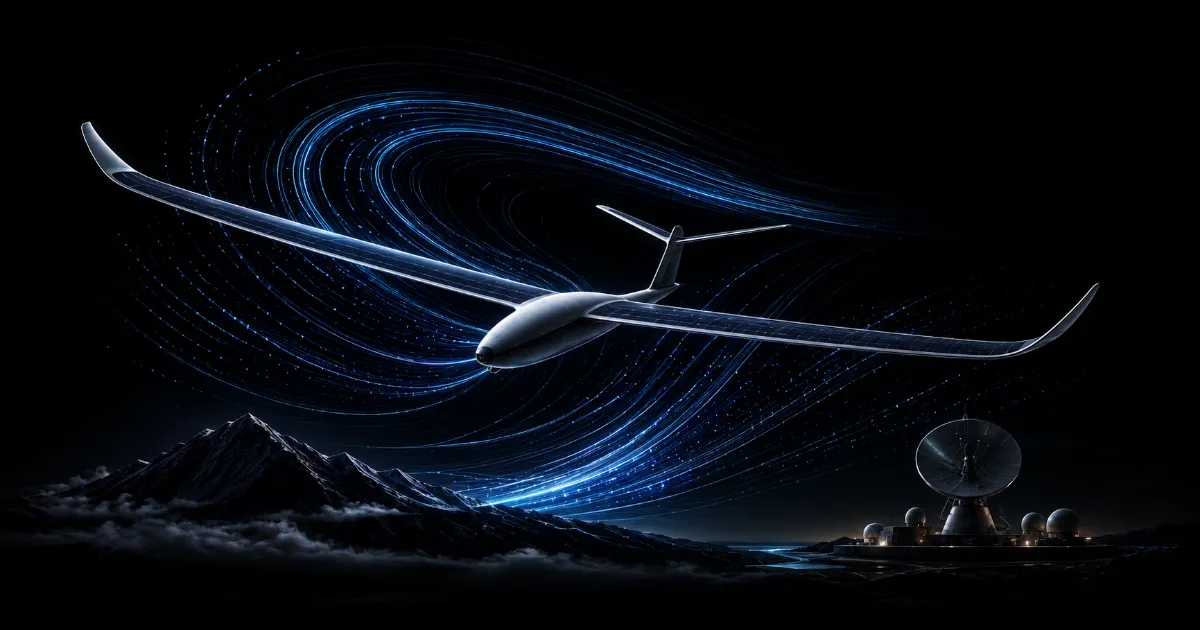
Traditional aerospace design has long been constrained by the fundamental trade-offs between payload capacity, energy storage density, and thermal endurance during continuous atmospheric flight. High Altitude Long Endurance platforms have historically relied on cumbersome photovoltaic arrays combined with massive electrochemical battery banks, limiting operational viability during extended winter months or high-latitude missions. Alteon is challenging these conventional paradigms by engineering autonomous aircraft designed to harvest kinetic energy directly from atmospheric wind currents to sustain continuous flight without landing.
Founded by young, visionary engineering talent, the startup has captured the attention of top-tier venture investors, securing significant early-stage funding to transition from numerical simulations to physical hardware prototyping. The core technical thesis centers on dynamic soaring and persistent altitude modulation, extracting mechanical energy from vertical wind shear gradients. This aerodynamic approach drastically reduces the dependency on purely solar-electric propulsion systems, opening entirely new operational windows for persistent aerial surveillance, environmental monitoring, and localized telecommunications relays.
Achieving year-long flight endurance requires pushing materials science, aerodynamic efficiency, and onboard autonomous control theory to unprecedented extremes. Structural components must exhibit extraordinary strength-to-weight ratios while withstanding continuous mechanical fatigue, severe ultraviolet radiation, and extreme sub-zero temperatures encountered in the upper troposphere and lower stratosphere. The engineering team utilizes ultra-lightweight carbon composite structures and advanced computational fluid dynamics models to optimize wing geometries for maximum lift-to-drag performance across fluctuating air densities.
Autonomous Flight Control and Wind Energy Harvesting Systems
Operating an aircraft autonomously for twelve consecutive months demands fault-tolerant flight control software capable of handling unpredictable meteorological phenomena without human intervention. Alteon utilizes sophisticated reinforcement learning algorithms running on localized edge-computing hardware to map atmospheric wind gradients in real time. The autopilot system dynamically adjusts control surface deflections, angle of attack, and flight trajectories to continuously extract kinetic energy from wind shear, converting atmospheric turbulence into propulsive thrust.
Sensory inputs are continuously ingested from multi-axis pitot tubes, inertial measurement units, and forward-looking LIDAR systems that detect atmospheric disturbances long before the aircraft enters them. This predictive control architecture allows the onboard flight computer to execute micro-maneuvers that stabilize the frame and optimize energy harvesting efficiency. If localized weather conditions become excessively volatile, the system executes pre-programmed evasion protocols to navigate around severe storm cells while maintaining net-positive energy budgets.
Developing such complex autonomous control loops requires exhaustive hardware-in-the-loop simulation testing prior to physical flight trials. The software engineering group subjects the guidance algorithms to simulated synthetic weather environments containing extreme wind shear, sudden pressure drops, and complete sensor failure scenarios. This rigorous verification process ensures that the autonomous agent can safely manage catastrophic anomalies and maintain stable flight dynamics across extended missions far beyond visual line of sight.
Power Management and Propulsion Architecture
While wind harvesting provides the primary kinetic energy vector during dynamic maneuvers, maintaining systems during calm air pockets necessitates a highly optimized auxiliary power management subsystem. Alteon integrates ultra-thin, flexible photovoltaic films seamlessly into the upper wing surfaces, maximizing solar energy capture during daylight hours. This harvested electrical energy is stored in advanced solid-state lithium-metal battery packs that offer superior volumetric and gravimetric energy densities compared to conventional commercial chemistries.
Propulsion is handled by highly efficient brushless DC electric motors coupled with large-diameter, low-RPM propellers designed to operate effectively in the thin air of high altitudes. The motor controllers feature customized thermal dissipation designs that prevent electronic junction overheating in cryogenic ambient conditions while maximizing electrical conversion efficiency. Every watt of power consumed by avionics, communication payloads, and thermal heaters is meticulously accounted for within a centralized energy budgeting firmware.
Thermal management in stratospheric environments presents severe engineering hurdles due to the lack of convective cooling in thin air combined with extreme radiative heat loss during orbital night cycles. The aircraft employs specialized phase-change materials and multi-layer insulation blankets to protect sensitive avionics bays and battery compartments from freezing. Active internal thermal circulation loops redistribute waste heat generated by the propulsion motor controllers to critical onboard microprocessors, ensuring reliable operation across extreme diurnal temperature swings.
Commercial Applications and Strategic Outlook
Persistent aerial platforms capable of remaining aloft for a year unlock transformative commercial and governmental use cases that currently require expensive satellite constellations or high-maintenance drone fleets. Earth observation, precision agriculture monitoring, border security surveillance, and emergency disaster response communications can be delivered at a fraction of the cost of low-earth orbit satellite deployments. Furthermore, unlike fixed-orbit satellites, these autonomous aircraft can be repositioned dynamically over specific geographic areas of interest on demand.
The backing from prominent tech investors such as Lachy Groom validates the audacious technological ambition of the startup and provides the necessary capital to build out advanced prototyping facilities. Transitioning from small-scale wind tunnel models to full-scale flight test articles represents the next critical milestone for the organization. As flight testing ramps up in controlled airspace, the validation of continuous wind-harvesting mechanics will dictate the pace of commercialization and potential defense or enterprise contract acquisition.
Ultimately, Alteon embodies a new wave of deep-tech engineering companies tackling seemingly impossible physical challenges through first-principles thinking and rapid iteration. By reimagining how aircraft interact with atmospheric energy, the company is not merely building a better drone; it is establishing a foundational technology stack for persistent atmospheric platforms. The success of this venture could redefine the boundaries of aerospace engineering and open the stratosphere to continuous, cost-effective commercial utilization.
Related Coverage on TechRoro
- [Startups] Generative Intelligence Redefines Interactive Entertainment By Empowering Players To Become Creators
- [Startups] Executive Mental Models For Artificial Intelligence Strategy
- [Startups] Navigating The Complex Realities Of Artificial Intelligence In Recruitment