

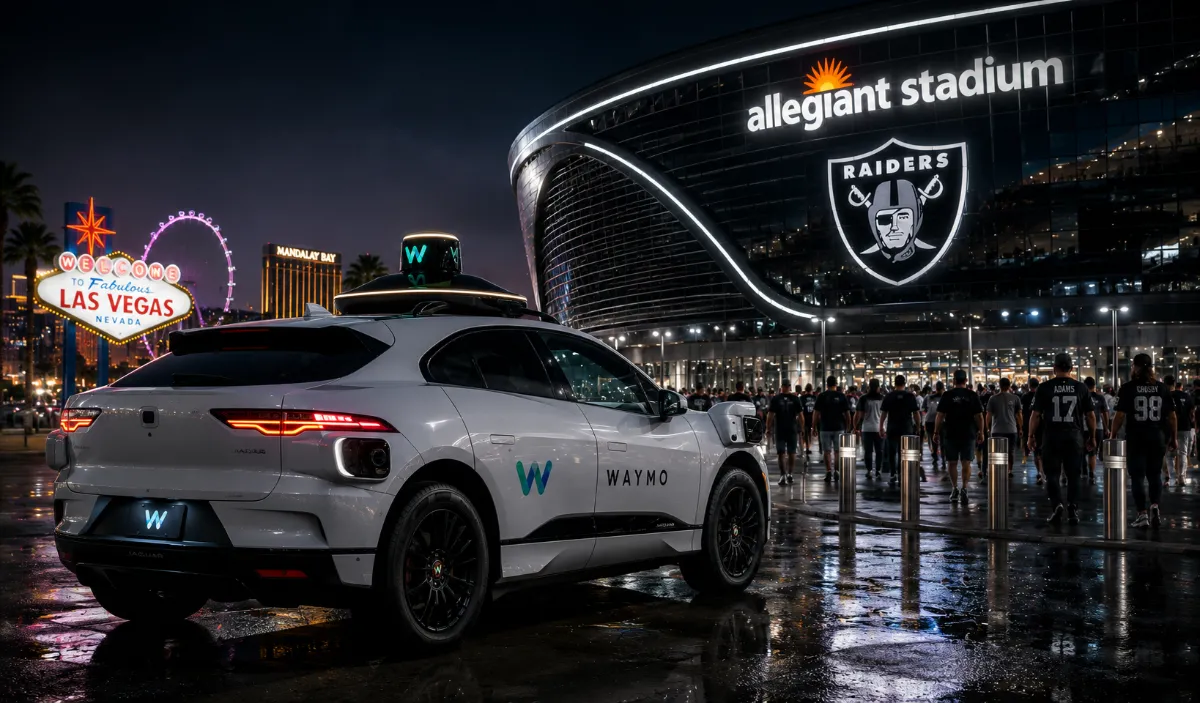
- Subject Overview: Waymo Autonomous Ridehailing Now Serves Las Vegas Raiders Fans at Allegiant Stadium — Key developments across Transportation.
- Technical Context: Detailed analysis of architectural changes, product capabilities, and engineering metrics.
- Industry Impact: Key implications for software developers, startup founders, and enterprise technology adopters.
The Autonomous Integration of Sports Logistics
The landscape of urban transportation is undergoing a seismic shift, and the intersection of professional sports and autonomous vehicle technology has finally arrived in Las Vegas. Waymo, the leader in Level 4 autonomous driving systems, has officially announced a strategic partnership with the Las Vegas Raiders and Allegiant Stadium. This collaboration seeks to solve the notorious congestion issues that plague high-capacity venues by offering fans a seamless, driverless alternative to traditional rideshares and private parking.
By embedding Waymo service zones directly into the logistics plan for the stadium, both organizations are creating a new blueprint for event-day traffic management. Instead of navigating jammed parking lots or waiting for surge-priced human-driven vehicles, attendees can leverage the Waymo app to summon an autonomous Jaguar I-PACE equipped with the Waymo Driver. This integration represents a major milestone in proving that autonomous technology can handle the complex, high-density traffic patterns associated with major entertainment events.
Technical Operations at Scale
Operating an autonomous fleet in the middle of tens of thousands of departing fans requires more than just standard navigation capabilities. Waymo has been refining its mapping and perception layers to handle the chaotic environment of a post-game stadium exit. The vehicles utilize a sophisticated array of LiDAR, radar, and high-resolution cameras to identify pedestrian movement, emergency vehicle signals, and temporary traffic control measures that are unique to the Allegiant Stadium campus.
| Performance Metric | Traditional Ridehailing | Waymo Autonomous Service |
|---|---|---|
| Driver Availability | Dependent on human supply | Constant fleet presence |
| Traffic Coordination | Reactive to crowds | Proactive sensor-based navigation |
| Surge Pricing | Highly variable | Stable algorithmic pricing |
| Reliability | Variable human error | Consistent sensor-driven safety |
- Sensor Fusion: The system continuously updates its spatial understanding of the stadium surroundings, ensuring that even if physical lanes shift, the vehicle maintains a safe path.
- Dynamic Routing: Waymo uses proprietary path planning to avoid bottlenecks, selecting optimal pick-up points that are safely distanced from the heaviest pedestrian flow.
- Fleet Telemetry: Real-time monitoring ensures that wait times are optimized by positioning vehicles ahead of the final whistle.
Improving Urban Mobility for Las Vegas
Las Vegas serves as the perfect testing ground for this technology. With its grid-based infrastructure and a constant influx of visitors who are unfamiliar with local traffic rules, the city benefits significantly from the predictable, rule-abiding nature of autonomous systems. By reducing the number of individual vehicles circling the stadium in search of parking, Waymo is effectively contributing to a more efficient use of urban space.
Beyond simple convenience, the partnership addresses the environmental impact of large-scale event transportation. Autonomous fleets in the Waymo network are entirely electric, aligning with the broader push toward sustainable urban mobility. By replacing short-distance gasoline-powered vehicle trips with electric autonomous rides, the collaboration supports the city’s long-term sustainability goals while simultaneously improving the fan experience.
Managing High-Density Traffic Environments
The challenge of navigating a venue that attracts upwards of 65,000 spectators is significant. Waymo engineers have spent considerable time working with local authorities to ensure that their software can recognize and respond to the specific signals given by traffic management personnel. This level of synchronization is essential for safety, as it allows autonomous vehicles to defer to human instructions during peak egress periods when traffic laws might be temporarily superseded for the sake of efficiency.
Furthermore, the system is designed to prioritize the safety of pedestrians above all else. During game days, the concentration of people in the immediate vicinity of Allegiant Stadium is extreme. Waymo’s software is calibrated to anticipate unexpected movements from distracted pedestrians, allowing the vehicles to maintain a conservative buffer that is often safer than the behavior of an average human driver in high-stress, stop-and-go traffic situations.
Scaling the Future of Event Logistics
The implications of this partnership extend far beyond Las Vegas. If successful, this model could become the gold standard for how professional sports teams across North America manage their stadium logistics. As teams seek to improve fan satisfaction and reduce the carbon footprint of their operations, autonomous ridehailing provides a compelling solution that combines technology with tangible utility.
Looking ahead, we can expect to see further integration between ridehailing apps and ticketing platforms. Imagine a world where purchasing a ticket to a Raiders game automatically offers the option to book a Waymo trip, ensuring your ride is waiting the moment you step out of the stadium. This level of friction-free travel is exactly what modern urban centers need to move away from the unsustainable reliance on private vehicles.
The Road Ahead
As this program matures, the focus will shift toward expanding capacity and optimizing the pickup-dropoff experience even further. Waymo is clearly positioning itself not just as a technology provider, but as an essential piece of urban infrastructure. For the Las Vegas Raiders and their fanbase, this collaboration marks the end of the stadium traffic nightmare and the beginning of a smarter, cleaner, and more efficient era of event attendance.


