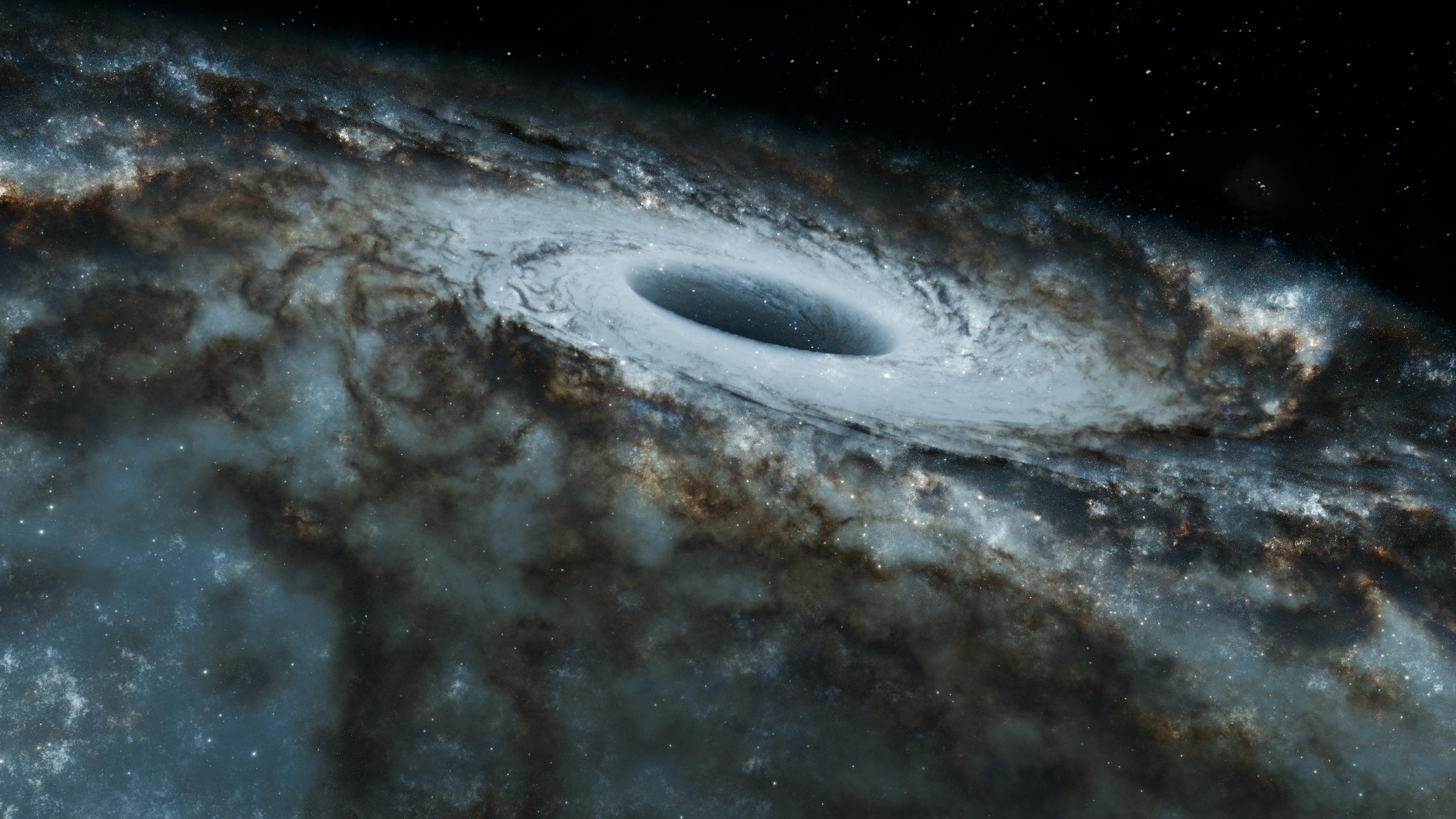

- Subject Overview: Mapping the Cosmos Building the Largest Interactive Celestial Atlas — Key developments across Energy.
- Technical Context: Detailed analysis of architectural changes, product capabilities, and engineering metrics.
- Industry Impact: Key implications for software developers, startup founders, and enterprise technology adopters.
The Scale and Engineering of the Survey
Constructing the largest map of the cosmos ever created required unprecedented engineering feats in both hardware design and software data processing. Operating from dedicated telescope facilities, automated survey systems spent years scanning the night sky night after night, capturing petabytes of raw optical and infrared imagery. Every single exposure had to be meticulously calibrated, stitching together billions of distinct pixels while correcting for atmospheric distortion, satellite trails, and galactic dust obscuration.
Processing a 5.6 trillion-pixel dataset demands advanced distributed computing clusters capable of executing complex image-stacking and astrometric calibration algorithms. Software engineers developed specialized machine learning pipelines to automatically classify stars, distant galaxies, quasars, and transient phenomena across the multi-petabyte archive. This automated classification is essential for distinguishing between faint background galaxies and foreground stellar artifacts within our own Milky Way galaxy.
Furthermore, the sheer volume of data generated by this survey necessitated the creation of distributed data distribution networks. Researchers around the globe required seamless access to the catalog without overwhelming central storage repositories. By leveraging modern cloud-native architectures and high-performance database indexing strategies, the consortium successfully transformed raw telescope observations into an easily queryable, high-performance celestial catalog for the global scientific community.
Interactive Visualization and Public Access
Translating petabytes of complex astronomical data into an interactive, user-friendly platform represents a triumph of modern science communication and software engineering. Rather than locking the colossal dataset behind academic paywalls or requiring specialized command-line tools, the project team engineered a web-based visualization interface. Users from professional astrophysicists to curious amateur stargazers can seamlessly zoom from the grand scale of the cosmic web down to individual star-forming regions with minimal latency.
Under the hood, this interactive map utilizes advanced rendering techniques borrowed from video game engines and geographic information systems. By dynamically streaming multi-resolution image tiles based on the user's viewport coordinates, the application delivers smooth 60 frames-per-second navigation across billions of celestial objects. This technical achievement bridges the gap between massive supercomputing outputs and accessible educational tools, democratizing space exploration for anyone with an internet connection.
Integrating spatial indexing structures such as hierarchical triangular meshes allows the software to execute complex spatial queries instantly. When a user clicks on a specific galaxy or nebula, the interface queries distributed metadata databases to pull relevant spectral classifications, redshift measurements, and historical observation notes in real time. This responsiveness transforms the map from a static picture into a dynamic, living encyclopedia of the visible universe.
Scientific Discoveries and Catalog Insights
Beyond its visual appeal, the comprehensive all-sky map serves as a goldmine for empirical astronomical research, yielding immediate discoveries regarding the large-scale structure of the universe. By mapping the precise coordinates and redshifts of four billion celestial objects, researchers can trace the intricate cosmic web of filaments and voids that dictate galaxy formation. These detailed statistical distributions provide stringent constraints on cosmological parameters, including the properties of dark matter and the expansion rate of the universe.
Moreover, the survey has cataloged thousands of previously unknown rare cosmic phenomena, including hyper-velocity stars ejected from galactic cores, distant quasars shining from the early epochs of cosmic dawn, and interacting galaxy pairs on the brink of galactic collision. Automated anomaly detection algorithms running on the dataset have flagged unusual stellar flares and variable stars, prompting targeted follow-up observations with space telescopes and ground-based observatories.
Cross-referencing this optical map with multi-wavelength surveys in the radio, X-ray, and infrared spectrums unlocks a holistic understanding of energetic astrophysical processes. Researchers can analyze how supermassive black holes at the centers of galaxies influence surrounding star formation through powerful relativistic jets and stellar winds. Such multi-messenger and multi-spectral correlations are critical for assembling a complete evolutionary history of our universe.
Future Horizons in Astronomical Cartography
As successful as this 5.6 trillion-pixel survey is, it represents merely a stepping stone toward even more ambitious observational undertakings currently under development. Next-generation telescopes boasting wider fields of view and ultra-sensitive digital sensors will soon begin surveying the sky with even greater depth and temporal resolution. These upcoming projects will track transient events in real time, creating moving-picture maps of the dynamic night sky rather than static snapshots.
Managing the exponential growth of astronomical data will require continuous innovation in artificial intelligence, edge computing, and automated robotic observatory management. Future astronomers will rely increasingly on autonomous algorithms to prioritize targets of interest and dispatch telescope slew commands within seconds of an anomaly occurring. This synergy between big data infrastructure and observational astronomy ensures that our digital map of the cosmos will continue to expand in fidelity and scope.
Ultimately, completing and publishing this monumental map underscores humanity's relentless drive to comprehend our place in the cosmos. By turning raw photons captured by glass lenses into an explorable digital universe, the project inspires future generations of scientists, engineers, and dreamers. The universe is vast, intricate, and largely unknown, but tools like this bring humanity one step closer to mapping the infinite.
Related Coverage on TechRoro
- [Energy] Biohybrid Robotics And Insect Integration Engineering For Urban Disaster Recovery
- [Energy] Geopolitical Scapegoating and the Truth Behind American Data Center Opposition
- [Startups] Trust Bank Deploys Advanced Artificial Intelligence for Card Spending Analytics