- Subject Overview: Unlocking the Dark Dimension Theoretical Physics and Cosmological Evolution — Key developments across Energy.
- Technical Context: Detailed analysis of architectural changes, product capabilities, and engineering metrics.
- Industry Impact: Key implications for software developers, startup founders, and enterprise technology adopters.
The Changing Dynamics of Cosmic Expansion
For decades, the standard model of cosmology rested on the bedrock assumption that dark energy was a cosmological constant, meaning its density remained completely uniform and unchanging as space expanded. This framework successfully predicted the accelerated expansion of the universe driven by this mysterious repulsive force. However, recent data collected from massive sky surveys and baryon acoustic oscillation measurements have introduced subtle anomalies that challenge this long-held certainty.
Researchers analyzing these vast datasets have noticed tantalizing statistical hints that dark energy might actually be evolving over time, specifically weakening in its overall potency. If dark energy is indeed a dynamical field rather than a static cosmological constant, theoretical physicists must identify the underlying mechanisms driving this decay. Such a paradigm shift requires looking beyond the standard four dimensions of spacetime into more exotic frameworks that can account for energy transfer across hitherto unobserved physical realms.
To explain why dark energy would lose strength, scientists have turned their attention toward potential interactions between the universe's two hidden sectors, namely dark energy and dark matter. While both components remain largely invisible and interact only weakly or not at all with ordinary baryonic matter, they make up approximately ninety-five percent of the total mass-energy budget of the cosmos. Understanding how these two enigmatic forces might influence each other is currently one of the most pressing challenges in modern theoretical astrophysics.
The Theoretical Framework of the Dark Dimension
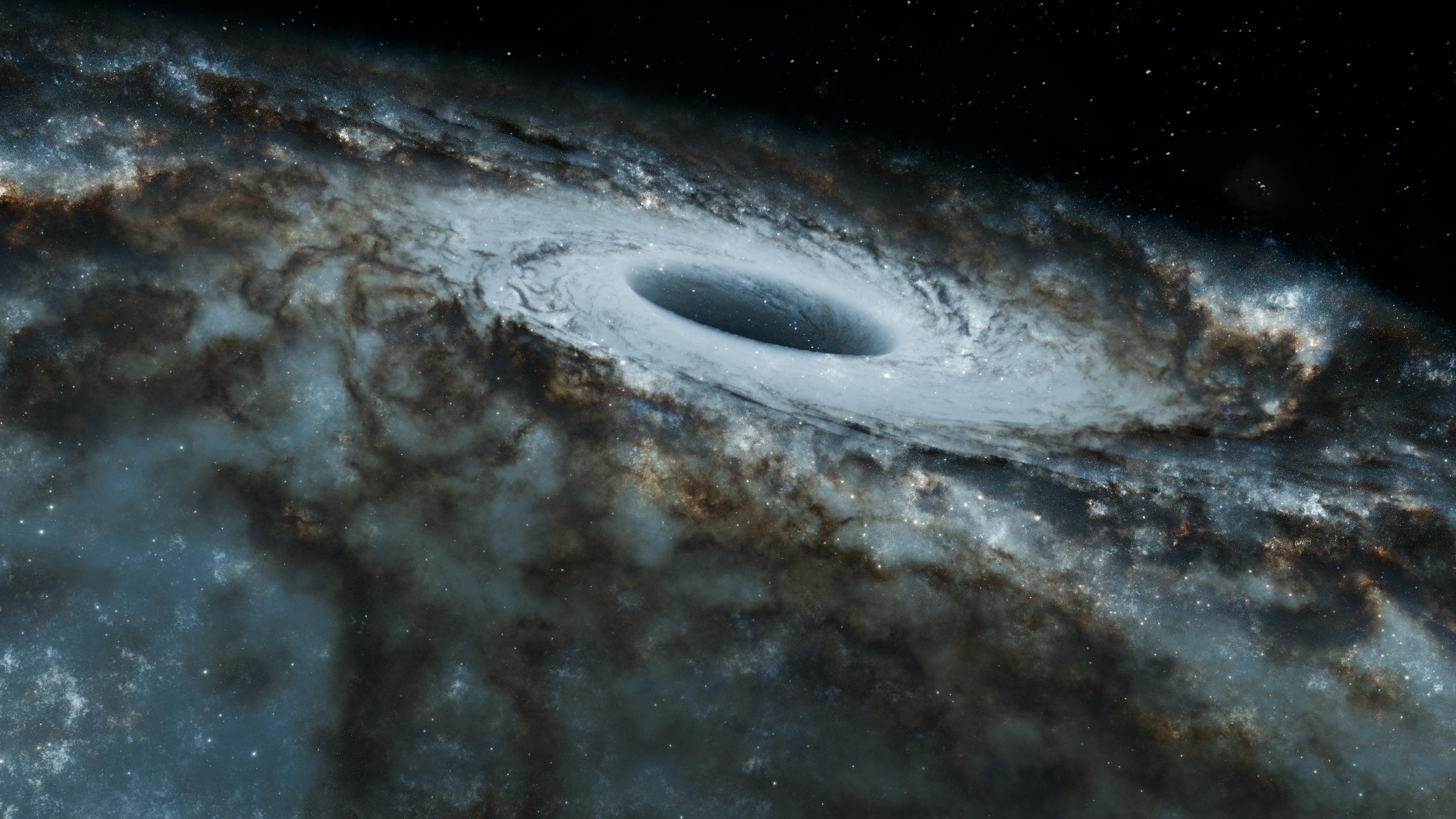
To bridge the gap between dark energy and dark matter, theoretical physicists have proposed the existence of a compactified fifth dimension, frequently referred to in the literature as the dark dimension. In string theory and related higher-dimensional frameworks, our observable four-dimensional universe could be embedded within a larger multidimensional bulk. This dark dimension would provide a geometric arena where dark matter particles can interact with the fields responsible for dark energy through subtle gravitational or scalar forces.
Within this higher-dimensional construct, the scale of the dark dimension is not infinitely small on a subatomic level, nor is it macroscopic; instead, it is estimated to be on the micrometer scale. This specific size emerges naturally when tying the properties of dark energy to the mass of the neutrino or the vacuum energy density of the universe. By constraining the geometry of this extra dimension, theorists can calculate precise rates of energy exchange between the dark energy field and dark matter particles without violating existing gravitational tests.
Furthermore, the introduction of this dark dimension offers a compelling solution to the infamous cosmological constant problem, which has plagued physics for over half a century. Instead of requiring a fine-tuning of vacuum energy to an absurdly precise degree, the higher-dimensional dynamics naturally dilute the effective energy density over cosmological timescales. As the universe expands, subtle leakage of energy from our visible brane into the dark dimension could account for the observed reduction in dark energy strength.
Observational Challenges and Future Surveys
Validating the existence of a dark dimension requires pushing current observational astronomy and particle physics to their absolute limits. Because the proposed extra dimension operates primarily on cosmological scales or through subtle micro-scale gravitational deviations, detecting its signature demands unprecedented precision in mapping the distribution of galaxies. Next-generation instruments like the Dark Energy Spectroscopic Instrument and space-based observatories are currently collecting the necessary data to test these exotic theoretical predictions.
One of the primary observational targets is the growth rate of cosmic structures over time. If dark matter is actively losing or gaining energy through interactions within the dark dimension, the rate at which galaxies cluster together will deviate slightly from the standard cosmological model predictions. Astrophysicists utilize cosmic microwave background measurements and weak gravitational lensing surveys to isolate these tiny anomalies, separating genuine higher-dimensional physics from instrumental noise and astrophysical systematic errors.
Collaboration between high-energy particle physicists and observational cosmologists is crucial for constraining the parameter space of the dark dimension hypothesis. Collider experiments searching for missing energy signatures and dark photon candidates complement astronomical observations by testing whether similar dimensional leakage occurs at microscopic scales. Synthesizing data from both the largest and smallest scales of nature represents the most promising pathway toward solving the dark sector mystery.
Strategic Outlook for Modern Cosmology
As observational techniques continue to improve, the field of cosmology stands on the precipice of a major revolution that could match or exceed the paradigm shifts brought by general relativity and quantum mechanics. The possibility that dark energy and dark matter are intertwined within a dark dimension forces scientists to rethink the foundational geometry of the universe. Embracing higher-dimensional physics is no longer just an elegant mathematical exercise but a necessary step to reconcile conflicting astronomical datasets.
Looking ahead, the next decade of space exploration and ground-based telemetry will likely confirm or refute the dynamical nature of dark energy. Should future surveys definitively prove that dark energy is weakening due to multidimensional interactions, humanity will gain a radically expanded understanding of reality. This discovery would not only illuminate the true nature of ninety-five percent of the universe but also pave the way for entirely new branches of physics and engineering.
Related Coverage on TechRoro
- [Energy] Biohybrid Robotics And Insect Integration Engineering For Urban Disaster Recovery
- [Energy] Geopolitical Scapegoating and the Truth Behind American Data Center Opposition
- [Infrastructure] Unlocking High-Performance Generative Workloads With GLM-5.3 and DigitalOcean Partnership