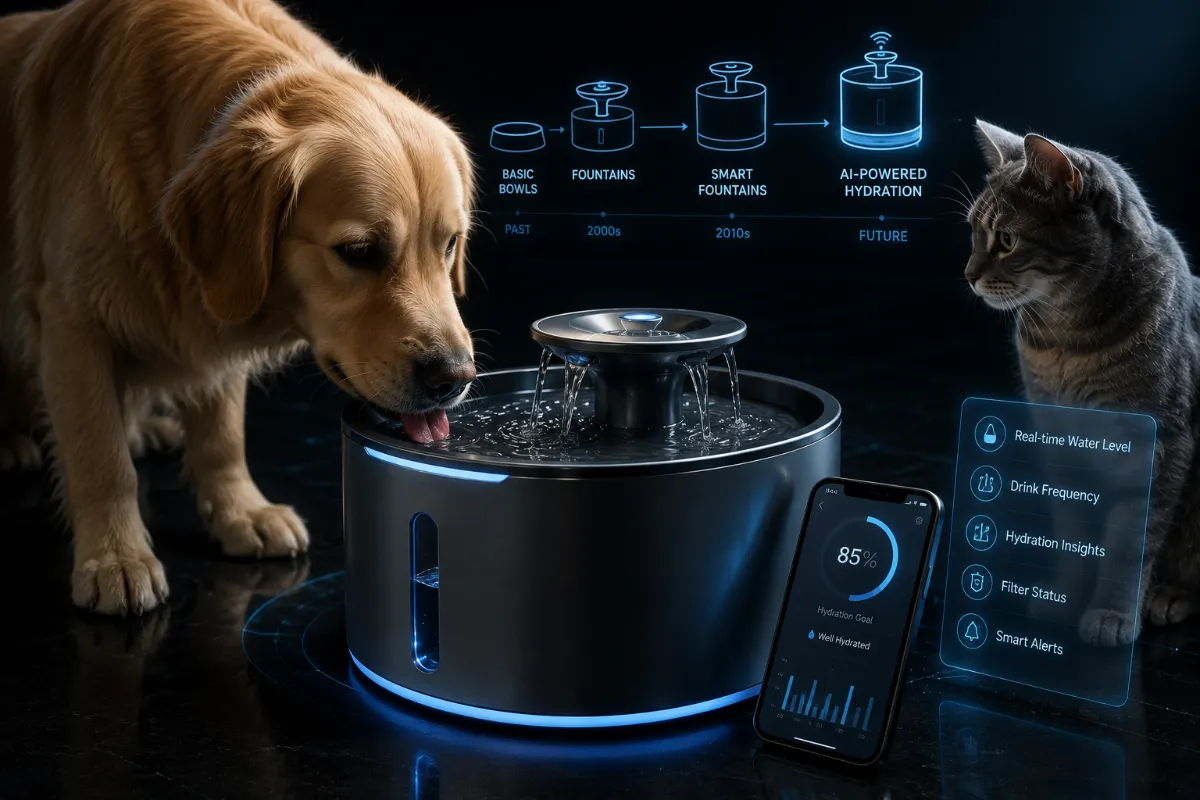
- Subject Overview: The Evolution of Smart Hydration Systems for Modern Pet Care — Key developments across Gadgets.
- Technical Context: Detailed analysis of architectural changes, product capabilities, and engineering metrics.
- Industry Impact: Key implications for software developers, startup founders, and enterprise technology adopters.
Understanding Pet Hydration Requirements
Domestic cats are notorious for their low thirst drive, an evolutionary trait stemming from their ancestors who obtained the bulk of their hydration through raw diets. In a modern indoor environment, this often leads to chronic dehydration, which can manifest as kidney issues and urinary tract complications. The introduction of high-end, electrified water fountains has changed the landscape of pet care by utilizing natural behavioral triggers—specifically the appeal of running water—to encourage consistent hydration.
Modern smart fountains, such as those produced by Petlibro (petlibro.com) and Petkit (petkit.com), go beyond the basic concept of a reservoir. They incorporate fluid dynamics that mimic natural streams, which serves as a powerful psychological nudge for feline users. When a pet encounters a fountain that provides a constant, aerated flow, their instinctual preference for fresh, oxygenated water takes over, leading to significantly higher consumption rates compared to stagnant bowl-based systems.
Advanced Filtration and Water Quality
At the core of the 2026 generation of pet fountains is an emphasis on multi-stage purification. Water quality is not just about clarity; it is about managing the chemical and biological load of the water. These devices typically employ a combination of mechanical, chemical, and biological filters. A stainless steel or high-grade plastic mesh removes hair and debris, while an activated carbon layer absorbs chlorine, heavy metals, and odors that cats find repellent.
- Mechanical Filtration: Captures fur and particulate matter, protecting the pump mechanism.
- Chemical Filtration: Activated carbon removes common municipal water impurities.
- Ion Exchange Resin: Softens water, which is essential for pets prone to crystal formation.
By ensuring that every sip is free of contaminants and the 'stale' taste often found in tap water, these systems provide a clinical-grade advantage in preventative care for pets.
Ergonomic Engineering and User Interface
Designing a pet fountain involves a delicate balance between ease of maintenance and the physical dimensions of the pet. A poorly designed fountain can cause 'whisker fatigue' if the basin is too narrow, causing the cat to avoid the device entirely. Modern manufacturers have leaned into wide-surface designs that respect feline anatomy while housing the complex electrical components safely beneath the waterline.
Key Takeaway: Choosing a smart fountain requires prioritizing flow quietness and filter accessibility, as the user experience for the cat is defined by the absence of distracting pump noise and the presence of fresh, taste-neutral water.
These units are also increasingly modular. The ability to disassemble the pump and reservoir without specialized tools is a requirement for modern households. By standardizing the form factor of internal components, brands like Oneisall (oneisall.com) have simplified the process of routine deep cleaning, which is essential to prevent biofilm buildup—the primary culprit behind fountain-related health issues.
Feature Comparison of Leading Smart Hydration Systems
| Feature | Entry-Level Fountains | Smart Tier Fountains | Advanced AI Integration |
|---|---|---|---|
| Material | Basic Plastic | Stainless Steel / BPA-Free | Medical Grade Polymer |
| Filtration | Simple Mesh | Multi-Stage Carbon | UV-C Sterilization |
| Connectivity | None | Low Battery Alerts | Health Tracking Apps |
| Flow Control | Single Speed | Adjustable | Motion Activated |
Connectivity and Health Monitoring
We are currently witnessing the integration of IoT into the pet hydration space. Premium models now offer connectivity via mobile applications, providing owners with real-time data on their pet’s drinking frequency. By using motion sensors or weight-sensitive bases, these devices can log when a pet visits the fountain. This is invaluable for pet owners managing specific health conditions, as a drop in drinking frequency can serve as an early warning sign for underlying illness.
Furthermore, the integration of UV-C light sterilization within the water flow path ensures that the water remains sterile even if the fountain is not cleaned for several days. This technology, borrowed from human water purification systems, effectively destroys the DNA of bacteria and viruses, providing a layer of security that traditional manual cleaning cannot replicate.
The Roadmap for Pet-Tech Infrastructure
As the smart home ecosystem expands, the role of these fountains will shift from standalone gadgets to nodes in a broader pet health network. We anticipate future iterations that sync with automated feeders and activity trackers to provide a holistic view of a pet's daily metabolic health. This data-driven approach is the future of veterinary care, moving from reactive treatments to proactive management.
The Big Picture
Investing in a premium water fountain is one of the most effective ways to leverage technology to extend the health span of a pet. By combining sophisticated fluid dynamics with advanced filtration, these devices tackle the primary environmental factors that contribute to chronic dehydration. As these products continue to mature, the focus will likely remain on reducing maintenance effort while increasing the granularity of the health data collected. For the discerning owner, the market now offers solutions that are as effective as they are unobtrusive.
Sources
Petlibro (petlibro.com), Petkit (petkit.com), Oneisall (oneisall.com)