- Subject Overview: Why Peggle Remains the Gold Standard for Digital Joy and Kinetic Satisfaction — Key developments across Gaming.
- Technical Context: Detailed analysis of architectural changes, product capabilities, and engineering metrics.
- Industry Impact: Key implications for software developers, startup founders, and enterprise technology adopters.
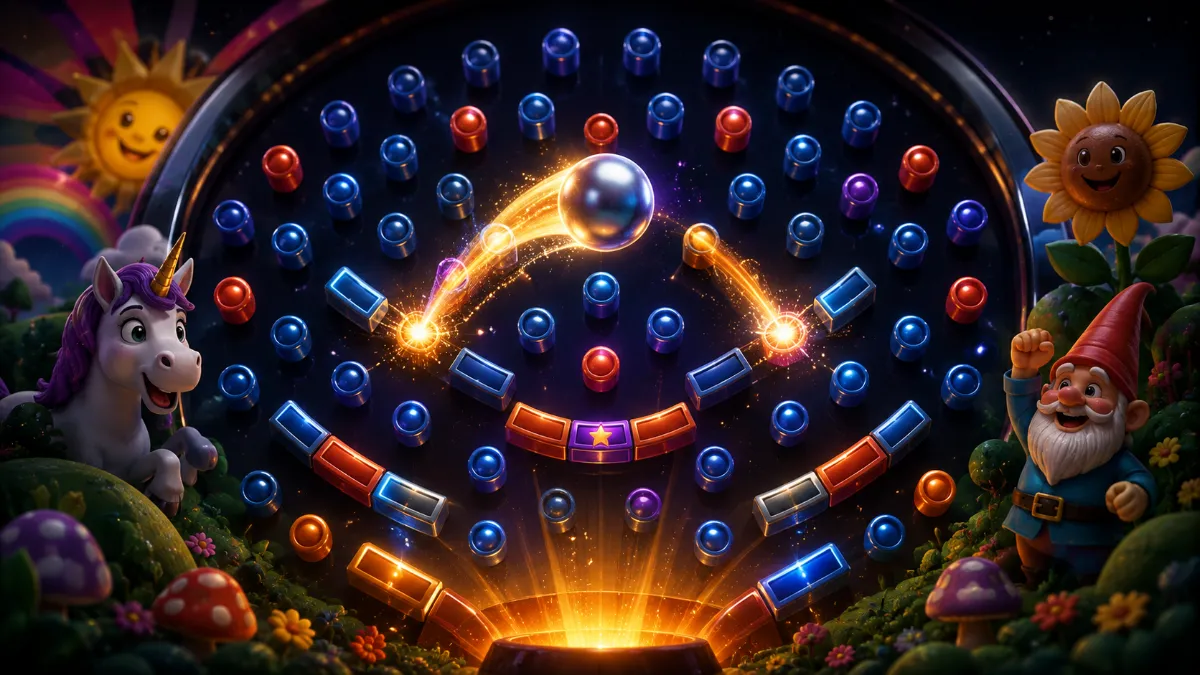
For nearly twenty years, the gaming industry has chased the ghost of PopCap Games' masterpiece. Peggle was more than just a puzzle game; it was a carefully calibrated engine of audio-visual feedback that rewarded players for every single collision. When a ball hit a peg, the game didn't just register a point. It played a musical note, shifted the color palette, and eventually launched into a triumphant rendition of Ode to Joy. This psychological feedback loop created a unique sense of accomplishment that many modern mobile and PC titles have failed to replicate until now.
The Anatomy of a Perfect Physics Puzzle
The secret to the original game's success lies in its rigid adherence to Newtonian physics draped in a veneer of chaotic, unpredictable fun. Designers spent months refining the friction coefficients and bounce angles of the pegs to ensure that every shot felt fair yet slightly miraculous. When a player clears the final orange peg, the screen slows down and zooms in, turning a simple physics simulation into a high-stakes dramatic performance. This specific mechanic remains the gold standard for game feel, yet few developers have dared to iterate upon it without devolving into overly complex systems that lose the charm of the original experience.
| Design Element | Traditional Puzzle | Peggle Approach | Player Impact |
|---|---|---|---|
| Physics Engine | Predictable Grid | Randomized Bounce | High Surprise Factor |
| Audio Feedback | Generic Bloops | Dynamic Orchestration | Intense Satisfaction |
| Goal Clarity | Implicit | Explicit Targeting | Reduced Frustration |
Solving the Kinetic Feedback Gap
Recent attempts to revive the genre have often stumbled by overcomplicating the inputs. Players are not looking for complex RPG mechanics or deep narrative trees when they seek the joy of peg-clearing; they want the tactile sensation of a projectile navigating a board. The most successful modern iterations are stripping back the bloat and focusing on the core physics interactions. By prioritizing frame-perfect collision detection and layered sound design, these new developers are finally bridging the gap between legacy titles and modern hardware capabilities.
- Precision Haptics: Modern controllers allow for granular feedback that heightens the tension of a long-running ball trajectory.
- Dynamic Lighting: Real-time ray tracing or simple bloom effects can transform a static board into a pulsating neon playground.
- Adaptive Difficulty: Ensuring the final shot remains tense without becoming impossible is the key to player retention.
Key Takeaway: The essence of the physics puzzle genre isn't found in its complexity, but in the deliberate balance between chaos and controlled victory.
Why Developers Struggle with Simplicity
It is an ironic reality of game development that building a simple, intuitive experience is often harder than building a complex one. When a game is this simple, every frame counts. If the physics feel slightly off, or if the sound cues are out of sync by even a few milliseconds, the magic vanishes. Many studios attempt to add power-ups or secondary objectives to justify a game's existence, but these features often mask the underlying lack of polish in the main physics engine. To truly honor the genre, one must commit to the fundamental joy of the bounce.
The Road Ahead for Arcade Classics
The resurgence of interest in these mechanics suggests a wider shift in the gaming market toward bite-sized, high-dopamine experiences. As players grow tired of the 100-hour open-world grind, the demand for games that can be enjoyed in ten-minute bursts is skyrocketing. We are entering a phase where the indie ecosystem is reclaiming the arcade aesthetic, blending retro sensibilities with modern engine power. If these new titles can maintain the sensory integrity of their predecessors, we may see a full-scale renaissance of the physics-puzzle genre in the coming years.