- Subject Overview: US Army Unit Leverages GTA 6 Launch to Bolster Reenlistment Incentives — Key developments across Gaming.
- Technical Context: Detailed analysis of architectural changes, product capabilities, and engineering metrics.
- Industry Impact: Key implications for software developers, startup founders, and enterprise technology adopters.
Executive Overview and Core Hook
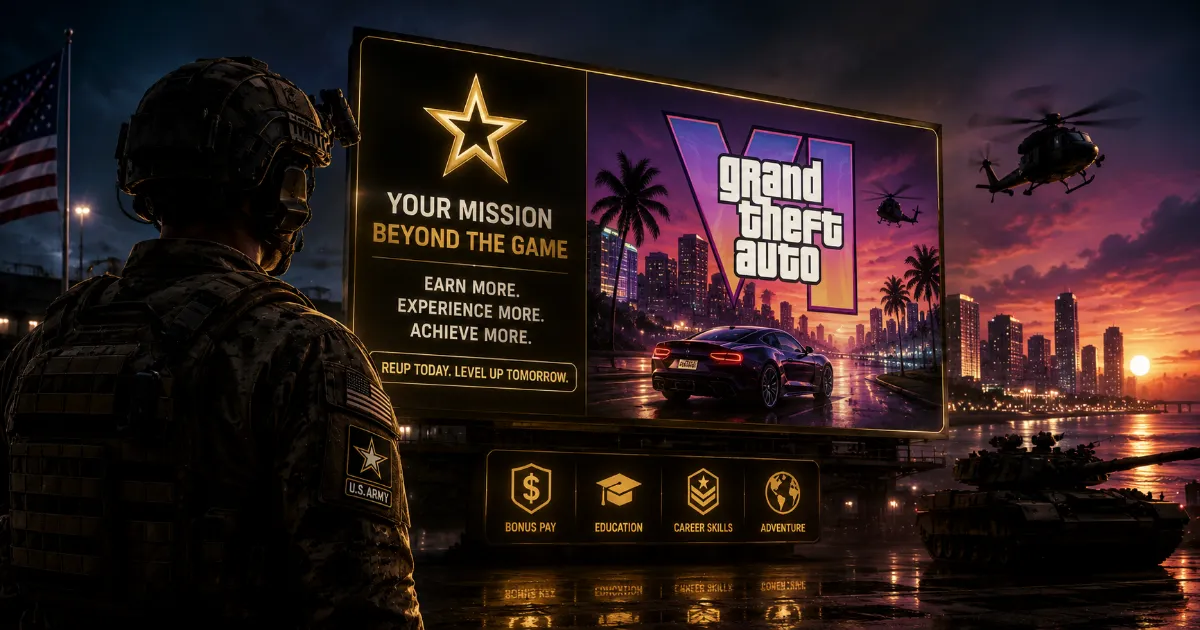
In an era defined by rapid digital transformation and shifting generational priorities, the United States military is continually seeking innovative methods to engage with a younger demographic. Traditional recruitment and retention strategies, which historically relied on patriotic appeals, financial bonuses, and long-term career stability, are increasingly being supplemented by localized, culturally resonant incentives. A recent, unconventional initiative from a US Army unit stationed in Georgia serves as a prime example of this pivot. By tying the high-stakes decision of reenlistment to the cultural phenomenon surrounding the upcoming release of Grand Theft Auto 6, leadership is acknowledging that the modern soldier’s life is deeply integrated with digital entertainment and social connectivity.
This specific incentive—a guaranteed four-day pass during the game’s launch window—is a strategic maneuver designed to tackle the ongoing challenge of personnel retention. Military service is inherently demanding, often characterized by rigorous schedules and limited personal autonomy. By offering a temporal reward that allows soldiers to participate in a globally anticipated cultural moment, the unit is effectively humanizing the institutional requirements of service. This strategy highlights a growing awareness that for many service members, maintaining a connection to civilian hobbies and digital trends is essential for mental well-being and overall job satisfaction. The decision to leverage a specific pop-culture tentpole event demonstrates a sophisticated understanding of the current socio-technical landscape, where the boundary between professional duty and personal digital life is increasingly porous.
Technical Breakdown and Architecture
The mechanics behind this incentive program are grounded in the principles of human resource management and operational psychology. At its core, the policy functions as a structured reward system that converts professional commitment—in the form of extended service contracts—into operational flexibility. The unit’s leadership has essentially created a micro-incentive framework where time off is utilized as a form of currency. By synchronizing this time off with the release window of Grand Theft Auto 6, the administration is tapping into the psychological concept of the scarcity heuristic; because the game launch is a singular, time-sensitive event, the perceived value of the four-day pass is significantly amplified compared to a standard, non-event-linked leave request.
From a logistical perspective, the implementation of such a policy requires a high degree of coordination at the company and battalion levels. Commanders must ensure that operational readiness is maintained while granting localized time off. This involves a shift in how duty rosters are managed, specifically moving toward a more flexible, demand-driven scheduling model. The infrastructure supporting this includes internal communication channels where soldiers are informed of the criteria for the reenlistment bonus, ensuring that the offer is transparent and clearly tied to the administrative action of signing an extension. The technical success of this initiative relies on the ability of local leadership to manage personnel throughput, ensuring that the influx of leave requests during the launch window does not compromise the unit’s overall mission-essential task list or readiness requirements.
Markdown Comparison Table and Key Metrics
| Feature | Traditional Retention Incentive | Cultural Event-Based Incentive |
|---|---|---|
| Primary Motivator | Financial / Long-term benefit | Immediate lifestyle benefit |
| Temporal Scope | Multi-year commitment | Short-term temporal gain |
| Psychological Impact | Security-based | Experience-based |
| Administrative Cost | High (Budget allocation) | Low (Scheduling flexibility) |
| Engagement Potential | Low (Abstract) | High (Relatable) |
- The use of time-based rewards increases immediate psychological gratification among younger cohorts.
- Integrating civilian milestones into military service schedules improves the perception of organizational flexibility.
- Data-driven scheduling allows units to offer unique perks without requiring significant changes to the base budget.
- High-profile cultural events act as force multipliers for recruitment and retention marketing campaigns.
Developer and Ecosystem Impact
For software engineers and systems architects working within the Department of Defense and its associated defense industrial base, this development signals a broader shift in how military organizations perceive the digital ecosystem. As the military continues to integrate more simulation-based training and cloud-native software environments, the culture of the workforce is becoming increasingly tech-literate. The fact that an Army unit is publicly aligning itself with a major gaming release underscores the reality that the modern soldier is a digital native. For defense contractors, this means that the software tools, training platforms, and internal communication systems they build must be designed with user experience in mind, mirroring the high-quality interfaces and engaging design patterns found in modern consumer gaming.
Furthermore, this move impacts the broader ecosystem of military human resources. As units adopt more flexible, incentivized models for retention, there is a growing need for software solutions that can manage, track, and optimize these individualized incentive packages. Engineers are tasked with building robust, secure, and transparent systems that can handle complex scheduling requests while maintaining the strict operational security requirements of the Department of Defense. The synergy between high-end digital entertainment and military life suggests that future recruitment platforms may lean heavily on gamification, personalization, and real-time interaction to remain competitive in a talent market that is increasingly focused on the quality of life and work-life integration.
Strategic Market Outlook and Analysis
The strategic implications of this policy extend far beyond the borders of a single Georgia-based unit. As the global labor market tightens, the military faces stiff competition from private-sector tech companies that offer flexible working arrangements, remote options, and generous leave policies. By adopting tactics that resemble consumer-facing loyalty programs, the US Army is entering a new phase of institutional adaptation. This approach reflects a trade-off: the institution gives up a small amount of control over the daily schedule in exchange for the long-term benefit of retaining a trained professional.
Market competition for personnel is now multi-dimensional. It is no longer just about the salary or the benefits package; it is about the culture and the quality of the daily experience. Critics might argue that such incentives trivialize the gravity of military service. However, proponents suggest that these measures are essential to bridge the disconnect between a modern generation and the traditional military hierarchy. The adoption of pop-culture-driven incentives is likely to expand, particularly as digital natives move into higher-ranking leadership positions. This trend suggests a future where military retention strategies are increasingly modular, personalized, and tuned to the specific demographic trends of the incoming force. As long as these incentives do not interfere with core mission objectives, they represent a pragmatic evolution in military human capital management.