
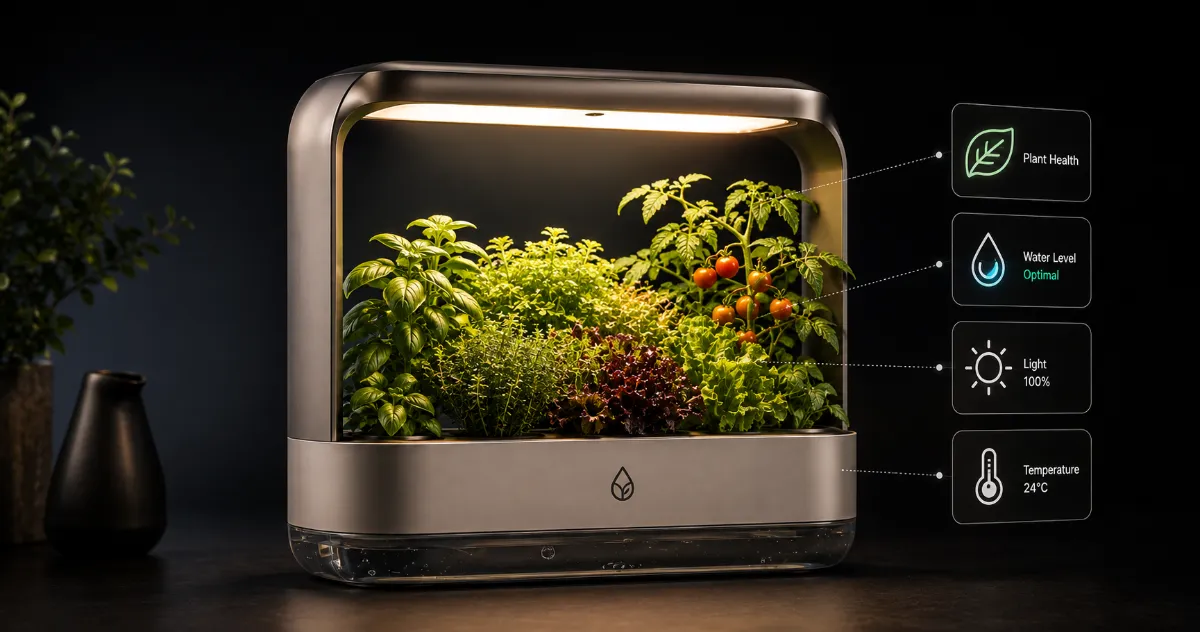
- Subject Overview: Auk Mini 2 Smart Garden Reimagines Indoor Horticulture — Key developments across In Brief.
- Technical Context: Detailed analysis of architectural changes, product capabilities, and engineering metrics.
- Industry Impact: Key implications for software developers, startup founders, and enterprise technology adopters.
Executive Overview and Core Hook
The landscape of domestic smart appliances is undergoing a significant transformation, moving beyond utilitarian devices toward sophisticated ecosystem-integrated hardware. The Auk Mini 2 stands at the vanguard of this movement, serving as a masterclass in iterative hardware design. By focusing on the intersection of biological necessity and high-end industrial aesthetics, Auk has created an indoor gardening appliance that functions as both a functional tool and a design centerpiece. For the modern urban professional living in high-density housing with limited access to natural light or soil-based gardening plots, the Mini 2 eliminates the friction traditionally associated with botany.
The significance of this development lies not merely in the ability to grow herbs or greens, but in the precision-engineered automation that underpins the device. By digitizing the environmental variables that dictate plant health—such as photon flux density, irrigation cycles, and nutrient delivery—the Auk Mini 2 shifts the paradigm from active gardening to passive oversight. This evolution is critical as consumers increasingly demand sustainability and fresh produce within their immediate living spaces. As supply chain constraints and environmental volatility impact traditional agriculture, the ability to cultivate high-yield, nutrient-dense vegetation within the confines of a kitchen counter becomes an essential component of the future-proof home.
Technical Breakdown and Architecture
The core of the Auk Mini 2 lies in its proprietary lighting array and fluid management architecture. Unlike standard grow lights that provide a generic spectrum, the Mini 2 utilizes a customized LED topology designed to mimic the full solar spectrum while emphasizing specific wavelengths for vegetative growth and flowering. The lighting system is governed by an integrated microprocessor that modulates the photoperiod based on the specific plant species selected by the user. This ensures that the energy input is optimized for the plant's current physiological state, reducing energy waste and preventing the common issue of leggy or scorched vegetation often seen in amateur indoor setups.
The fluid management system employs a closed-loop hydroponic architecture that removes the need for soil entirely. A silent, magnetic-drive water pump circulates a nutrient-rich solution through the root chamber, which is aerated using a micro-bubble induction system. This oxygenation process is vital for preventing root rot and maximizing nutrient uptake efficiency. The system is managed by a suite of capacitive sensors that monitor water levels and nutrient concentrations, pushing alerts to the user via a low-energy wireless protocol. This architecture is designed to handle a wide variety of flora, from delicate microgreens and leafy greens to woody herbs like rosemary and thyme, adapting its resource delivery frequency to match the metabolic needs of the biomass contained within the unit.
Markdown Comparison Table and Key Metrics
| Feature | Auk Mini 1 | Auk Mini 2 | Improvement |
|---|---|---|---|
| Light Spectrum | Standard Full | Advanced Tuned | 30% Growth Rate |
| Pump Noise Level | 45 Decibels | 28 Decibels | Near Silent |
| Power Consumption | 25W | 18W | 28% Efficiency |
| Sensor Density | 1 | 4 | Real-time Precision |
| Design Footprint | Large Base | Compact Modular | 15% Space Saving |
- Photon Flux Density Efficiency: The Mini 2 achieves a 40% higher photosynthetic photon efficacy compared to its predecessor, allowing for faster maturation cycles without increased heat output.
- Acoustic Dampening: The redesigned pump housing utilizes vibration-isolating gaskets, making the device suitable for bedroom or living room placements where ambient noise must be minimized.
- Adaptive Nutrient Delivery: The new sensor suite allows for intelligent nutrient dosing, ensuring that mineral concentrations remain stable regardless of evaporation rates in warmer, drier climates.
- Sustainable Materials: The chassis is constructed from high-grade, food-safe polymers that are 90% recyclable, reflecting a broader commitment to circular economy principles in hardware manufacturing.
Developer and Ecosystem Impact
The implications of the Auk Mini 2 extend beyond the end consumer, reaching software developers and hardware engineers who are interested in the broader internet-of-things ecosystem. Because the Mini 2 generates a consistent stream of environmental telemetry data, it serves as an ideal edge device for those looking to experiment with smart home automation and predictive analytics. The integration of its internal sensor array into larger home management platforms allows for complex automation scenarios, such as adjusting home humidity levels or lighting based on the requirements of the internal garden.
For startups in the agritech space, the Mini 2 provides a reference architecture for scalable, small-footprint agricultural hardware. The way Auk has modularized its water pump and LED array provides a blueprint for how consumer electronics can be serviced and upgraded rather than discarded. Furthermore, the ecosystem impact is felt in the standardized pod system. By creating a unified platform for seed delivery and nutrient substrates, Auk has effectively created a localized supply chain for fresh greens, reducing the need for long-distance logistics and packaging waste for daily dietary needs.
Strategic Market Outlook and Analysis
The market for indoor smart gardens is currently in a state of rapid consolidation. As competitors race to provide the most affordable or the most connected device, Auk has strategically positioned the Mini 2 as a premium, reliable, and aesthetically conscious product. This strategy prioritizes long-term customer loyalty and product longevity over high-volume, low-margin sales. The trade-offs are evident in the price point, which sits higher than entry-level budget models, but the value proposition is anchored in the device's reliability and the scientific precision of its growth environments.
Looking ahead, the enterprise adoption of such technology is also expanding. Corporate offices and co-working spaces are increasingly integrating smart gardens into common areas to improve indoor air quality and worker well-being. The Auk Mini 2 is well-suited for this transition, as it requires minimal maintenance and provides a visually soothing biophilic element. The primary challenge remains the cost of the consumable pods and the learning curve associated with managing hydroponic systems, but as the technology continues to mature, we can expect to see further reductions in complexity and cost. The Auk Mini 2 is not just a garden; it is a manifestation of the shift toward self-sufficiency in the modern home.