
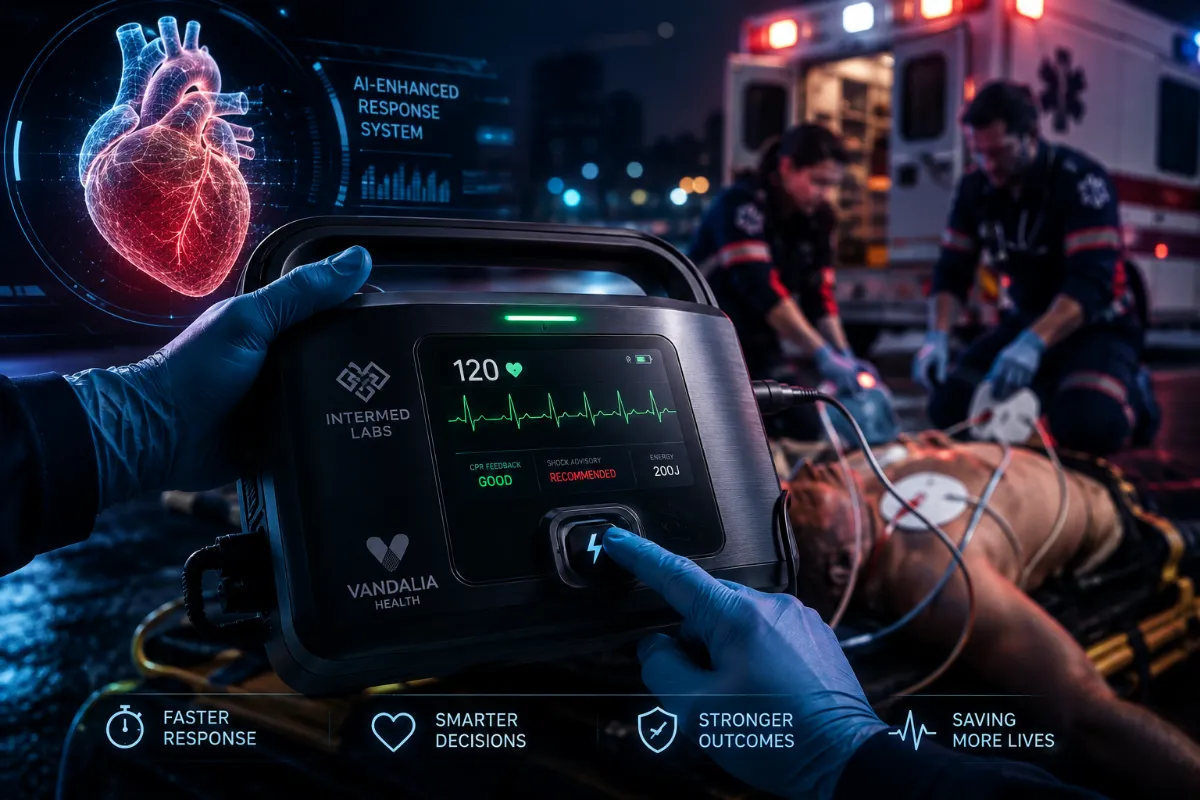
- Subject Overview: Intermed Labs and Vandalia Health Revolutionize Emergency Cardiac Response with Final Prototype — Key developments across In Brief.
- Technical Context: Detailed analysis of architectural changes, product capabilities, and engineering metrics.
- Industry Impact: Key implications for software developers, startup founders, and enterprise technology adopters.
The Urgent Need for Rapid Cardiac Intervention
The medical community has long understood that the difference between survival and long-term cardiac impairment often comes down to minutes. In the context of myocardial infarction, or what is commonly known as a heart attack, the phrase "time is muscle" remains the guiding principle for emergency responders and hospital systems alike. For decades, the reliance on traditional electrocardiogram workflows has been limited by the physical constraints of equipment and the necessity of specialized personnel being physically present at the bedside of the patient. The collaboration between Intermed Labs and Vandalia Health aims to dismantle these barriers through a robust technological framework designed to expedite diagnostic clarity.
By focusing on the final prototype stage, this partnership is signaling a shift toward real-time telemetry that integrates directly into the existing emergency medical services ecosystem. This is not merely about hardware miniaturization; it is about architectural change in how telemetry data is ingested, processed, and transmitted to cardiologists who are often miles away from the incident site. The prototype addresses the bottlenecks caused by data latency and human error during the high-stress triage phase of an emergency medical transport.
Engineering the Diagnostic Interface
The technological foundation of the new system lies in its ability to synthesize multiple streams of patient vitals into a single, actionable dashboard. In traditional settings, emergency responders must capture, print, and relay data in fragmented steps. The new interface developed by the teams utilizes high-fidelity connectivity protocols to ensure that the patient’s cardiac telemetry is mirrored on a receiving terminal at the hospital before the ambulance even reaches the facility. This creates a virtual bridge that allows specialists to interpret data while the patient is still in the field.
| Feature | Legacy System | Advanced Prototype | Impact |
|---|---|---|---|
| Data Relay | Manual/Delayed | Instantaneous | Reduced Latency |
| Interpretation | On-site only | Remote/Cloud-integrated | Faster Diagnosis |
| Sensor Accuracy | Standard Lead | High-Density Array | Improved Signal |
This approach effectively turns every point of contact into a diagnostic node. By leveraging cloud-based compute power, the prototype performs initial pattern recognition to alert medical teams to specific indicators of acute coronary syndrome, allowing for rapid decision-making before the patient has been physically admitted to the emergency department.
Integration into Existing Hospital Infrastructure
Transitioning a novel medical device from a prototype to a hospital-wide standard requires rigorous integration with existing electronic health records and diagnostic suites. The partnership between Intermed Labs and Vandalia Health focuses heavily on the interoperability of this new hardware with common industry platforms. By utilizing standard communication protocols, the system ensures that the data is not trapped in a silo but is instead part of a comprehensive patient profile that follows the individual through their surgical and recovery phases.
- Seamless Data Ingestion: The system maps incoming telemetry directly to the patient's profile in the hospital's central database.
- Specialist Notification: Automated alerts are pushed to mobile devices for on-call cardiologists based on the severity of the telemetry output.
- Scalable Architecture: The platform is designed to support modular hardware upgrades, ensuring that as sensor sensitivity improves, the central processing system remains relevant.
Key Takeaway: By digitizing the earliest moments of cardiac care, this collaboration minimizes the time-to-balloon ratio, which is the gold standard metric for heart attack intervention success.
Clinical Validation and Regulatory Hurdles
Moving to the final prototype phase means that the focus must now shift toward clinical validation and regulatory compliance. Any medical device involving cardiac care must withstand the highest level of scrutiny regarding signal integrity and failure mode analysis. The developers have emphasized that the prototype has undergone extensive stress testing to ensure that environmental factors, such as electromagnetic interference in an urban ambulance setting, do not compromise the accuracy of the data being transmitted.
Regulatory bodies require evidence that the automation of triage decisions does not introduce new risks to the patient. Consequently, the team is conducting rigorous trial runs to compare the prototype's diagnostic outputs against traditional, gold-standard 12-lead ECG machines. The goal is to achieve parity in sensitivity while drastically reducing the time required to perform the analysis. This evidence will form the backbone of their submission for certification and widespread deployment across the Vandalia Health network.
The Road Ahead
The trajectory of this partnership suggests that we are moving toward a future where cardiac care is predictive rather than reactive. By pushing the final prototype toward mass production, Intermed Labs and Vandalia Health are creating a template for other regional health systems to follow. The integration of high-speed data transmission and intelligent triage systems will fundamentally alter the survival statistics for cardiac events in rural and underserved areas, where specialized care is often geographically distant. As the system moves toward full deployment, the focus will likely shift from hardware refinement to software optimization, specifically in the realm of machine learning, which could eventually automate even more of the diagnostic process to support overworked hospital staff. The success of this project could serve as a blueprint for modernizing emergency infrastructure across the entire medical sector.
Sources
Intermed Labs (intermedlabs.com) Vandalia Health (vandaliahealth.com)