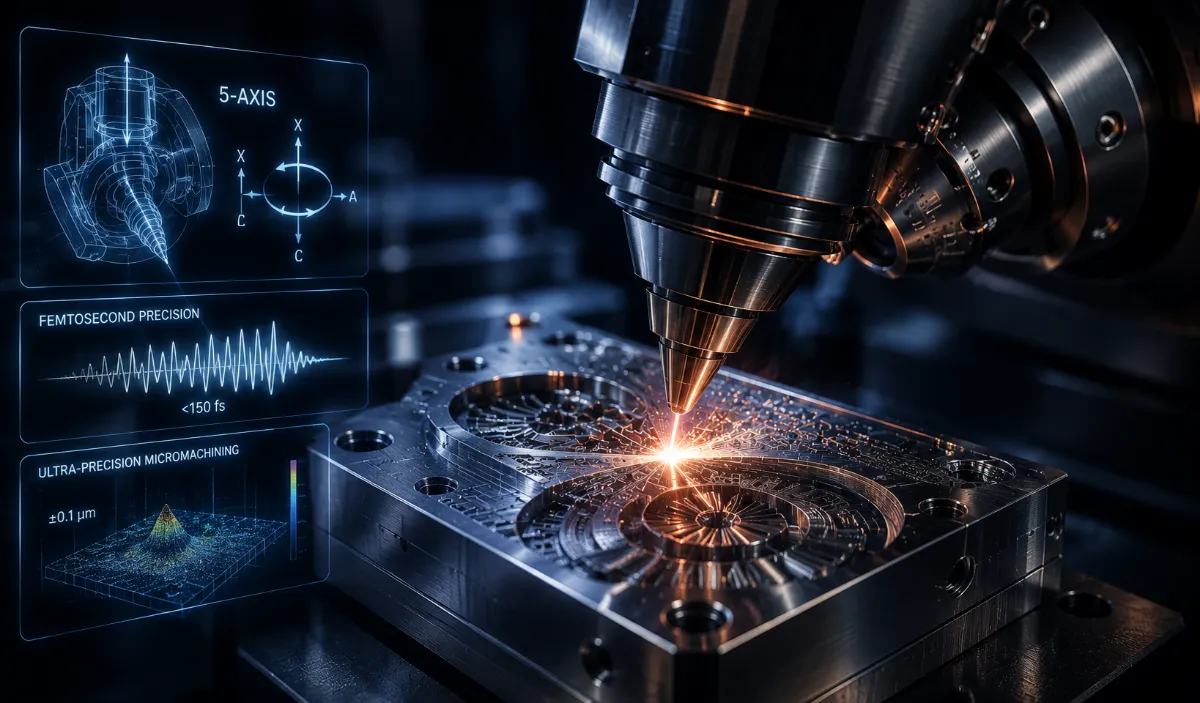

- Subject Overview: Manufacturing Resurgence Through Collaborative Robotics and Digital Integration — Key developments across In Brief.
- Technical Context: Detailed analysis of architectural changes, product capabilities, and engineering metrics.
- Industry Impact: Key implications for software developers, startup founders, and enterprise technology adopters.
Executive Overview and Core Hook
The landscape of American manufacturing is currently undergoing its most significant transformation since the dawn of the assembly line. As evidenced by the groundbreaking discussions and demonstrations at the International Manufacturing Technology Show (IMTS) 2026, the industry is moving away from the rigid, monolithic automation of the past toward a fluid, highly responsive model defined by collaborative robotics and deep digital integration. This is not a story of displacement, but one of augmentation. Collaborative robots, or cobots, are now serving as force multipliers for skilled labor, allowing human operators to offload repetitive, high-precision, or ergonomic-straining tasks to machines that can operate safely alongside them without the need for restrictive safety cages.
This shift is critical for the future of the global supply chain, which has faced unprecedented volatility over the last several years. By leveraging digital twin technology, manufacturers can now simulate entire production runs in a virtual environment before a single bolt is turned in the physical factory. This ability to foresee bottlenecks, optimize energy consumption, and predict mechanical failure before it occurs is the cornerstone of the modern smart factory. As domestic production continues to see a resurgence, the ability to rapidly reconfigure production lines to meet fluctuating demand—without the multi-month lead times traditionally required for retooling—will be the defining competitive advantage for North American firms in the decade to come.
Technical Breakdown and Architecture
The architectural backbone of this manufacturing evolution lies in the convergence of edge computing and high-fidelity sensor fusion. Unlike legacy systems that relied on centralized, latency-prone control loops, contemporary collaborative robotic cells utilize distributed intelligence. Each robotic arm is equipped with advanced vision systems and tactile feedback sensors that process environmental data at the edge. This allows for millisecond-level adjustments in grip strength, positioning, and safety protocols. By processing this data locally, factories avoid the pitfalls of network instability while maintaining a constant telemetry stream to the cloud for fleet-wide optimization and predictive maintenance analysis.
Digital twin integration serves as the overarching digital thread. This is a multi-layered simulation model that ingests data from every IIoT sensor on the factory floor, ranging from thermal imaging of motors to vibration analysis of robotic joints. When a change is proposed—such as a shift in production volume or a change in component material—the digital twin calculates the potential impact on throughput, power usage, and component wear. This allows engineers to conduct what-if scenarios in a sandbox environment that mirrors the exact physical configuration of the factory. When the optimal configuration is identified, the parameters are pushed back to the shop floor hardware through an integrated middleware layer, effectively reconfiguring the production cell automatically.
Furthermore, the integration of 5G private networks has removed the physical constraints of industrial connectivity. By enabling high-bandwidth, low-latency communication between mobile autonomous robots and stationary workstations, manufacturers can maintain a flexible, modular shop floor layout. This modularity means that a production line is no longer a static sequence of machines, but a dynamic network of assets that can be rearranged, expanded, or contracted based on the specific requirements of the product being manufactured, significantly reducing the capital expenditure associated with new product introductions.
Markdown Comparison Table and Key Metrics
| Feature | Legacy Industrial Automation | Modern Collaborative Integration |
|---|---|---|
| Safety Setup | Physical Cages/Light Curtains | Integrated Proximity/Force Sensing |
| Reconfiguration Time | Weeks to Months | Hours to Days |
| Data Processing | Centralized/Delayed | Distributed/Real-Time Edge |
| Scalability | Fixed/Hard-coded | Modular/API-driven |
| Human Interaction | High Separation | Continuous Collaboration |
- Safety Throughput: Modern cobot cells show a 40% improvement in human-machine cycle time by eliminating the need for safety-stop resets.
- Predictive Accuracy: Digital twin adoption has led to an average 22% reduction in unplanned maintenance downtime.
- Energy Efficiency: Real-time load balancing through edge intelligence provides an average 15% reduction in factory power consumption.
- Flexibility Index: Factories using modular robotic systems report a 60% increase in the speed of introducing new product variants to the market.
Developer and Ecosystem Impact
The transition to software-defined manufacturing has created a massive new opportunity for software engineers and systems architects. Modern manufacturing is increasingly becoming an IT-heavy discipline, requiring experts in API integration, data pipeline management, and cybersecurity. Startups specializing in middleware that bridges the gap between legacy PLC (Programmable Logic Controller) hardware and modern cloud-based data lakes are seeing unprecedented demand. For software developers, this means that the factory floor is no longer just a destination for hardware; it is a complex, distributed computing environment that requires robust, reliable code to maintain operational integrity.
Furthermore, the open-source movement is beginning to influence industrial hardware. As developers push for standardized communication protocols like OPC UA and MQTT, the barriers to entry for integrating third-party sensors and AI models into a production line are falling. This modular ecosystem allows manufacturers to mix and match hardware from different vendors without being locked into a proprietary software stack. It fosters a competitive marketplace for specialized AI models that can be deployed to the edge to detect defects, optimize robotic paths, or manage inventory in real-time, effectively turning the factory into a platform for innovation.
Strategic Market Outlook and Analysis
The strategic value of these technologies extends far beyond the factory walls. As global supply chains face increasing pressures from geopolitical shifts and the need for greater sustainability, the ability to bring production closer to the consumer—onshored or near-shored—is becoming a geopolitical imperative. Collaborative robotics and digital integration provide the economic justification for this shift. By reducing the reliance on low-cost manual labor and emphasizing the efficiency of high-skill human-robot teams, manufacturers can compete effectively even in high-wage economies.
However, the adoption of these technologies is not without trade-offs. The initial investment in digital infrastructure and the need for a re-skilled workforce represent significant hurdles for smaller enterprises. The competition for talent—specifically individuals who possess both mechanical aptitude and software proficiency—is intense. Companies that fail to prioritize digital transformation today will likely face a widening productivity gap that will be impossible to close in the future. The winners of the next decade will be those who view their factory as a living, breathing software ecosystem, rather than a static assembly facility. Ultimately, the integration of these collaborative technologies represents the final step in the maturation of Industry 4.0, moving from theoretical concept to the standard operating procedure for the global industrial leader.
Sources
Association for Manufacturing Technology (amtonline.org) IMTS The International Manufacturing Technology Show (imts.com)