
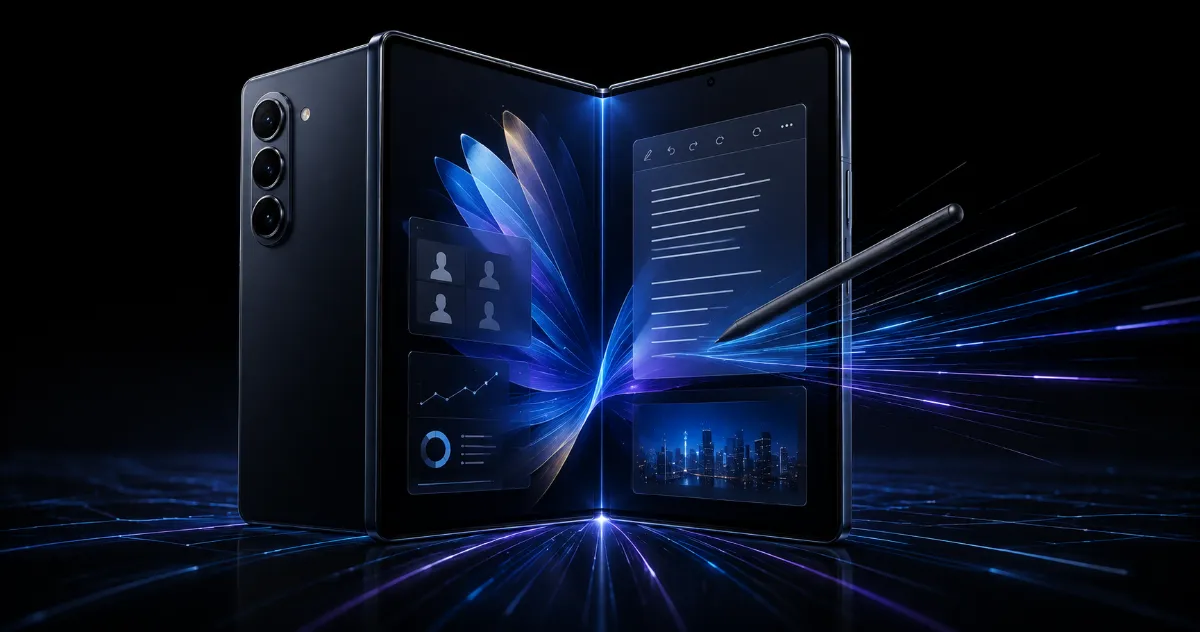
- Subject Overview: Samsung Galaxy Z Fold8 Series Redefines the Foldable Productivity Paradigm — Key developments across In Brief.
- Technical Context: Detailed analysis of architectural changes, product capabilities, and engineering metrics.
- Industry Impact: Key implications for software developers, startup founders, and enterprise technology adopters.
Samsung Galaxy Z Fold8 Series Redefines the Foldable Productivity Paradigm
Executive Overview and Core Hook
For nearly a decade, Samsung has served as the primary architect of the foldable smartphone market. Throughout this period, the Galaxy Z series occupied a unique space that felt simultaneously revolutionary and experimental. Early adopters often viewed these devices as high-end prototypes, accepting the trade-offs of visible creases, fragile hinge mechanisms, and bulky chassis designs in exchange for the novelty of a transformative form factor. However, the introduction of the Galaxy Z Fold8 and the premium Z Fold8 Ultra marks a definitive turning point for the category. The industry is moving away from the era of novelty and into a period of mature, refined engineering that finally justifies the premium cost of ownership for professional power users and enterprise organizations alike.
This latest generation represents more than just a specification bump; it is a fundamental rethinking of how a mobile device should function within a hybrid workspace. By drastically reducing the thickness of the hinge, improving the structural integrity of the Ultra Thin Glass, and refining the aspect ratio of the cover display, Samsung has addressed the primary friction points that previously hindered widespread adoption. The Z Fold8 series is no longer a gadget for early adopters to show off; it is a productivity powerhouse designed to replace secondary devices, bridging the gap between a standard smartphone and a portable workstation. For the enterprise sector, this iteration signifies that foldables are finally ready for mainstream deployment, offering the reliability and durability required for daily professional use.
Technical Breakdown and Architecture
At the heart of the Galaxy Z Fold8 series lies an entirely redesigned hinge architecture known as the Flex-Lock mechanism. This system utilizes a dual-rail track that allows the device to fold completely flat, eliminating the wedge-shaped gap that characterized earlier iterations. By reducing the number of moving parts within the hinge, Samsung has improved the device's ingress protection rating, now achieving a full IPX8 rating for water resistance alongside improved dust mitigation through micro-bristle seals. The internal display is powered by a new generation of low-temperature polycrystalline oxide paneling, which provides a variable refresh rate ranging from 1Hz to 144Hz, ensuring peak energy efficiency during static document reading and fluid motion during high-intensity multitasking.
The Z Fold8 Ultra model pushes the hardware envelope further by incorporating a titanium alloy frame, which significantly reduces the overall weight while increasing the structural rigidity of the chassis. Internally, the device is driven by the latest generation of mobile silicon, featuring an integrated neural processing unit designed specifically for on-device artificial intelligence tasks. This allows for real-time document translation, complex data visualization, and advanced image processing without relying on cloud-based latency. The thermal management system has also been overhauled, featuring a vapor chamber that is forty percent larger than the previous generation, ensuring sustained performance during intensive workflows such as video editing or running multiple enterprise-grade applications simultaneously.
Markdown Comparison Table and Key Metrics
| Feature | Galaxy Z Fold8 | Galaxy Z Fold8 Ultra |
|---|---|---|
| Main Display | 7.6-inch Dynamic AMOLED 2X | 8.0-inch Dynamic AMOLED 3X |
| Peak Brightness | 2,600 nits | 3,000 nits |
| Frame Material | Armor Aluminum | Titanium Alloy |
| Battery Capacity | 4,400 mAh | 5,000 mAh |
| Max RAM | 12GB LPDDR5X | 16GB LPDDR5X |
| Charging Speed | 25W Wired | 45W Wired |
Key Performance Indicators
- Unprecedented Screen Density: Both models feature an increased pixel density that renders text and complex data sets with the clarity of a high-resolution desktop monitor.
- Thermal Efficiency: The expanded vapor chamber design ensures that thermal throttling is virtually eliminated, even during prolonged sessions of multitasking across three or more active windows.
- Structural Integrity: The transition to reinforced internal components has resulted in a twenty percent increase in display durability compared to the previous Z Fold7 iteration.
- AI-Driven Productivity: On-device processing capabilities allow for instant context-aware summarization of documents and emails, enhancing individual throughput in fast-paced professional environments.
Developer and Ecosystem Impact
For software engineers and mobile developers, the launch of the Z Fold8 series necessitates a shift in how applications are architected for Android. The increased display estate and the new aspect ratio of the cover display mean that applications must be responsive across a much wider range of device states. Samsung has provided updated development kits that allow for more seamless transitions between the folded and unfolded states, enabling developers to maintain application state during the handoff without requiring a full reload. This is a significant advantage for financial services and healthcare apps that require persistent data input.
Startups and digital agencies are also finding that the Z Fold8 is an ideal candidate for cloud-native workflows. With the ability to display three full-sized applications side-by-side, professionals can maintain a terminal window, a code editor, and a documentation browser simultaneously. This level of concurrency, previously exclusive to desktop environments, is now fully mobile. The ecosystem impact is profound; as more developers optimize for this foldable architecture, the overall utility of the Android tablet and phone ecosystem increases, making the transition between devices much more fluid for the end-user.
Strategic Market Outlook and Analysis
From a market perspective, Samsung is positioning the Z Fold8 series as the definitive tool for the executive and creative professional. By segmenting the series into the base Z Fold8 and the premium Ultra, the company is effectively capturing two distinct tiers of the premium mobile market. The Ultra, in particular, competes directly with traditional ultra-portable laptops, offering a level of versatility that a standard smartphone cannot match. The competitive landscape is heating up, with various manufacturers exploring folding designs, yet Samsung’s advantage lies in its mature software stack and deep integration with enterprise services.
However, the market still faces challenges regarding consumer perception and long-term hardware concerns. While the Z Fold8 is the most durable foldable to date, the price point remains a significant barrier to entry for the average consumer. Samsung’s success will depend on its ability to demonstrate the ROI of these devices to enterprise procurement departments. Trade-offs remain, such as the increased weight compared to a standard slab phone and the need for specialized screen protectors, but the value proposition of having a workstation in one's pocket is becoming increasingly compelling. As cloud-based computing and mobile AI continue to evolve, the Z Fold8 series will likely serve as the blueprint for the next decade of mobile hardware, setting a standard that competitors will struggle to match in terms of both polish and functional depth.