Google Transforms AI Mode Into an Action-Oriented Inter-App Orchestrator
Google’s updated AI Mode transitions from simple informational search to active cross-application task execution.
From Informational Search to Task Execution
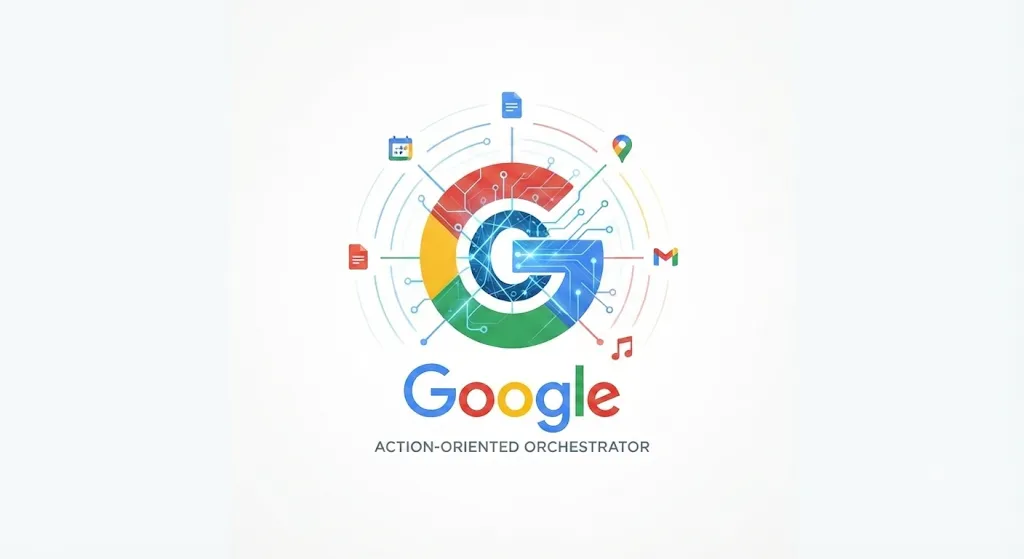
Google is fundamentally evolving its AI Mode, moving away from static information retrieval toward a model capable of active participation across the enterprise software stack. This update allows users to link their most-used applications, enabling the AI to pull, push, and process data across disparate platforms. This shift represents a transition from a search engine to an agentic orchestrator.
Historically, AI interfaces have functioned as silos; they provide answers, but the user must then manually perform the follow-up work. Google’s new integration model seeks to close this loop. By utilizing secure API handshakes, AI Mode can now execute workflows such as summarizing a document in one application and immediately drafting a response in another, or syncing meeting data across project management tools without the user ever leaving the primary interface.
The Engineering of Interoperability
Achieving this level of fluidity requires a robust backend architecture that can manage cross-platform permissions and data integrity. The integration relies on a structured agent framework:
- Credential Handshakes: Secure OAUTH-based integration that gives the AI authorized access to specific application endpoints.
- Intent Mapping: A high-accuracy layer that interprets user natural language and maps it to the corresponding application's function library.
- Verification Loops: A secondary confirmation layer that requires human oversight for high-impact actions, ensuring the AI does not perform unintended deletions or mass updates.
- Synchronization Latency Reduction: Optimizing the request-response cycle to ensure that multi-step tasks feel instantaneous rather than sequential.
By leveraging this architecture, Google is effectively turning the AI into a layer of middleware that sits on top of existing enterprise tools, effectively commoditizing the manual labor of toggling between applications.
The Bottom Line
This update is a strategic escalation in the battle for enterprise productivity. By making its AI more "active," Google is positioning itself to be the central control plane for professional workflows. While competitors offer similar agentic capabilities, Google’s existing footprint in the workplace—across email, documents, and project management—provides a unique advantage in data accessibility. As organizations look to reduce operational friction, the ability of a centralized AI to manage cross-app interactions will likely become a baseline requirement for enterprise software adoption, rather than a luxury feature. The transition from passive assistance to active execution is now the primary metric by which AI performance will be judged.