Cosmic Coincidence Captures A Meteorite Within The Lacerta Nebula
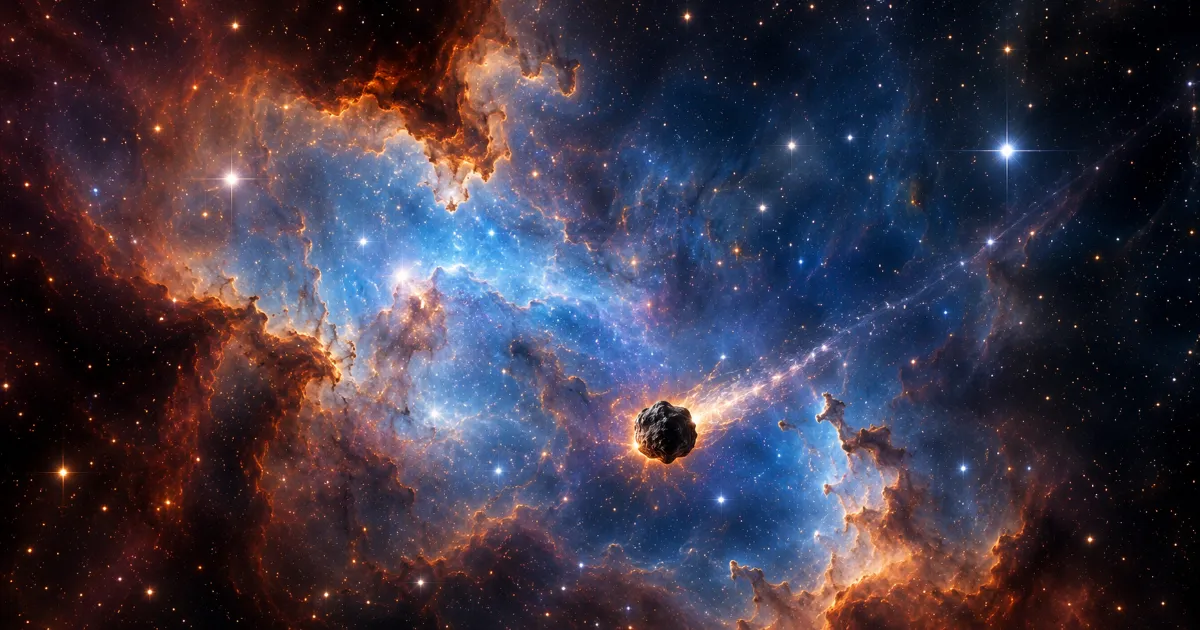
A rare astronomical alignment has allowed observers to catch a glimpse of a vaporizing meteor cutting across the backdrop of the distant Lacerta Nebula.
The Beauty Of Chance Astronomy
Space photography is often a game of patience and long exposure. In a striking example of celestial serendipity, a recent observation by space agencies captured a meteor in the process of vaporizing as it streaked through the upper reaches of our atmosphere, perfectly timed to cross the field of vision containing the Lacerta Nebula. While the nebula exists thousands of light years away, the meteor is an object from our own solar system, existing only miles above the observer. This visual intersection highlights the sheer scale of the cosmos, where local debris can momentarily obstruct the view of deep space giants.
Understanding The Lacerta Nebula
Located in the constellation of Lacerta, this nebula is a region of active star formation, characterized by dense clouds of gas and dust that act as the nursery for new stellar bodies. These regions are essential for understanding how stars develop and how the chemical elements necessary for planetary formation are dispersed throughout the galaxy. By peering into these clouds, astronomers can observe the raw physics of gravity and radiation as they compete to collapse gas into the next generation of suns. The contrast between the ancient, massive nature of the nebula and the fleeting, incandescent death of the meteor creates a compelling narrative of time and scale.
Technical Challenges Of Deep Sky Imaging
Capturing these events requires high sensitivity sensors capable of differentiating between the faint light of a nebula and the bright, fast moving streak of a meteor. Because the meteor moves across the sky in a matter of seconds, it creates a unique challenge for long exposure telescopes that are designed to track objects over hours. Modern image processing allows astronomers to stack multiple frames, enabling them to isolate the transient event from the deep space background. This technique has revolutionized how we capture dynamic events in the night sky, turning accidental observations into rigorous data points.
Comparative Perspectives
| Observation Type | Time Scale | Distance |
|---|---|---|
| Deep Sky Nebula | Millions of Years | Light Years |
| Atmospheric Meteor | Seconds | Kilometers |
The Real World Impact
Public interest in these images serves a vital role in STEM education and scientific advocacy. By bringing the wonders of the universe to the mainstream public, these snapshots encourage the next generation of astronomers to explore the fundamental questions of physics. Every image of this quality helps maintain the societal commitment to funding the space exploration and observational infrastructure that makes such discoveries possible. It reminds us that our planet is just one part of a vast, active, and ever changing galactic environment.
The Road Ahead
As we look forward, the integration of global telescopic networks will increase the probability of capturing these rare coincidences. The goal is to develop autonomous alert systems that can detect transient events in real time, allowing observatories to pivot their focus instantly. By turning our gaze upward with both persistence and advanced technology, we ensure that no corner of the night sky remains hidden, and every shooting star has a story waiting to be told.