Vercel Integrates Massive Qwen 3.8 Max Model to Power Advanced Vision and Language Workloads
Vercel adds support for the 2.4 trillion parameter Qwen 3.8 Max model to its AI Gateway, enabling scalable multimodal inference for modern web developers.
Multimodal Intelligence on the Edge
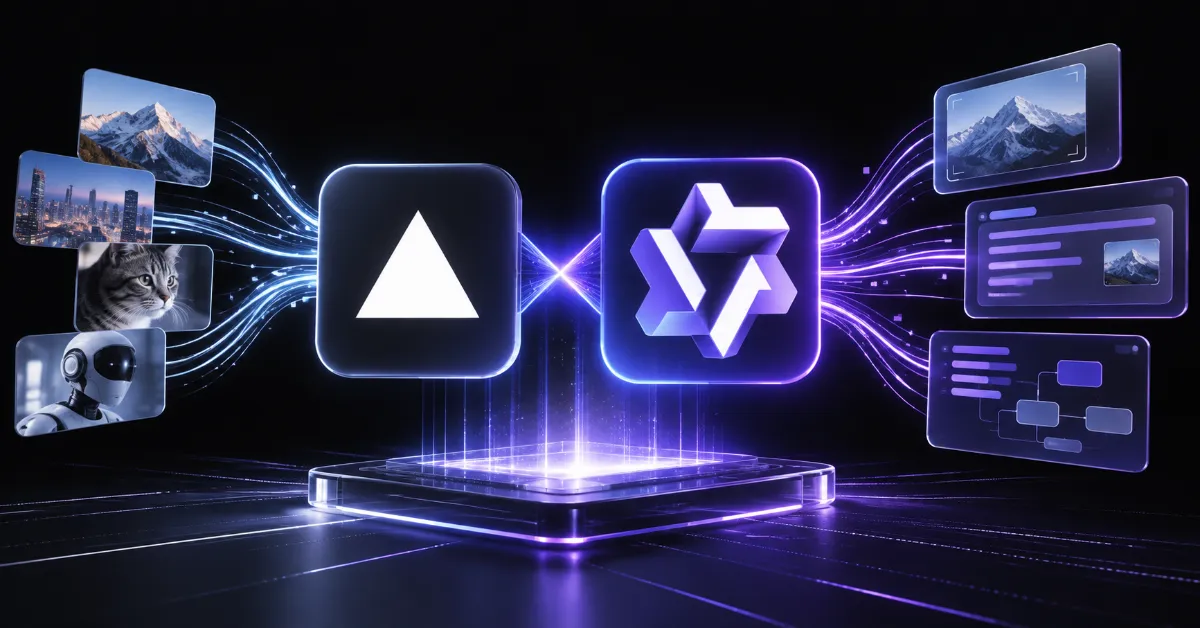
Developers seeking to bridge the gap between heavy computational models and web applications now have a powerful new ally. The integration of Qwen 3.8 Max into the Vercel AI Gateway marks a significant advancement for engineering teams working at the intersection of text processing and computer vision. With an architecture boasting 2.4 trillion parameters, this model provides a dense capacity for understanding complex instructions, while its native vision capabilities allow for the direct analysis of user generated media without requiring additional auxiliary pipelines.
Performance and Scaling Mechanics
The Vercel AI Gateway provides the necessary abstraction layer to handle these high throughput requests without forcing developers to manage individual model deployments or complex infrastructure orchestration. By exposing Qwen 3.8 Max via a standard API, Vercel enables seamless provider switching, caching, and rate limiting. This architecture ensures that even as model sizes grow toward the multi trillion parameter mark, applications remain responsive. The key advantage here is the unified interface, which treats the vast capabilities of Qwen 3.8 Max as a drop in replacement for lighter models while maintaining the performance overhead required for real time interactions.
Architectural Utility for Engineers
| Feature | Specification |
|---|---|
| Parameter Count | 2.4 Trillion |
| Modality | Text and Vision |
| Context Window | 1 Million Tokens |
| Primary Interface | Vercel AI Gateway |
For teams building heavy analytical dashboards or AI powered design tools, the extended context window is a defining characteristic. A one million token capacity permits the processing of extensive documentation sets, long form codebases, or high fidelity image sequences in a single session. This eliminates the need for aggressive context truncation or complex RAG implementations, simplifying the frontend logic significantly.
Operational Efficiency and Developer Experience
By centralizing access through the gateway, Vercel allows developers to monitor token usage and latency metrics in real time. This visibility is essential when working with models of this magnitude, as the cost per query can escalate quickly. The infrastructure provides granular control over telemetry, allowing engineers to identify potential bottlenecks within their prompt chains before they manifest as latency spikes for end users. The simplicity of implementation means that deploying a state of the art multimodal agent is now essentially a configuration change rather than a massive architectural overhaul.
The Big Picture
As the industry moves toward larger parameter counts, the bottleneck is increasingly shifting from model availability to infrastructure reliability. The integration of Qwen 3.8 Max into a serverless ecosystem like Vercel demonstrates a clear trend toward abstracting away the complexity of hardware management. Moving forward, developers will likely focus less on the underlying silicon and more on how these massive models interface with existing web standards. The arrival of this model signifies that high performance AI is no longer the exclusive domain of research labs, but a core component of the standard web development stack.