Why TinyNES Is The Ultimate Hardware Project for Retro Enthusiasts
Dive into the technical specs of TinyNES, a uniquely compact and authentic hardware project for classic gaming enthusiasts.
Reclaiming Authenticity in Retro Hardware
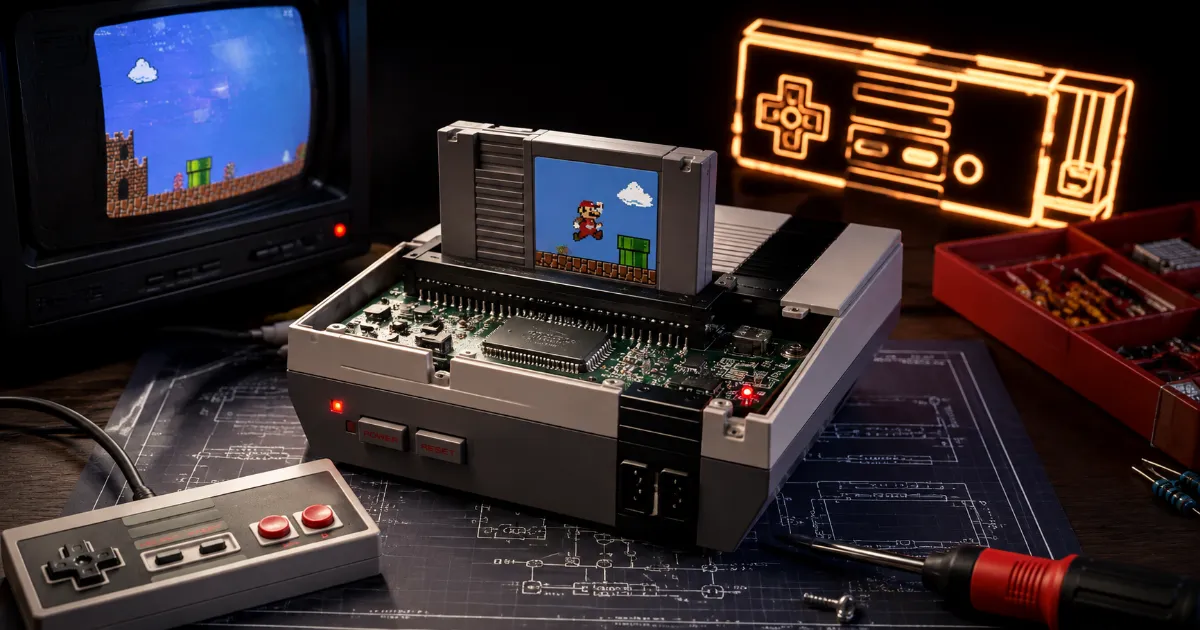
As the emulation market floods with software based solutions for classic gaming, a counter movement of hardware purists is emerging. The TinyNES is the embodiment of this philosophy. Rather than relying on FPGAs or software wrappers that interpret machine code, this device utilizes discrete components to mimic the actual logic of the original Nintendo Entertainment System hardware. It offers a tactile, authentic experience for those who value the physical reality of legacy technology.
At the core of the TinyNES is a design focus on miniaturization without compromising the original circuit integrity. By utilizing modern manufacturing techniques to assemble a classic architecture, the device manages to shrink the footprint of the console significantly while maintaining compatibility with original cartridges. This is a rare example of hardware that respects the original design limitations while embracing contemporary form factors.
Engineering Under the Hood
What sets this console apart from the vast array of cheap clones found on global marketplaces is the attention to timing and video output. Most clones cut corners on the PPU or CPU synchronization, leading to jittery gameplay or incorrect color palettes. The TinyNES focuses on high fidelity signals, providing a clean output that satisfies even the most demanding collectors.
| Feature | TinyNES | Standard Emulator | Low Cost Clone |
|---|---|---|---|
| Hardware Logic | Discrete / Authentic | Software Translation | Poorly Simulated |
| Compatibility | Excellent | Variable | Low |
| Build Quality | High | N/A (Software) | Fragile |
Why Hardware Purity Matters
For many developers and collectors, hardware is more than just a means to play a game. It is a time capsule. The way the original silicon processed sprites and managed memory creates a specific aesthetic that is often lost in translation through software abstraction. By rebuilding these circuits, enthusiasts are preserving a critical era of computer history that might otherwise vanish into the black box of emulation.
Beyond the nostalgia, these projects serve as excellent teaching tools for those interested in vintage computer architecture. Understanding how registers, stacks, and interrupts were handled on 8 bit systems provides valuable context for how modern software interacts with silicon. It is a masterclass in optimization, where every single byte of memory was a precious resource that had to be managed with surgical precision.
The Big Picture
As we look at the evolution of computing, the TinyNES serves as a reminder that hardware is the foundation of all software. In an age of cloud computing and massive abstraction layers, returning to the simplicity of discrete logic is both refreshing and educational. This project proves that there is a dedicated market for high quality, boutique hardware that honors the technical achievements of the past while utilizing the manufacturing precision of the present.