Airlines Are Finally Embracing Context Aware Design for Passenger UX
The travel industry is moving away from static app interfaces to context aware systems that predict and deliver the right information at the right time.
The Problem of Static Travel Interfaces
For the better part of a decade, the mobile experience for most airline passengers has been static, tedious, and frankly, poorly timed. Your boarding pass, a vital document that you might need at three different security checkpoints and the gate, is often buried under layers of menus or requires a manual search. When you are rushing through a busy terminal, the last thing you want to do is navigate an app hierarchy to find a QR code that the gate agent needs right now. This is a classic failure of static design, where the interface does not understand the user's current environmental context.
The Shift to Context Aware Systems
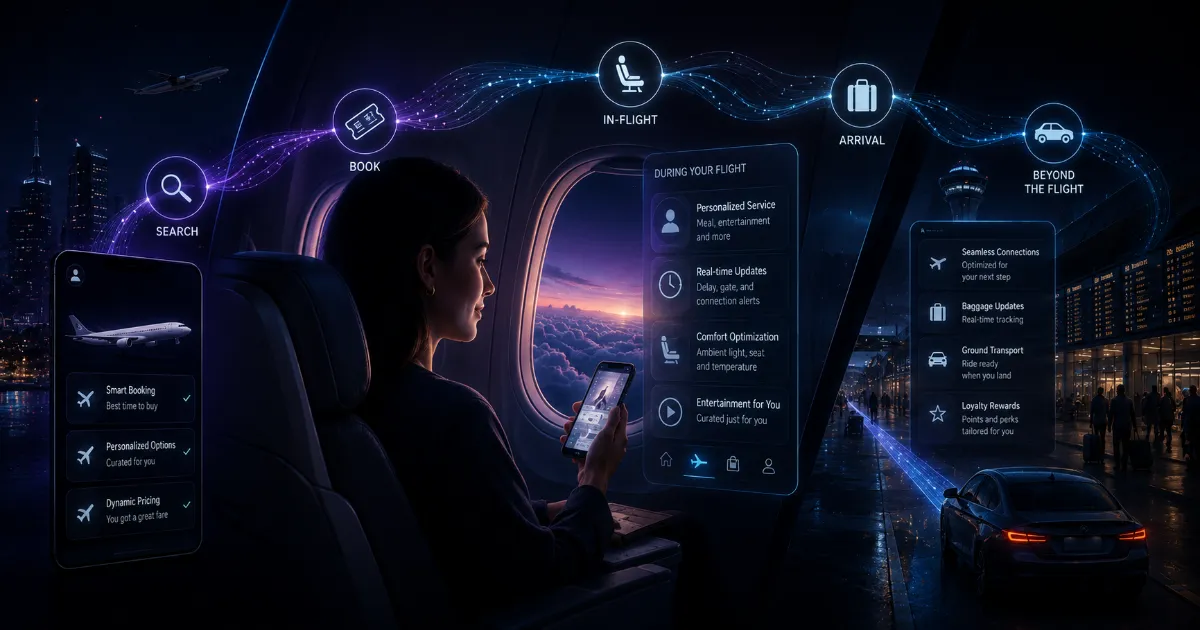
Context aware design is the process of building software that uses sensors, location data, and predictive modeling to anticipate user needs before they are explicitly requested. For airlines, this means the app should know you are in the terminal when you open it. It should prioritize the boarding pass, display the gate number in a large, high contrast font, and provide real time updates about boarding group status without you ever needing to click a button. By responding to the user's situation, the application changes from a tool you have to manage into an assistant that manages itself.
Key Elements of Context Aware Travel
- Location Triggered UI: The app detects arrival at the airport and updates the home screen accordingly.
- Proactive Notification: Real time push alerts that account for walking speed and security line wait times.
- Adaptive Information Architecture: Removing secondary functions like booking new flights during the critical window of boarding to reduce cognitive load.
- Offline Fallbacks: Ensuring that essential travel documents are cached locally, removing the dependency on spotty airport Wi-Fi.
The Psychology of Stress Reduction
When a user is in a high stress environment like an airport, their cognitive bandwidth is severely limited. A well designed, context aware app acts as a cognitive load reducer, effectively offloading the mental work of finding information to the software, which allows the traveler to focus on the immediate physical task of navigating the terminal.
Analyzing The Design Evolution
| Feature | Static Approach | Context Aware Approach |
|---|---|---|
| Boarding Pass | Requires manual navigation | Automatically surfaces at gate |
| Notifications | Generic status alerts | Personalized and time sensitive |
| Interface | Cluttered menu structure | Minimalist and task focused |
| Data Sync | Dependent on server requests | Localized and cached content |
The Road Ahead
As airlines lean into this new design philosophy, we are likely to see a broader shift in how transportation companies think about customer engagement. The goal is to move from being a service provider that simply facilitates travel to being a companion that facilitates a seamless experience. This is not just a win for the user; it is a competitive advantage for airlines. A traveler who feels guided and supported by their digital tools is a traveler who is more likely to remain loyal to the brand, regardless of the price of the ticket. The future of the travel industry is being written in code that understands the passenger's journey as well as the passenger does.