China Faces A Massive Battery Graveyard As Electric Vehicles Age
The rapid expansion of the Chinese electric vehicle market is hitting a wall as millions of batteries approach end of life with insufficient recycling infrastructure.
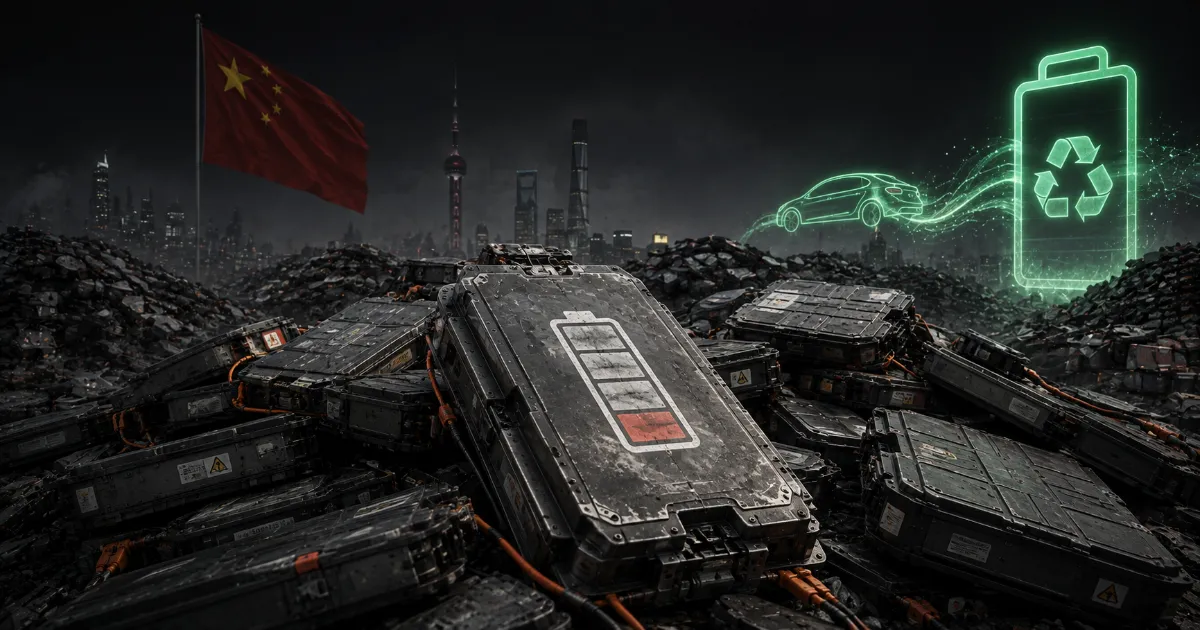
The Hidden Environmental Cost Of Rapid EV Adoption
China has effectively transformed the global automotive landscape by aggressively scaling its electric vehicle manufacturing base over the last decade. While the shift toward electrification is essential for decarbonization, a significant secondary challenge is emerging from the sheer volume of retired power units. As the first generation of mass market electric vehicles nears the end of their operational lifespan, the industry is confronted with a mountain of lithium ion batteries that require complex chemical processing to neutralize or recover. Current waste management systems are struggling to keep pace with the exponential growth of this specific hazardous material stream.
The Lifecycle Management Gap
Processing a used electric vehicle battery involves more than simple mechanical crushing. It requires high precision industrial chemical extraction to reclaim valuable materials like cobalt, lithium, and nickel. In China, the market is currently fragmented between established automotive manufacturers and a sprawling network of informal recyclers. These informal entities often prioritize quick material recovery over environmental safety standards, leading to chemical leakage and inefficient resource reclamation. The lack of a unified national protocol for battery tracking ensures that many batteries disappear into the secondary market or illegal disposal sites before they ever reach an accredited recycling facility.
Economic Realities Of The Circular Economy
Building a closed loop supply chain for battery components is theoretically profitable, but the volatile prices of raw battery metals make long term planning difficult for recyclers. When commodity prices for lithium drop, the incentive to recycle existing units decreases, leaving operators with high overhead costs and lower margins. Governments are now exploring extended producer responsibility mandates that force car manufacturers to take ownership of the battery throughout its entire lifecycle, including the recycling phase. This shift is intended to internalize the cost of environmental remediation directly into the vehicle purchase price.
The Technological Hurdles To Massive Scale Recycling
Standardizing the battery chemistry is the primary technical barrier to effective automated recycling. Manufacturers frequently use custom form factors and proprietary electrolyte mixtures to gain competitive advantages in energy density and thermal management. This variety forces recyclers to utilize manual disassembly processes, which are slow and pose risks to the technicians involved. Developing a standardized automated platform for battery pack dismantling would drastically improve throughput and safety, but such a transition requires unprecedented cross industry cooperation between fierce market rivals.
Analyzing The Current State Of Battery Reclamation
| Feature | Formal Recycling Facilities | Informal Disposal Operations |
|---|---|---|
| Safety Standards | High and Regulated | Negligible |
| Material Purity | High | Low |
| Environmental Impact | Controlled | Dangerous |
| Economic Sustainability | Reliant on Policy | Opportunistic |
The Road Ahead
Moving forward, China must implement a comprehensive digital tracking system that assigns a unique identifier to every battery cell manufactured. By leveraging block chain or centralized database infrastructure, regulators could monitor a pack from the initial manufacturing facility through to its final recycling point. Without a mandatory, enforceable national standard for battery decommissioning, the environmental promise of electric transport could be undermined by the very hardware that makes it possible. Success depends on harmonizing the financial interests of producers with the environmental imperatives of the state.