Architecting Cloud Infrastructure for the Rise of Autonomous Agents
Cloudflare is leading the conversation on how global network infrastructure must adapt to support the specific needs of autonomous AI agents.
Key Takeaways
- Autonomous Shift: Infrastructure must move from supporting human browser sessions to handling high frequency agent to agent communication.
- Security Primitives: Current authentication standards are insufficient for agents that need to act on behalf of users across disparate systems.
- Storage Evolution: The requirement for low latency, globally distributed state management is critical for agent consistency.
Redefining the Edge for Autonomous Systems
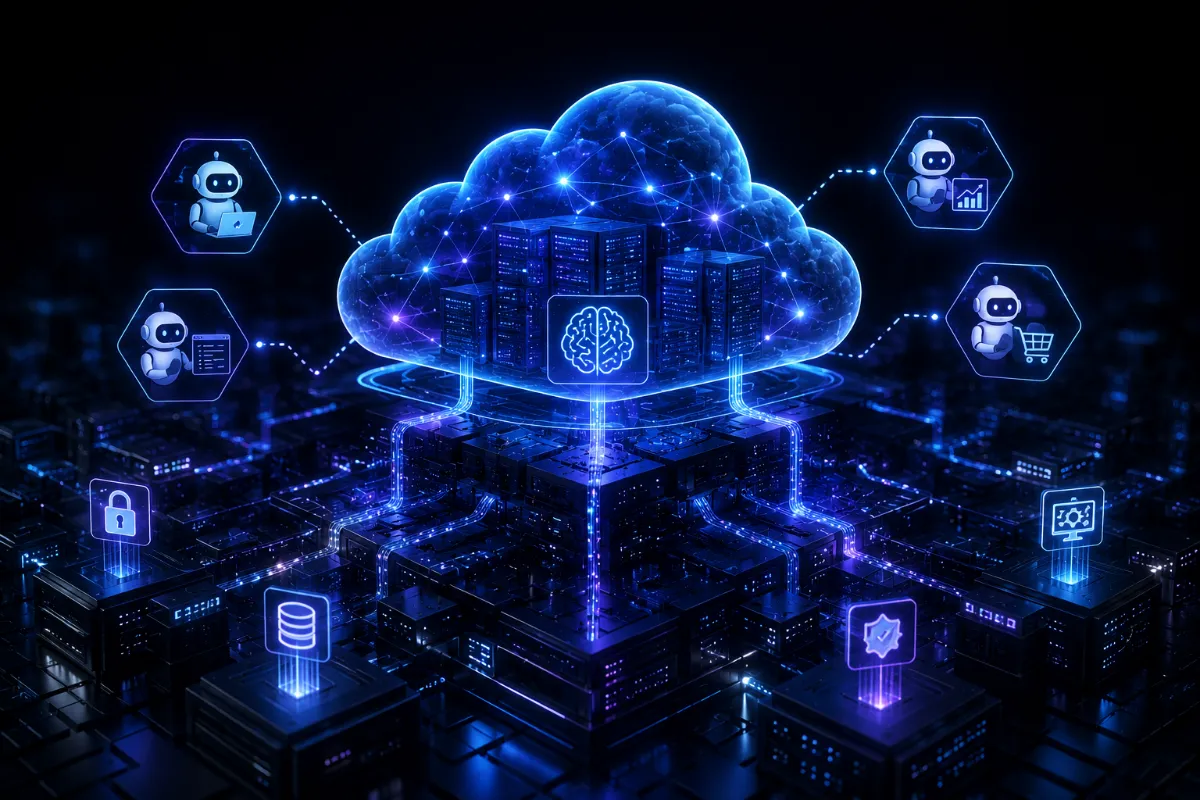
As the deployment of autonomous agents accelerates, the underlying cloud infrastructure is reaching a critical inflection point. For years, the internet has been designed to serve human browsers, characterized by sporadic, high latency interactions. Autonomous agents, however, operate on a fundamentally different cadence. They require persistent connectivity, instantaneous state synchronization, and security models that can handle machine to machine authorization without the need for manual login flows.
This transition requires a rethink of how we handle compute at the edge. Agents need to execute code as close to their data sources as possible to minimize latency. When an agent is coordinating a complex transaction across multiple APIs, the round trip time to a centralized data center becomes a bottleneck that can lead to synchronization errors. By distributing these execution environments globally, we can ensure that agents have the resources they need, when they need them.
The Security Implications of Automated Interaction
Traditional security models rely on the assumption that a human is initiating the request. With autonomous agents, the attack surface expands significantly. We need to implement new security primitives that can verify the identity and intent of an agent, even as it traverses multiple untrusted domains. This includes robust rate limiting that distinguishes between efficient automated processes and malicious bot activity, as well as granular access control that restricts what an agent can do on behalf of a user.
Infrastructure Requirements for Agentic Workflows
| Requirement | Current State | Future State for Agents |
|---|---|---|
| Latency | Human Optimized | Sub Millisecond Agent Sync |
| Authentication | OAuth/Session Based | Attestation/Identity Tokens |
| Compute | Server Based | Global Event Driven Functionality |
| Data | Client Side Caching | Distributed State Synchronization |
The Technical Roadmap
We are moving toward a world where agents act as the primary interface for the internet. This will necessitate a shift in how we build and consume APIs. Developers should start thinking about building agent first services, where the endpoint is optimized for programmatic consumption rather than visual presentation. This includes providing structured machine readable responses, robust error handling for automated retries, and clear, immutable logs for auditing agent behavior.
The Road Ahead
As we look toward the future, the integration of autonomous agents will represent the most significant change to the internet since the advent of mobile computing. By prioritizing the infrastructure needs of these entities now, we are ensuring that the digital landscape remains stable, secure, and performant. The next few years will be defined by how effectively we can adapt our global networks to support this new wave of intelligence, turning the internet into a truly reactive and capable ecosystem for both humans and their digital counterparts.