Why TikTok Shop Diverged From Shopee in the Indonesian Logistics Market
An analysis of TikTok Shop's strategic pivot in Indonesian logistics and why they chose partnership over the heavy asset ownership model.
Navigating the Indonesian Logistics Landscape
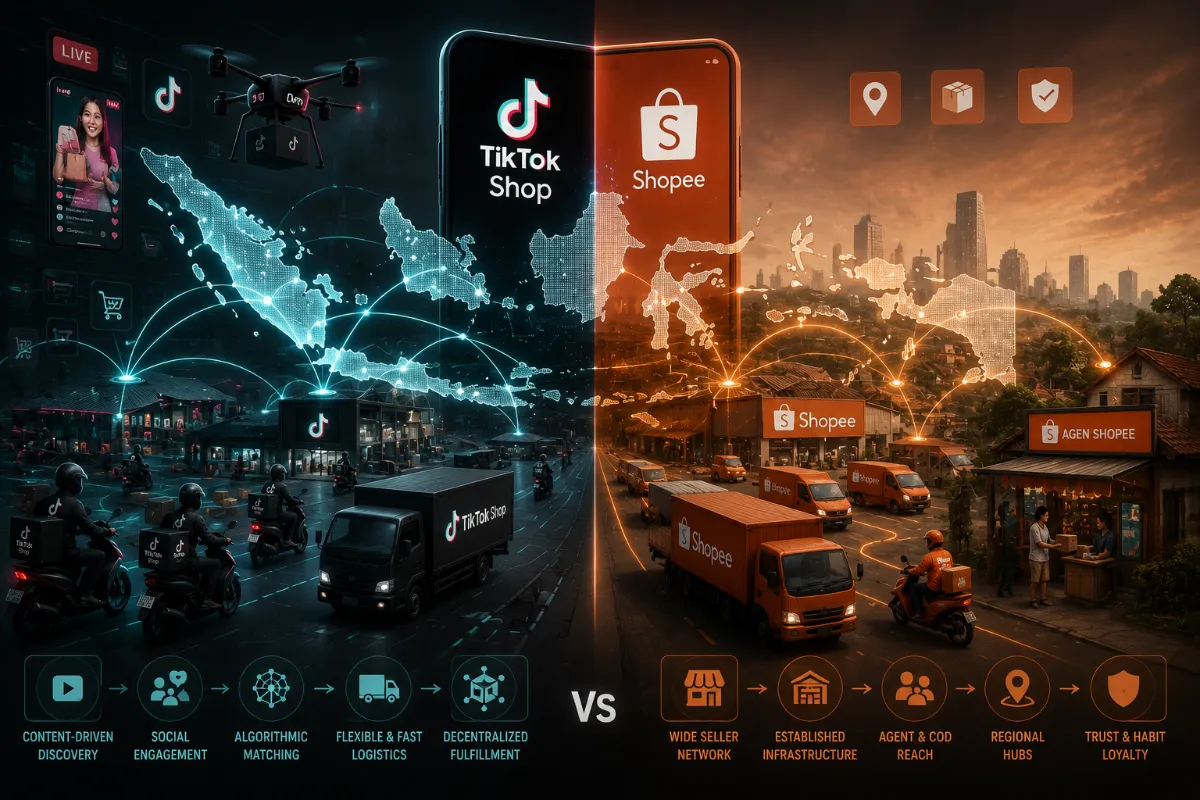
In the competitive arena of Southeast Asian e-commerce, the battle for delivery efficiency defines market dominance. TikTok Shop, leveraging its massive user engagement, faced a pivotal choice in Indonesia. Unlike Shopee, which heavily invested in its own logistics fleet to guarantee end-to-end control, TikTok chose a more flexible, partner-centric approach. This decision reveals a calculated trade-off between operational agility and the sheer capital intensity required to dominate the sprawling Indonesian archipelago.
The Strategic Rationale Behind Asset Light Models
Choosing an asset light logistics strategy allows TikTok Shop to redirect capital toward platform growth, content creation, and user acquisition. By integrating with existing logistics providers rather than building from the ground up, the platform minimizes the risks associated with managing thousands of drivers, complex distribution centers, and unpredictable last mile hurdles. While Shopee's control allows for optimized delivery times, it also carries the burden of massive overhead during periods of market fluctuation.
Comparative Market Logistics Approaches
| Feature | TikTok Shop Model | Shopee Logistics Model |
|---|---|---|
| Asset Ownership | Low (Third Party) | High (In-House Fleet) |
| Capital Expenditure | Lower | Significantly Higher |
| Delivery Velocity | Variable | Highly Consistent |
| Scaling Flexibility | Rapid | Methodical and Slow |
Balancing Consumer Expectations and Profitability
Indonesian consumers are increasingly demanding rapid delivery times, creating a pressure cooker environment for e-commerce operators. TikTok Shop relies on a curated network of reliable local logistics partners to meet these expectations. This ecosystem approach relies heavily on data interoperability. If the integration between the platform and the carrier is seamless, the consumer rarely notices the difference between in-house or outsourced logistics. However, when service disruptions occur, the platform lacks the direct authority to dictate fleet behavior, a primary risk in their chosen strategy.
The Big Picture
TikTok Shop’s path underscores a broader trend in platform economics where digital engagement outpaces physical infrastructure ownership. By focusing on the user experience layer, TikTok is betting that the quality of its algorithm and influencer ecosystem will compensate for the slight variations in delivery performance compared to integrated competitors. As the Indonesian market matures, the efficiency of their API-driven logistics partnerships will become the primary differentiator for their long-term growth and sustainability in the region.