Fender Leadership Comments Spark Debate Over Human Creativity and Artificial Intelligence
Fender CEO Bud Cole addresses the intersection of AI and musical collaboration, inviting discussion on the future of traditional instrumentation.
Rethinking the Role of Instrumentation in an AI World
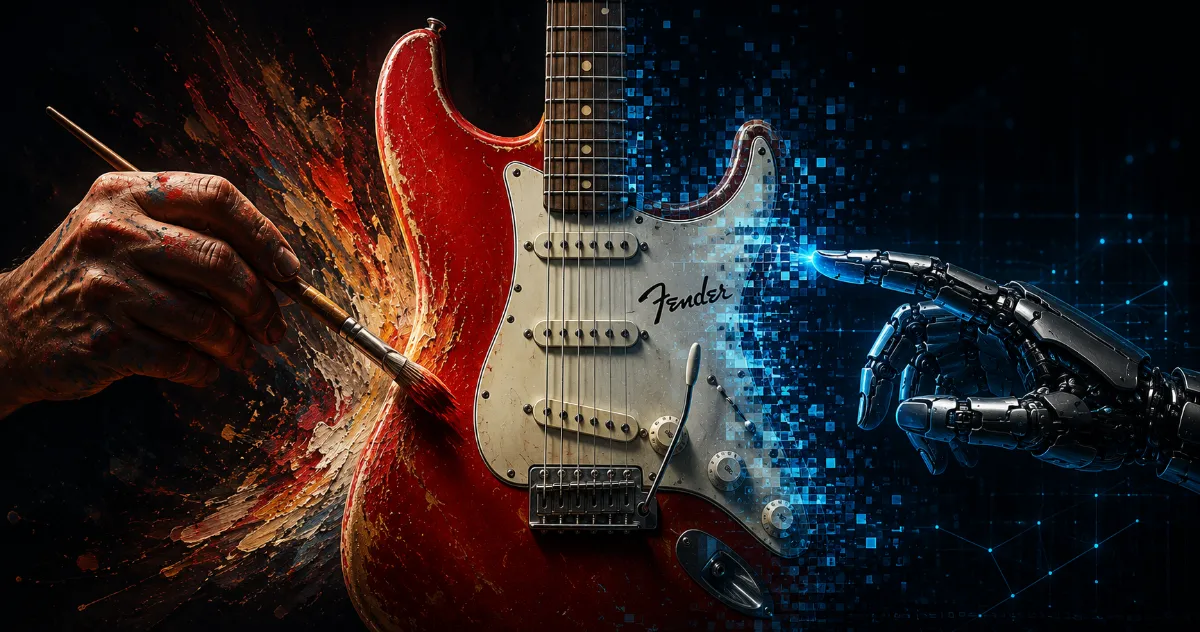
In a recent industry appearance, Fender CEO Edward Bud Cole offered a perspective on the future of music that has stirred significant conversation among musicians and technologists alike. By characterizing bandmates and the collaborative process as forms of analog intelligence, Cole sought to recontextualize the human element of music creation in an era increasingly dominated by generative AI. This executive commentary touches upon the fundamental tension between algorithmic efficiency and the organic friction that drives genuine artistic innovation.
The Analog Intelligence Argument
At the heart of Cole's commentary is the notion that the chemistry of a band functions as a complex, real time processing system. Unlike machine learning models that predict the next logical note based on massive datasets, human musicians provide unexpected contributions driven by personal experience and emotional response. This human element is what Fender, as a manufacturer of physical instruments, aims to preserve. The distinction here is between output that is technically proficient and output that resonates with human history and cultural context.
Industry Perspective on Generative Tools
The value of a physical instrument is found in the tactile connection between the player and the sound produced, something that software models can emulate but never truly replicate in a collaborative environment.
While generative tools are currently revolutionizing the backend of music production, such as mastering or sound design, the core act of performance remains tied to physical interaction. For a company like Fender, the mission remains focused on ensuring that guitars and amplifiers remain the primary interface for human expression. The potential for AI integration in the future is likely not to replace the player but to augment the creative workspace through intelligent accompaniment or sound shaping tools that respect the traditional player experience.
The Road Ahead
The conversation regarding the integration of technology into the arts is far from settled. As AI capabilities evolve, the industry must decide where the line exists between a tool that assists creativity and one that replaces the creator. Fender’s stance suggests a commitment to the latter, emphasizing that the human bandmate remains an irreplaceable asset. Looking forward, the focus for hardware manufacturers will be to provide professional grade tools that bridge the gap between classic analog sounds and the possibilities presented by digital workflows, ensuring the survival of the band dynamic in a technologically fluid future.