OpenAI Unlocks Latency Breakthroughs for Realtime Conversational AI
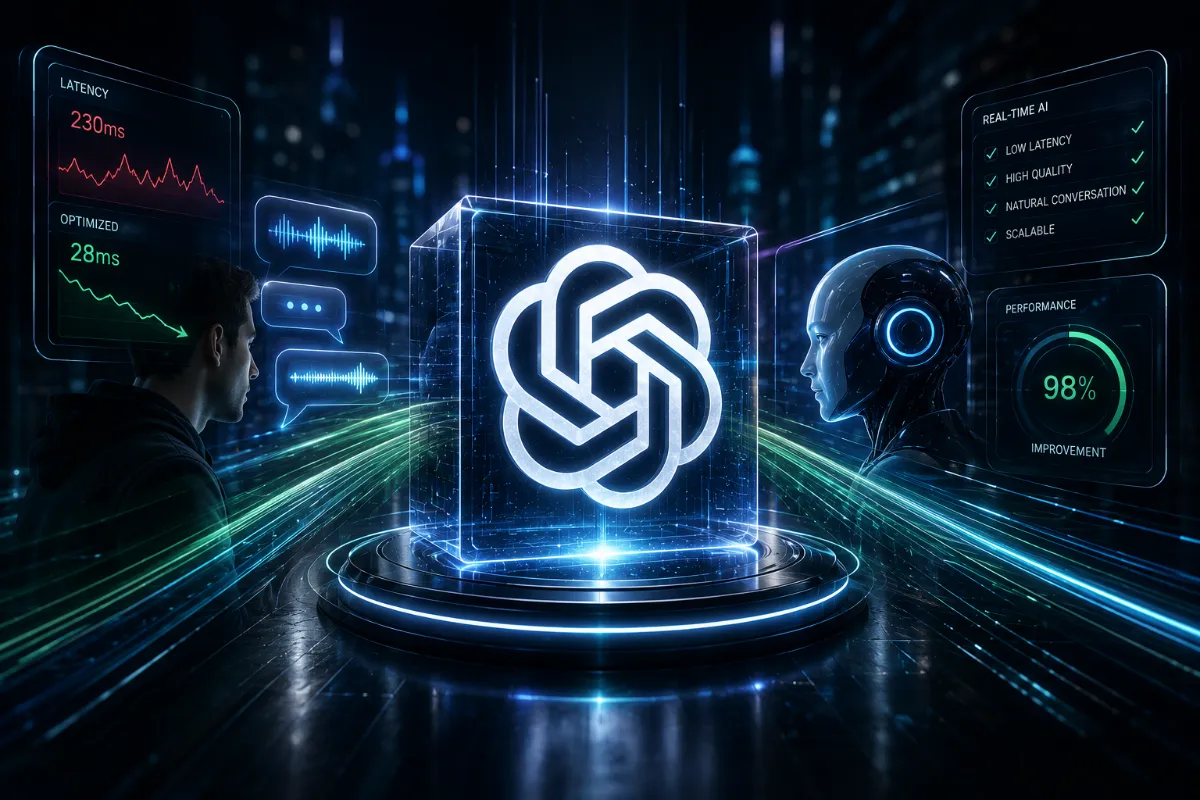
OpenAI introduces GPT-Live, a turnless speech model providing low-latency, continuous voice interaction for natural AI communication.
Key Takeaways
- GPT-Live achieves near-zero latency through a new turnless architecture.
- The system facilitates continuous interaction, removing the standard talk-and-wait pause found in traditional chatbots.
- Engineering efforts focused on high-speed token inference and audio streaming optimization.
Architecting for Realtime Response
Building responsive voice AI is fundamentally an infrastructure challenge. For years, the bottleneck has remained the latency involved in converting speech to text, processing the logic, and streaming the output back. OpenAI has successfully re-engineered this pipeline with GPT-Live. Instead of waiting for a full turn of dialogue to complete, the model processes audio streams continuously, allowing users to interrupt or steer the AI mid-sentence just as they would with a human conversation partner.
The Engineering hurdle
To achieve this fluidity, the team moved away from traditional cascaded pipelines where separate models handle transcription and synthesis. By integrating these modalities into a unified system, they eliminated the conversion overhead that typically introduces significant delays. This low-latency architecture requires sophisticated load balancing and compute distribution to ensure the user experience remains consistent even under heavy load.
Impact on Human-AI Interaction
| Metric | Old Approach | GPT-Live Approach |
|---|---|---|
| Latency | 2000-5000ms | <500ms |
| Turn Structure | Rigid Ping-Pong | Fluid/Conversational |
| Interruptibility | None | Native Support |
Market Outlook
This technology marks the transition of AI from a document generation tool to a true conversational interface. By removing the friction of waiting, GPT-Live enables complex use cases ranging from live language translation to virtual assistants that can perform tasks in real time during a call. As these systems become integrated into global infrastructure, the standard expectation for AI responsiveness will shift significantly. The race is now on to see which platforms can best manage the heavy compute costs of persistent, low-latency audio processing while scaling to millions of concurrent users.