Jane Street Bonsai Library Reinvents UI State Management
Discover how Jane Street is pushing the boundaries of functional programming with Bonsai, a modular UI library built for high performance web applications.
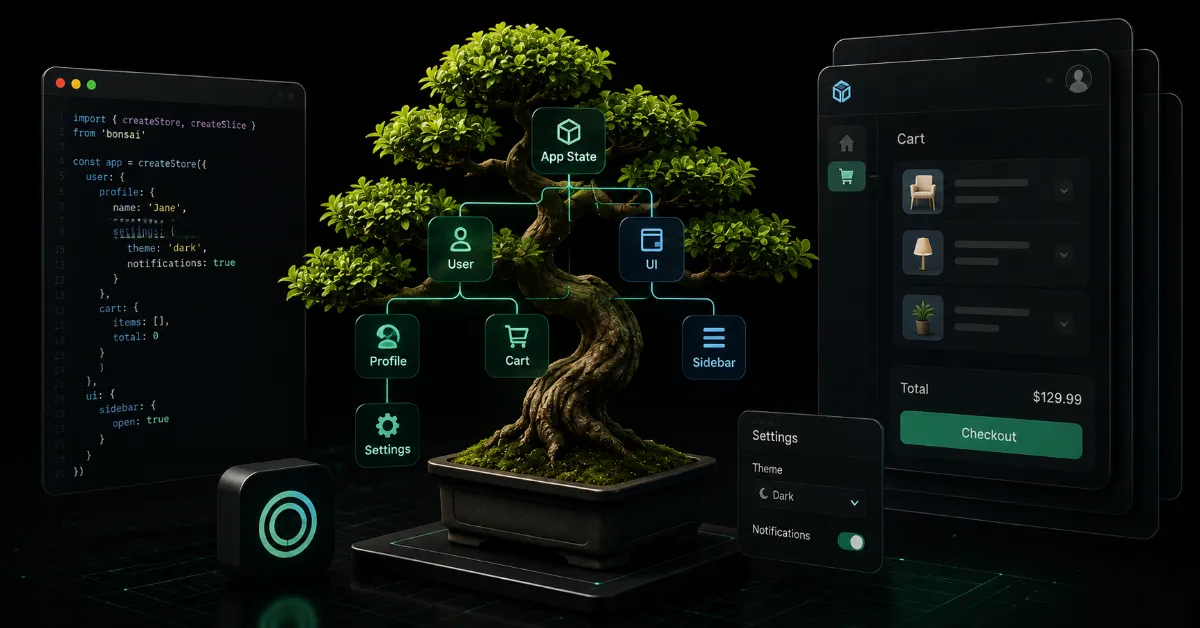
Architectural Foundations of Bonsai
Jane Street has long been a proponent of OCaml for complex system infrastructure. With the release of Bonsai, they bring their rigor for functional programming to the front end. Unlike standard reactive frameworks that rely heavily on mutable state, Bonsai treats the user interface as a pure function of state. This design philosophy enables developers to reason about UI behavior with a level of predictability that is often missing in modern web development frameworks.
Leveraging OCaml for Web Interfaces
Bonsai leverages the power of OCaml to provide a type safe, modular approach to component building. The library is structured around the concept of incremental computations, which ensures that only the minimal amount of work is performed when a state change occurs. This is particularly advantageous for large, data heavy applications where rendering performance is a critical constraint. By utilizing a functional reactive model, Bonsai effectively eliminates entire classes of bugs associated with inconsistent state updates.
Core Components of the Bonsai Framework
Developers migrating to Bonsai will find a unique set of abstractions that prioritize correctness.
| Feature | Benefit | Optimization Impact |
|---|---|---|
| Pure Components | Predictable output | High Render Efficiency |
| Incremental State | Minimal diffing | Low Memory Footprint |
| Type Safety | Catch errors at compile time | Reduced Runtime Failures |
The Developer Experience Advantage
One of the most compelling aspects of Bonsai is the way it encourages composition. In many UI libraries, component nesting can quickly become a source of spaghetti code, especially when managing shared state. Bonsai sidesteps this by enforcing strict hierarchical data flow. Developers can compose small, reusable modules without fear of side effects leaking across the component tree. This makes large scale applications significantly easier to test and iterate upon.
The Road Ahead
As web applications grow in complexity, the industry is shifting toward more robust, type driven development tools. Bonsai represents a significant step forward in this direction, proving that functional programming principles can scale effectively to the browser. For organizations that rely on high stakes, high reliability systems, this library offers a compelling alternative to the standard JavaScript ecosystem, providing a stable foundation for the next generation of interactive web software.