Kubernetes Gateway API v1.6 Advances Networking with TCP and UDP Standardization
The Kubernetes Gateway API reaches a new milestone as TCPRoute and UDPRoute graduate to the standard channel, simplifying multi protocol traffic management.
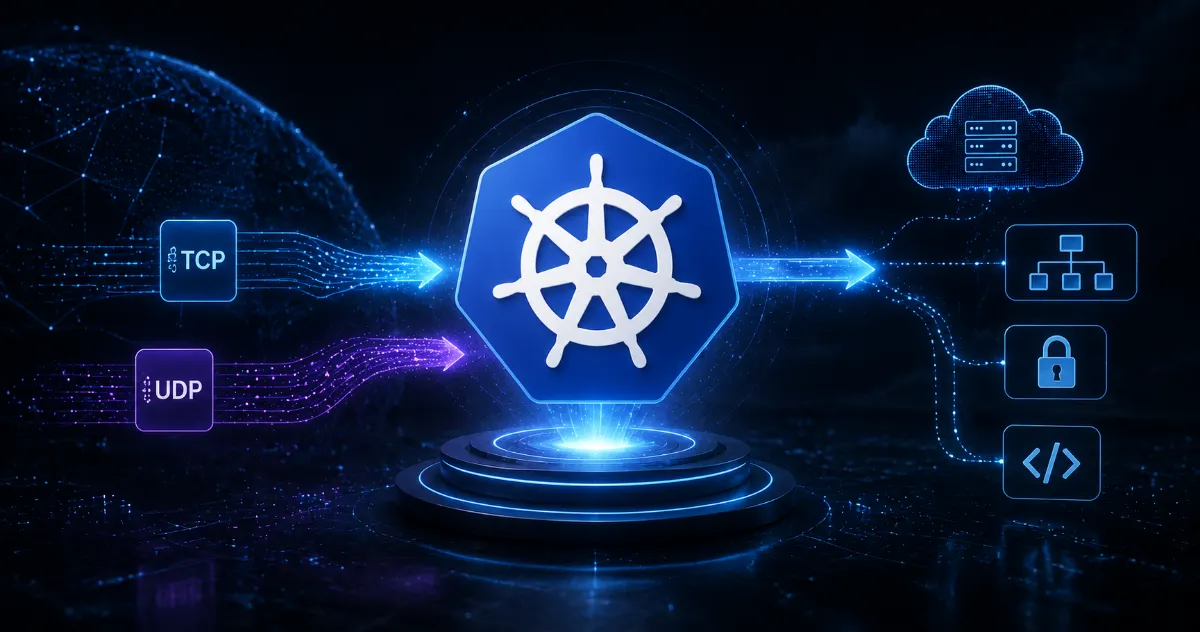
Standardizing Non HTTP Traffic Patterns
The networking landscape within Kubernetes continues to evolve as the Gateway API matures into a comprehensive solution for service routing. With the arrival of version 1.6, the ecosystem marks a pivotal shift: TCPRoute and UDPRoute have officially graduated to the standard channel. This transition signifies that these resources are now considered stable and ready for production grade usage across diverse cloud native environments. For platform engineers, this means moving away from the fragmentation of legacy Ingress controllers toward a unified, vendor neutral specification that handles non HTTP traffic with the same rigor as traditional web requests.
Historically, the Ingress resource was heavily skewed toward HTTP and HTTPS protocols, often leaving developers to implement custom solutions or vendor specific annotations for TCP and UDP workloads. By formalizing these routes within the Gateway API, the Kubernetes community is effectively standardizing how traffic enters the cluster across Layer 4. This ensures that load balancers, proxies, and service meshes can interact with a predictable API contract, reducing the operational cognitive load required to maintain complex connectivity stacks.
Under the Hood Protocol Integration
Transitioning these resources to the standard channel implies a high degree of interoperability. Implementations must now adhere to strict conformance tests, which guarantees that a TCPRoute configured on one compliant gateway will behave identically on another. This reliability is the bedrock of modern microservices architecture, where traffic shifting, canary deployments, and observability depend on consistent routing logic. Engineers can now define granular backend references, allowing for complex load balancing scenarios that involve multiple services or weight based traffic distribution without needing to resort to proprietary extensions.
| Feature | Status | Impact |
|---|---|---|
| TCPRoute | Standard | Reliable Layer 4 routing |
| UDPRoute | Standard | Production ready packet flow |
| Conformance | Mandatory | Guaranteed interoperability |
Operational Improvements for Platform Teams
With stability comes the ability to build higher level abstractions. Platform teams are already leveraging these resources to simplify the onboarding of database clusters, messaging queues, and custom streaming protocols that rely heavily on persistent TCP connections. The integration into the Gateway API model allows for a cleaner separation of concerns. GatewayClass, Gateway, and the Route resources interact in a way that allows network administrators to define security boundaries and traffic policies, while application developers remain focused on defining the specific routes for their services.
The graduation of TCPRoute and UDPRoute represents a major step forward in the vision of a universal networking interface for Kubernetes. By providing a stable foundation, we empower teams to build resilient infrastructure that is not beholden to specific vendor implementations.
The Big Picture
As organizations shift toward more sophisticated microservices deployments, the need for robust, non web protocol support is critical. The move to standardize these components is not merely a change in versioning, it is a consolidation of how we approach cloud native networking. By removing the friction associated with non HTTP traffic management, the Kubernetes ecosystem remains the dominant force in orchestrating complex, global scale software delivery. Moving forward, the focus will likely shift toward advanced traffic shaping policies and enhanced security integration, further cementing the Gateway API as the primary vehicle for all cluster ingress traffic.