- Subject Overview: Oral Link Secures Singapore HSA Registration For Consumer AI Dental Screening Technology — Key developments across Startups.
- Technical Context: Detailed analysis of architectural changes, product capabilities, and engineering metrics.
- Industry Impact: Key implications for software developers, startup founders, and enterprise technology adopters.
Regulatory Milestone For Healthcare Intelligence
Navigating the stringent regulatory pathways of medical device oversight remains one of the most formidable challenges for healthtech startups operating across Southeast Asia and global markets. The recent announcement from Oral Link regarding the formal registration of their artificial intelligence dental screening tool by the Health Sciences Authority marks a watershed moment for the regional medical technology ecosystem. This regulatory clearance not only validates the clinical efficacy and safety parameters of the software algorithm but also establishes a clear precedent for direct-to-consumer digital health applications seeking institutional validation within heavily regulated jurisdictions.
The implications of securing Health Sciences Authority approval extend far beyond immediate market access within Singapore, serving as a powerful credential for international expansion and clinical credibility. Digital health platforms frequently encounter skepticism from traditional medical practitioners and regulatory bodies alike, primarily due to concerns surrounding algorithmic bias, data privacy, and diagnostic accuracy. By meeting the rigorous standards mandated by the Health Sciences Authority, Oral Link has effectively bridged the trust deficit that typically hinders early-stage medical artificial intelligence ventures. This milestone underscores the increasing maturity of the regional healthtech sector, demonstrating that local startups can successfully navigate complex compliance frameworks without compromising on innovation velocity.
Achieving this regulatory milestone requires a sustained commitment to clinical validation, rigorous data governance, and transparent software development lifecycles. Oral Link had to demonstrate that its underlying neural networks could consistently and accurately identify dental abnormalities across diverse demographic datasets without exhibiting systematic bias. The regulatory review process involves exhaustive auditing of training datasets, algorithmic decision-making pathways, and post-market surveillance mechanisms designed to catch potential drift or classification errors. Consequently, this registration serves as a testament to the rigorous engineering and clinical discipline underpinning the startup's core technology stack, positioning them favorably against both domestic and international competitors.
Architectural Foundation Of Dental Diagnostics
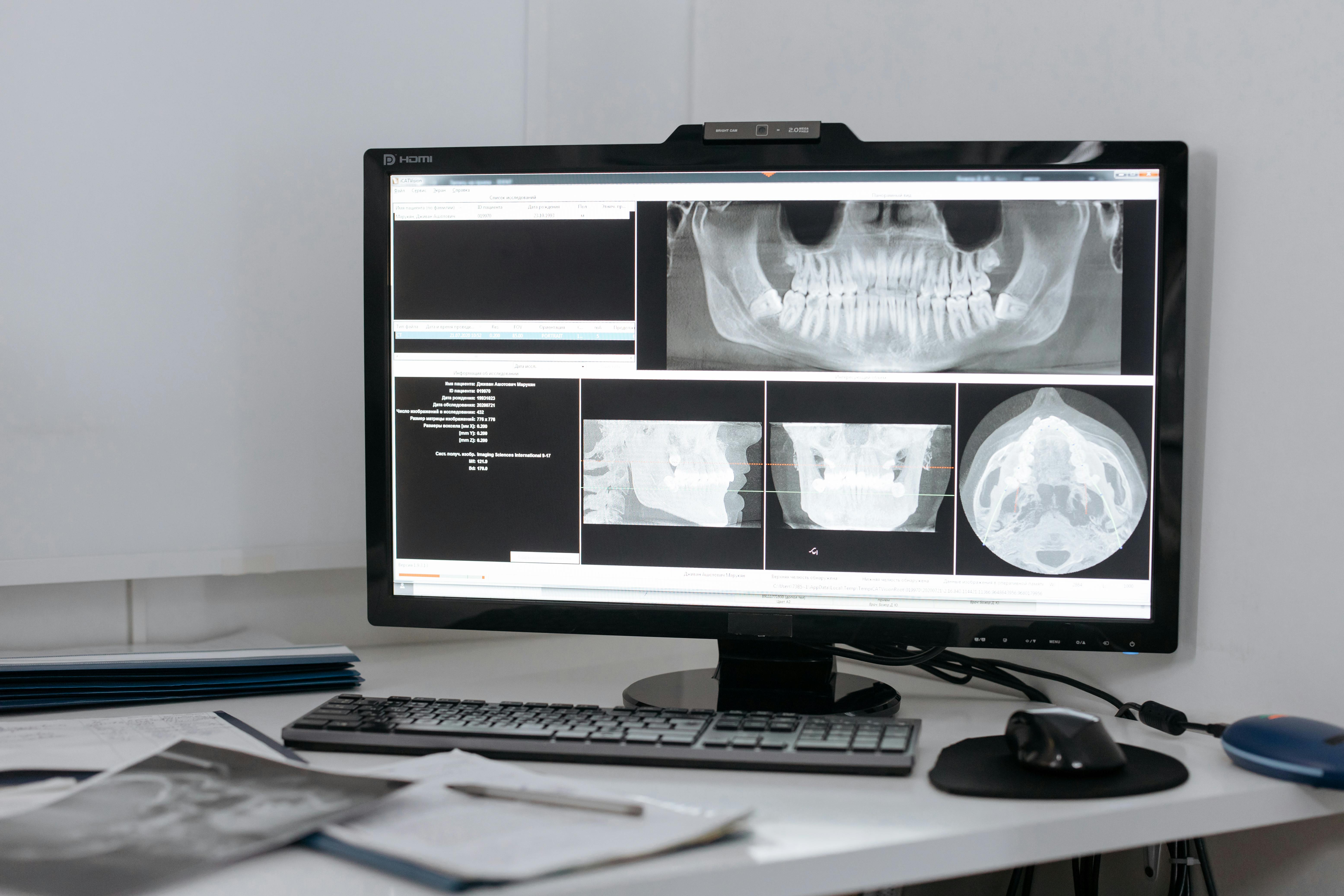
At the core of Oral Link's diagnostic platform lies a sophisticated convolutional neural network architecture specifically optimized for high-resolution intraoral imaging analysis. Dental imaging presents unique computational challenges, including variable lighting conditions, anatomical occlusion, and artifacts caused by saliva or metallic restorations. The engineering team at Oral Link had to design custom preprocessing pipelines that normalize image brightness, enhance contrast along periodontal margins, and segment relevant anatomical structures with pixel-level precision before feeding the data into the primary inference engine.
The deployment architecture must balance the computational demands of heavy deep learning models with the low-latency requirements inherent in consumer-facing applications. Whether running on edge devices or leveraging secure cloud infrastructure, the system must execute inference within milliseconds to ensure a seamless user experience. Oral Link utilizes model quantization and pruning techniques to reduce the memory footprint of their neural networks, enabling efficient execution on consumer smartphones without sacrificing sensitivity or specificity. This optimization is critical for scaling direct-to-consumer health solutions, where hardware heterogeneity across user devices can severely impact application performance and reliability.
Data privacy and end-to-end encryption form the bedrock of the platform's infrastructure, ensuring compliance with strict healthcare data protection regulations such as the Personal Data Protection Act. Intraoral images captured by consumers are anonymized at the point of capture, stripped of personally identifiable metadata, and transmitted via secure channels utilizing transport layer security protocols. The models themselves are trained and fine-tuned within isolated, secure cloud environments that prevent unauthorized access or data leakage. This robust architectural security posture is essential for maintaining consumer trust and satisfying the stringent auditing requirements mandated by healthcare regulators.
Clinical Integration And User Experience
Bridging the gap between advanced artificial intelligence and everyday consumer behavior requires an intuitive user interface that abstracts complex diagnostic metrics into actionable insights. Oral Link has meticulously engineered its application workflow to guide users through the image capture process with real-time feedback, ensuring that suboptimal photographs are rejected before inference is executed. This proactive guidance minimizes false positives and negatives caused by motion blur or improper framing, thereby enhancing the overall reliability of the screening tool in unsupervised home environments.
For dental practitioners and clinics, the integration of consumer-generated AI screening data into existing electronic health record systems represents a paradigm shift in preventative dental care. Rather than replacing the clinical judgment of licensed dentists, the platform acts as an intelligent triage mechanism that encourages timely professional intervention when anomalies are detected. This collaborative model fosters a symbiotic relationship between digital health startups and traditional healthcare providers, alleviating strain on public health resources while empowering individuals to take proactive control of their oral hygiene and long-term dental health.
The economic viability of direct-to-consumer healthtech hinges on engagement loops that retain users over extended periods. Oral Link addresses this challenge by embedding personalized educational content, risk-reduction recommendations, and progress tracking directly into the application workflow. By transforming periodic dental checkups into an ongoing, interactive digital experience, the platform cultivates sustained user engagement that extends far beyond a single screening event. This approach not only drives organic user acquisition but also generates a continuous stream of longitudinal health data that can be utilized to further refine and retrain the underlying machine learning models.
Strategic Outlook And Regional Expansion
With the Health Sciences Authority registration firmly secured, Oral Link is uniquely positioned to accelerate its go-to-market strategy across Southeast Asia and adjacent international health markets. The company plans to leverage this regulatory validation to forge strategic partnerships with insurance providers, corporate wellness programs, and regional dental clinic chains. These partnerships will serve as vital distribution channels, enabling the startup to scale its user acquisition cost-effectively while embedding its technology deeply into the broader healthcare continuum.
Looking toward the future, the roadmap for Oral Link involves expanding the diagnostic capabilities of its artificial intelligence engine to encompass a broader spectrum of oral pathologies, including early-stage periodontal disease and oral mucosal lesions. Such expansions will require continuous investment in research and development, ongoing clinical trials, and iterative regulatory submissions across multiple international jurisdictions. As artificial intelligence continues to reshape the global healthcare landscape, startups that successfully combine rigorous clinical validation with scalable consumer software architectures will undoubtedly lead the transformation.
In conclusion, Oral Link's achievement highlights the immense potential of localized artificial intelligence innovation in solving critical public health challenges. By prioritizing regulatory compliance, robust technical architecture, and user-centric design, the company has set a high benchmark for the regional healthtech industry. As they embark on their next phase of growth, the global healthcare community will be closely watching how consumer-facing diagnostic tools redefine preventative care standards in the digital age.
Related Coverage on TechRoro
- [Startups] AIR Secures $50 Million To Pioneer Autonomous Agent Security And Skill Vetting Platforms
- [Startups] ByteDance Secures Massive 29.6 Billion Dollar Loan Facility Amid Global Expansion
- [Startups] Newlight Secures Seed Funding to Pioneer Hydrogen Fuel-Injection for Maritime Cargo