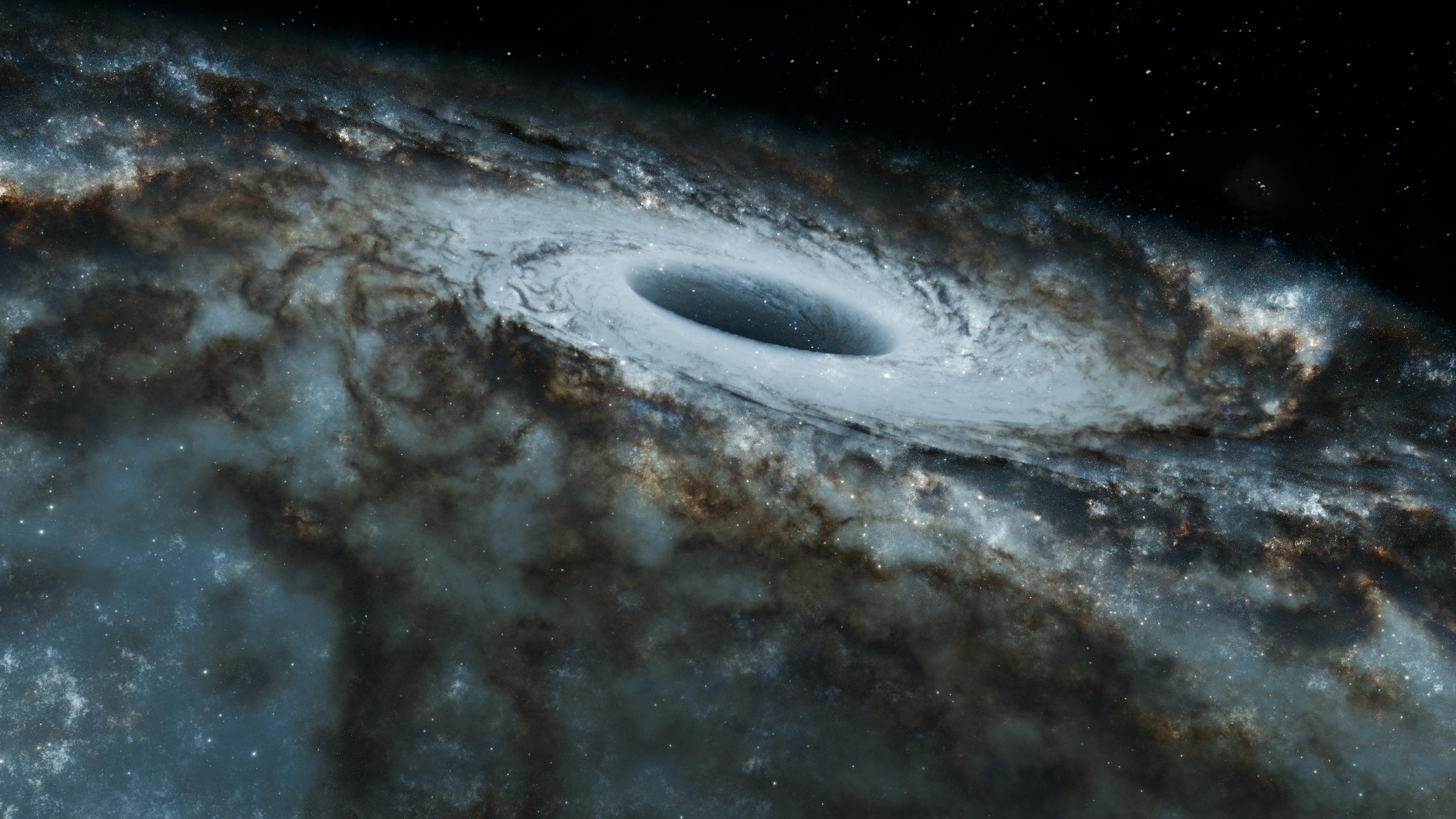

- Subject Overview: Unlocking the Universe Through Subatomic Ghost Particle Detection — Key developments across Energy.
- Technical Context: Detailed analysis of architectural changes, product capabilities, and engineering metrics.
- Industry Impact: Key implications for software developers, startup founders, and enterprise technology adopters.
Unlocking the Universe Through Subatomic Ghost Particle Detection
Executive Overview and Core Hook
For decades, the standard model of particle physics has been haunted by the existence of neutrinos, the most abundant yet enigmatic subatomic particles in the universe. Often referred to as ghost particles, these entities are produced in the violent, high-energy crucibles of the cosmos, such as exploding stars, black hole accretion disks, and the remnants of the Big Bang. Because they lack electrical charge and possess near-zero mass, they traverse the vacuum of space and the bulk of solid matter with almost zero interaction. Capturing a neutrino is not merely an engineering feat; it is a fundamental challenge of detection theory that requires rethinking the very definition of an observatory.
To move beyond the limitations of traditional, terrestrial sensors, global scientific communities are now engaging in planetary-scale engineering. By utilizing vast, naturally occurring mediums—such as deep glacial ice in the Antarctic or thousands of tons of ultra-pure liquid scintillator in subterranean caverns—scientists are creating detectors that span cubic kilometers. The objective is to identify the singular, stochastic flash of light produced when a neutrino finally decides to interact with an atom. This development marks a transition in physics from observational study to active environmental manipulation, turning our planet into a primary instrument for peering into the deep, dark past of the universe.
Technical Breakdown and Architecture
The architecture of a modern neutrino observatory relies on the principle of Cherenkov radiation. When a high-energy neutrino strikes an atomic nucleus within a dense medium, it produces a secondary particle, often a muon, which travels faster than the speed of light within that medium. This generates a faint, cone-shaped shockwave of blue light. To detect this, engineers must deploy thousands of ultra-sensitive optical sensors, known as Digital Optical Modules, deep within the medium to capture the photons before they are scattered or absorbed.
In the Antarctic ice sheet, this involves drilling holes up to two and a half kilometers deep using high-pressure hot water drills. Once the borehole is established, a string of sensors is lowered into the molten water, which then freezes, locking the sensors into a permanent, transparent crystal lattice. This creates a massive, three-dimensional grid capable of tracking the trajectory of particles with precision. In subterranean liquid-based detectors, the engineering shifts toward structural containment. Scientists must construct massive vats lined with photomultiplier tubes, kept in near-perfect isolation from cosmic rays that would otherwise drown out the weak signals of the neutrinos. These facilities are often shielded by kilometers of rock or submerged in tanks of purified water to dampen background radiation, creating a silent environment where the faint blue pulse of a neutrino interaction can be isolated from the noise of the universe.
Markdown Comparison Table and Key Metrics
| Feature | Ice-Based Observatories | Subterranean Liquid Scintillators |
|---|---|---|
| Primary Medium | Antarctic Glacial Ice | Liquid Scintillator or Argon |
| Depth Range | 1,500 to 2,500 Meters | 500 to 2,000 Meters |
| Detection Mechanism | Cherenkov Radiation in Ice | Scintillation Light/Ionization |
| Scalability | High (Cubic Kilometers) | Moderate (Scale of Tons) |
| Main Focus | High-Energy Astrophysical Neutrinos | Solar and Geo-Neutrinos |
- Optical Sensor Sensitivity: Modern sensors must be capable of detecting a single photon arrival after the signal has traveled hundreds of meters through the medium.
- Data Throughput: These observatories generate petabytes of raw data, requiring advanced machine learning algorithms to filter out background thermal noise from real, high-energy particle events.
- Structural Longevity: Once deployed in glacial environments, sensors are effectively inaccessible, requiring hardware with decades-long operational life cycles in sub-zero temperatures.
- Signal-to-Noise Ratio: The primary engineering challenge remains the drastic reduction of background interference, demanding extremely low-radioactivity materials for all internal sensor components.
Developer and Ecosystem Impact
The development of these observatories is driving innovation in fields far beyond particle physics. Software engineers and data scientists working on these projects are pushing the boundaries of edge computing and real-time signal processing. Because the raw data rates are massive, many detectors now employ local, hardware-level filtering where FPGAs or specialized silicon perform initial data triage before transmission to global research hubs. This paradigm of distributed, high-throughput signal processing is highly transferable to industries involved in autonomous sensing, remote global monitoring, and high-frequency trading where latency and accuracy are paramount.
Furthermore, the startups and hardware manufacturers involved in the supply chain for these projects are pioneering new standards for long-term reliability in harsh environments. The development of ultra-low noise electronics and high-pressure-rated sensors has implications for subsea energy infrastructure and deep-space instrumentation. As these detectors grow in sophistication, the software ecosystems surrounding them—often built on open-source frameworks for distributed data analysis—are becoming the blueprint for how large-scale, international science collaborations manage decentralized, massive-scale data sets in the cloud.
Strategic Market Outlook and Analysis
The market for neutrino research is defined by high barriers to entry, characterized by multi-decadal timelines and massive capital expenditures from national governments and international consortia. While there is no immediate commercial application for individual neutrino detection, the geopolitical value of mastering this technology is significant. Nations that lead in the construction and operation of these facilities are essentially controlling the global standard for high-energy physics research, attracting the best talent and driving the next generation of sensor and data technologies.
Competition is largely defined by the trade-off between volume and precision. Ice-based detectors offer an immense volume, which is necessary to capture rare, high-energy neutrinos coming from distant galaxies. Conversely, subterranean liquid detectors prioritize precision and energy resolution, which are critical for studying the neutrinos produced by our own sun or the core of the Earth. Enterprise adoption of the resulting data-management architectures is already underway in sectors like cybersecurity and weather forecasting, where identifying a faint signal amidst a sea of noise is the core business objective. Ultimately, the industry is moving toward a more integrated model, where global observatories act as nodes in a unified, planetary-scale sensor network, providing real-time data on the invisible forces that shape our universe.
Sources
IceCube Neutrino Observatory (icecube.wisc.edu) Kamioka Observatory (km.icrr.u-tokyo.ac.jp) Deep Underground Neutrino Experiment (dune.fnal.gov)