
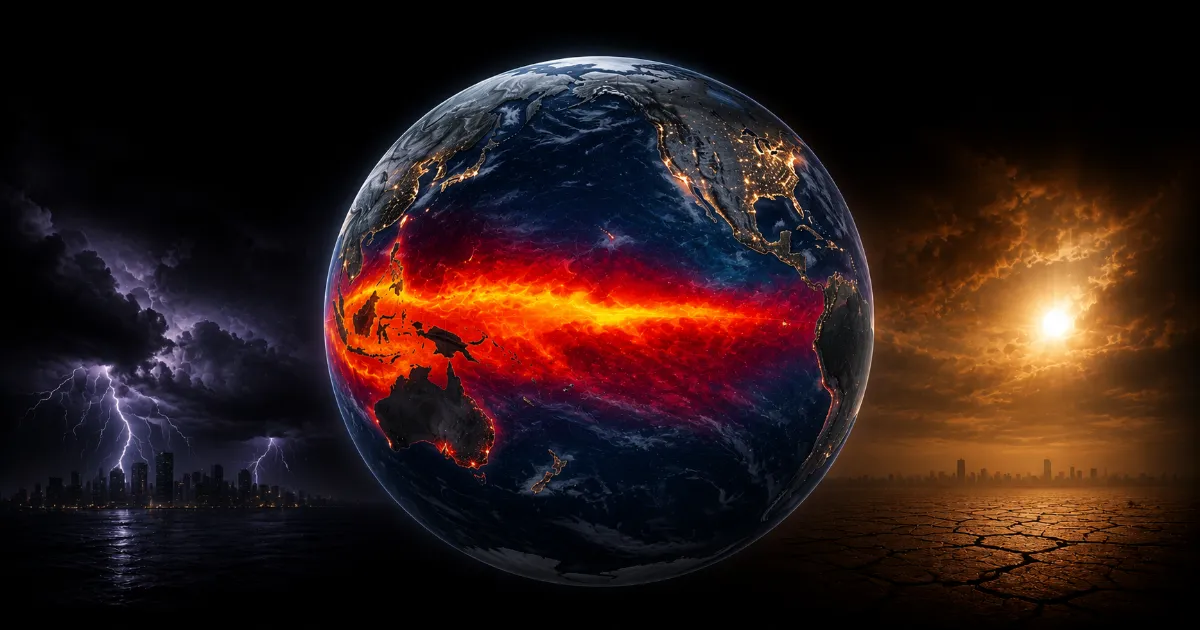
- Subject Overview: World Meteorological Organization Warns Supersized El Nino Phenomenon Will Persist Into Early 2026 — Key developments across Energy.
- Technical Context: Detailed analysis of architectural changes, product capabilities, and engineering metrics.
- Industry Impact: Key implications for software developers, startup founders, and enterprise technology adopters.
Understanding the Mechanics of Modern Climate Anomalies
The contemporary manifestation of the El Nino Southern Oscillation represents a radical departure from historical baseline norms observed throughout the twentieth century. Oceanographers at leading global climate institutions have documented sustained thermal buildup across the equatorial Pacific basin, creating a massive reservoir of excess heat energy. This thermal anomaly alters atmospheric pressure gradients and disrupts conventional jet stream trajectories across both hemispheres.
The compounding effects of background global warming have fundamentally altered how these cyclic ocean events manifest across regional ecosystems. Rather than following predictable decadal cycles, contemporary climate drivers interact with elevated baseline sea surface temperatures to amplify overall volatility. Consequently, meteorological forecasting models must account for nonlinear feedback loops that accelerate thermal absorption and atmospheric moisture retention.
Agricultural sectors across multiple continents face severe operational vulnerabilities as prolonged drought conditions threaten staple crop yields. Irrigation infrastructure built for historical precipitation averages proves increasingly inadequate against the intensified dry spells triggered by displaced moisture belts. Food security analysts emphasize the urgent need for adaptive agricultural frameworks capable of withstanding prolonged meteorological shocks.
Meteorological Tracking and Predictive Infrastructure
Advanced satellite observation networks and deep-ocean profiling floats provide real-time telemetry essential for monitoring subsurface thermal anomalies. These high-resolution data streams feed complex numerical weather prediction models designed to simulate atmospheric fluid dynamics over extended forecasting horizons. Supercomputing clusters process petabytes of oceanic and atmospheric measurements to evaluate the trajectory of the ongoing climate event.
Despite significant technological advancements in observation capabilities, predicting the precise localized impacts of a supersized El Nino remains an immense computational challenge. Small variations in coastal upwelling currents or wind shear can drastically alter precipitation footprints across populated regions. Climatologists continuously refine assimilation algorithms to reduce uncertainty margins and improve early-warning lead times for vulnerable communities.
International data-sharing initiatives ensure that developing nations receive timely meteorological advisories necessary for disaster preparedness and resource allocation. Collaborative frameworks bridge technical divides, enabling meteorological agencies worldwide to synchronize their monitoring efforts and standard operating procedures. This global cooperation remains critical as extreme weather events bypass traditional geographical boundaries.
Socioeconomic Vulnerabilities and Energy Infrastructure
Global energy grids face unprecedented stress as extreme temperature swings drive massive spikes in both cooling and heating electricity demand. Power generation facilities located near coastal zones confront heightened risks from storm surges and rising sea levels exacerbated by thermal expansion. Grid operators are deploying smart-load balancing technologies to prevent systemic failures during peak demand intervals driven by extreme weather.
Urban planning paradigms must urgently evolve to address the cascading risks associated with prolonged heatwaves and severe urban flooding. Infrastructure investments are shifting toward resilient civil engineering designs that can absorb extreme precipitation volumes without catastrophic drainage failures. Municipal authorities increasingly rely on data-driven resilience models to prioritize critical structural upgrades across metropolitan areas.
Economic losses resulting from disrupted supply chains and damaged infrastructure place heavy burdens on national treasuries and insurance markets. Actuarial models are being overhauled to incorporate probabilistic climate risk assessments into long-term commercial property evaluations. Financial institutions now view severe meteorological volatility as a primary material risk to global economic stability.
Longterm Mitigation and Adaptive Pathways
Addressing the root causes of intensified climate phenomena requires aggressive global decarbonization strategies combined with robust adaptation measures. Transitioning away from carbon-intensive energy sources remains the single most effective pathway to stabilizing long-term global temperature trajectories. International climate summits continue to press for binding emissions reduction targets to prevent further escalation of ocean thermal extremes.
Concurrently, investment in climate-resilient technologies—ranging from drought-resistant crop genetics to advanced flood defense systems—has accelerated across both public and private sectors. Research institutions are exploring novel geoengineering concepts and ecosystem-based adaptation strategies to buffer communities against extreme weather impacts. These multifaceted interventions represent our best defense against an increasingly volatile meteorological future.
The intersection of advanced artificial intelligence and climate science promises new breakthroughs in predictive modeling and rapid response coordination. Machine learning models trained on decades of historical climate data can identify subtle precursor signals that human analysts might overlook. As these computational tools mature, they will play an indispensable role in safeguarding human populations from extreme weather crises.
Related Coverage on TechRoro
- [Startups] Magna Expands Indian Mobility Footprint With Major Capital Injection Into Yuma Energy
- [Energy] Unraveling the Structural Vulnerabilities in Modern Food Supply Chains
- [Energy] Public Health Emergency As United States Records First Measles Fatalities Amid Falling Vaccination Rates