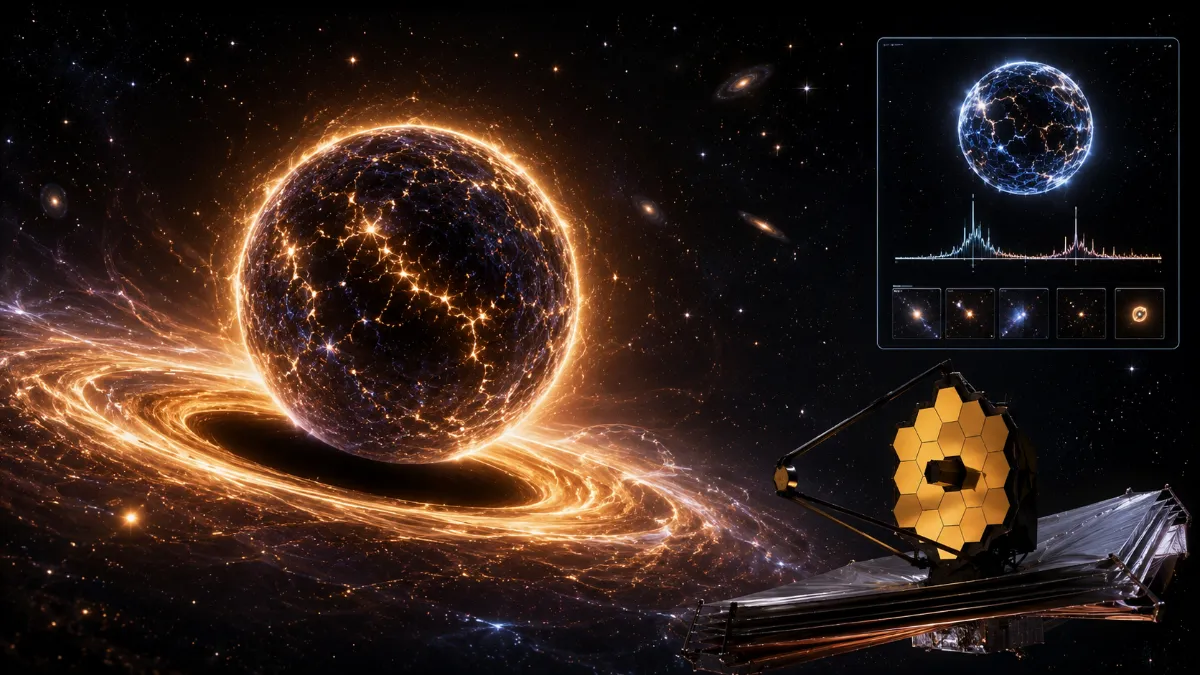

- Subject Overview: Physicists Uncover Enigmatic Quantum Droplet State of Matter — Key developments across Science.
- Technical Context: Detailed analysis of architectural changes, product capabilities, and engineering metrics.
- Industry Impact: Key implications for software developers, startup founders, and enterprise technology adopters.
A New Chapter in Quantum Mechanics
Executive Overview and Core Hook
Physics has long relied on a rigorous binary categorization of particles: fermions and bosons. Fermions, which follow the Pauli Exclusion Principle, generally avoid sharing the same quantum state, while bosons are social entities that can bunch together to form unified states like Bose-Einstein condensates. Recently, a team of researchers has observed a phenomenon that blurs these lines, suggesting the existence of a quantum droplet, a state that functions in ways that current models struggle to fully explain. This discovery emerged during experiments involving ultra-cold atoms cooled to temperatures near absolute zero, where the boundaries between individual particle identity and collective fluid behavior begin to evaporate.
This development is significant because it challenges the long-standing theoretical frameworks that govern condensed matter physics. By observing how these droplets form, maintain, and dissolve, scientists are witnessing a macroscopic manifestation of quantum mechanical laws. This is not merely a theoretical curiosity; it represents a new frontier in the control of matter at the quantum level. The emergence of this state provides a unique laboratory to study strong correlations in many-body systems, potentially unlocking new pathways for creating materials that exhibit exotic properties, such as superfluidity or superconductivity at higher temperatures than previously thought possible. As we move deeper into the era of quantum information science, understanding these droplets becomes paramount for developing stable, scalable quantum architectures.
Technical Breakdown and Architecture
The mechanics behind the quantum droplet state are rooted in the delicate balance between attractive and repulsive forces within a dilute gas of ultra-cold atoms. Typically, when a gas is cooled to extreme temperatures, it transitions into a Bose-Einstein condensate where all particles occupy the lowest energy state. However, the quantum droplet occurs when researchers introduce specific interaction tuning, often utilizing Feshbach resonances to manipulate the scattering length between atoms. This allows for a regime where the attractive forces between particles are almost perfectly cancelled out by the quantum fluctuations of the system.
At the heart of the quantum droplet is the phenomenon of Lee-Huang-Yang corrections. These corrections account for the energy shifts caused by quantum fluctuations in a Bose gas. In a standard gas, these fluctuations are negligible, but in these highly specialized ultra-cold systems, they provide a crucial repulsive pressure that prevents the droplet from collapsing into a solid or a dense liquid. This creates a self-bound state of matter that occupies a finite volume even in the absence of an external confining potential. The resulting structure behaves like a liquid drop, yet it maintains its quantum coherence, effectively acting as a single, giant, macroscopic quantum object. The stability of these droplets is extremely sensitive to density, and the internal pressure profile reveals a complex interplay between kinetic energy, interaction energy, and the zero-point energy of the collective system.
Markdown Comparison Table and Key Metrics
| Feature | Traditional Bose-Einstein Condensate | Quantum Droplet State | Standard Liquid Droplet |
|---|---|---|---|
| Binding Mechanism | External Potential | Self-Bound | Van der Waals Force |
| Particle Density | Low | Ultra-High | High |
| Quantum Coherence | High | High | Low/None |
| Stability | Requires Trapping | Self-Stabilizing | Surface Tension Dependent |
- Self-Binding Properties: Unlike Bose-Einstein condensates that require magnetic or optical traps, quantum droplets sustain their shape through intrinsic quantum pressure.
- Quantum Fluctuation Dominance: The stability is primarily dictated by Lee-Huang-Yang corrections, representing a macroscopic effect of microscopic quantum noise.
- Superfluid Characteristics: These droplets exhibit zero viscosity, allowing them to flow through narrow apertures without energy loss.
- Density Sensitivity: The state is highly tunable, allowing researchers to observe phase transitions by adjusting the interaction strength between constituent particles.
Developer and Ecosystem Impact
For software engineers and theoretical researchers working in the quantum computing space, the discovery of quantum droplets offers a new paradigm for state manipulation. Current quantum computing models often rely on individual trapped ions or superconducting qubits, both of which are notoriously difficult to scale due to decoherence and environmental noise. If these droplets can be harnessed as information carriers, they might provide a more robust medium for storing quantum states. Because they are self-bound and inherently resistant to certain types of environmental perturbation, they could theoretically serve as the foundation for a new generation of topological qubits, which are generally more fault-tolerant than standard implementations.
Furthermore, the ability to control these droplets using external magnetic or light fields allows for the design of programmable quantum systems. Startups and labs focusing on quantum sensing might leverage the extreme sensitivity of these droplets to external fields to develop sensors with unprecedented precision. The mathematical models describing these droplets also have applications in computational fluid dynamics and materials science simulations, providing a framework for understanding complex, non-linear systems that were previously difficult to model accurately. By bridging the gap between microscopic particle physics and macroscopic fluid mechanics, this research opens up a vast space for algorithm development aimed at simulating quantum chemistry and material properties.
Strategic Market Outlook and Analysis
The market for quantum technologies is currently in a phase of aggressive exploration, with enterprise adoption focusing primarily on quantum-safe cryptography and optimization problems. However, the identification of the quantum droplet state introduces a potential shift in the hardware roadmap. While mainstream efforts are heavily invested in superconducting circuits and ion traps, the existence of a self-bound, coherent matter state suggests that neutral atom approaches—which are already gaining traction—could be significantly enhanced. This discovery forces competitors to rethink the scalability of their hardware, as the ability to create stable droplets could reduce the reliance on complex, power-hungry cooling and trapping architectures.
Trade-offs remain significant. The primary challenge is the requirement for ultra-cold environments, which currently necessitate sophisticated and expensive cryogenic infrastructure. Furthermore, the lifetime of these droplets is relatively short, limiting their utility in long-duration computational tasks. Despite these limitations, the strategic importance of this discovery cannot be overstated. Companies that successfully integrate this understanding into their quantum processing units could achieve a decisive advantage in coherence times and error rates. As the industry moves from noisy intermediate-scale quantum devices toward fault-tolerant systems, the transition from manipulating isolated qubits to manipulating collective quantum droplets may define the next decade of strategic hardware development.
Sources
Max Planck Society (mpg.de) National Institute of Standards and Technology (nist.gov) American Physical Society (aps.org)