
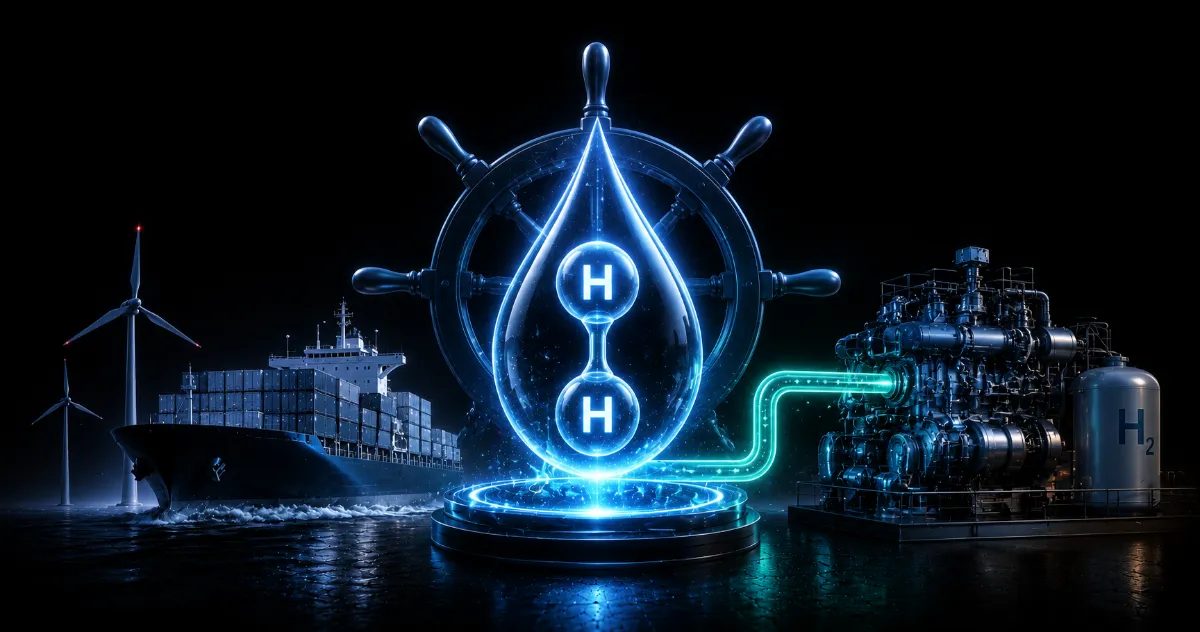
- Subject Overview: Newlight Secured Seed Capital to Revolutionize Maritime Decarbonization with Hydrogen Fuel Injection — Key developments across Startups.
- Technical Context: Detailed analysis of architectural changes, product capabilities, and engineering metrics.
- Industry Impact: Key implications for software developers, startup founders, and enterprise technology adopters.
The Maritime Decarbonization Imperative And Engineering Hurdles
The global maritime shipping industry remains one of the hardest economic sectors to decarbonize, accounting for nearly three percent of global greenhouse gas emissions annually. Traditional heavy fuel oil engines power the vast majority of international cargo vessels, releasing massive quantities of carbon dioxide, sulfur oxides, and particulate matter into the atmosphere. Transitioning these massive vessels to alternative energy sources has historically been plagued by low energy density, massive storage requirements, and extreme safety hazards associated with handling cryogenic or highly pressurized fuels on the open ocean.
Addressing these deep infrastructural challenges requires more than just incremental tweaks to existing combustion designs. Maritime engineers and propulsion architects face severe thermodynamic and chemical constraints when trying to introduce alternative molecules into traditional marine diesel powerplants. Simply replacing fuel oil with unassisted hydrogen often leads to catastrophic engine knock, erratic ignition timings, and severe thermal stress on cylinder walls. These physical barriers have kept clean maritime propulsion largely confined to theoretical white papers and small-scale harbor craft rather than transoceanic container ships.
Newlight has approached this monumental engineering challenge by fundamentally rethinking how hydrogen is introduced into the combustion chamber. Instead of attempting a complete structural overhaul of existing marine propulsion systems or forcing vessels to adopt entirely new, untested engine architectures, the company developed a specialized fuel-injection methodology. This approach allows conventional marine diesel engines to co-fire hydrogen seamlessly alongside traditional marine fuels, drastically cutting harmful emissions without sacrificing the raw torque and reliability required for heavy maritime transport.
Technical Architecture Of The Hydrogen Injection System
The core innovation behind the Newlight propulsion system lies in its proprietary precision fuel-injecting architecture, which manages the micro-timing and atomization of hydrogen gas alongside pilot diesel fuel. Controlling the exact delivery window of hydrogen molecules is critical for preventing premature ignition and managing peak cylinder pressure. By utilizing advanced solenoid valves and high-frequency actuation units, the system introduces pressurized hydrogen into the combustion cylinder at precisely calibrated intervals during the compression stroke.
This precise injection timing optimizes the air-fuel mixing process, creating a leaner burn that significantly increases thermal efficiency while lowering peak combustion temperatures. Lower combustion temperatures directly translate to a massive reduction in nitrogen oxide emissions, a notorious byproduct of high-temperature maritime diesel combustion. Furthermore, the presence of hydrogen accelerates the flame propagation speed of the remaining carbon-based fuel, ensuring a more complete and efficient combustion cycle across varying engine loads and operational speeds.
Integrating such a sophisticated control system into the harsh, corrosive environment of a working cargo ship engine demands exceptional hardware resilience. The Newlight engineering team utilized aerospace-grade alloys and specialized thermal barrier coatings to protect the injector tips from the extreme heat and pressure fluctuations inside the combustion chamber. Software control loops monitor real-time telemetry, dynamically adjusting injection parameters based on ambient air temperature, humidity, and fuel quality to maintain optimal engine performance.
Operational Validation Across Transoceanic Routes
Proving the viability of any maritime clean tech requires moving out of controlled laboratory environments and surviving the punishing realities of the open sea. Newlight recently achieved a major milestone by completing an arduous eighty five hundred nautical mile test run spanning from Singapore to Ghana. This grueling voyage exposed the hydrogen injection system to weeks of relentless saltwater corrosion, severe tropical storms, rolling swells, and continuous multi-week engine operation under heavy load.
Throughout the transoceanic journey, the propulsion system maintained stable operation without experiencing a single critical hardware failure or unplanned maintenance stop. Marine engineers aboard the vessel continuously collected high-resolution telemetry data tracking fuel consumption rates, exhaust emissions profiles, and mechanical wear indicators. The empirical data gathered during the voyage confirmed significant reductions in greenhouse gas emissions and improved fuel efficiency compared to baseline operations using unassisted heavy fuel oil.
Achieving this successful deployment validates the scalability of the technology for existing commercial fleets without requiring shipowners to construct entirely new vessels. Retrofitting current cargo ships with the Newlight injection system offers a financially viable bridge technology as the global maritime industry slowly builds out bunkering infrastructure for pure zero-emission fuels. The ability to drop emissions immediately while utilizing existing vessel hulls and powerplants represents a massive operational victory for commercial fleet operators facing tightening international environmental regulations.
Venture Capital Backing And Strategic Commercial Scaling
Fueling this aggressive technological and operational expansion, Newlight successfully closed a nine million dollar seed funding round backed by prominent investors specializing in climate tech and industrial decarbonization. This fresh capital injection will be directly allocated toward scaling up manufacturing capacity, expanding the engineering research team, and securing commercial partnership agreements with major global ship management companies and vessel operators.
As international regulatory bodies such as the International Maritime Organization implement stricter carbon pricing and emissions caps, cargo fleet operators are under intense financial pressure to adopt sustainable technologies. Solutions that offer immediate efficiency gains and carbon reductions without massive capital expenditure outlays will dominate procurement strategies in the coming decade. Newlight is strategically positioned to capture significant market share by offering a pragmatic, retrofittable hardware solution that aligns environmental responsibility with bottom-line profitability.
Looking ahead, the company plans to initiate wider pilot programs with major container lines and bulk carriers operating across diverse global shipping lanes. These upcoming deployments will further stress-test the hardware under varying fuel qualities and operating conditions, building a robust dataset to satisfy the stringent safety certifications required by major classification societies. Through relentless engineering and strategic commercial execution, Newlight is proving that the decarbonization of heavy maritime transport is not just a distant future goal, but an achievable reality happening right now.
Related Coverage on TechRoro
- [Startups] Newlight Secures Seed Funding to Pioneer Hydrogen Fuel-Injection for Maritime Cargo
- [Startups] Magna Expands Indian Mobility Footprint With Major Capital Injection Into Yuma Energy
- [Startups] Alteon Secures Seed Backing to Build Ultra-Endurance Autonomous Wind Harvesting Aircraft