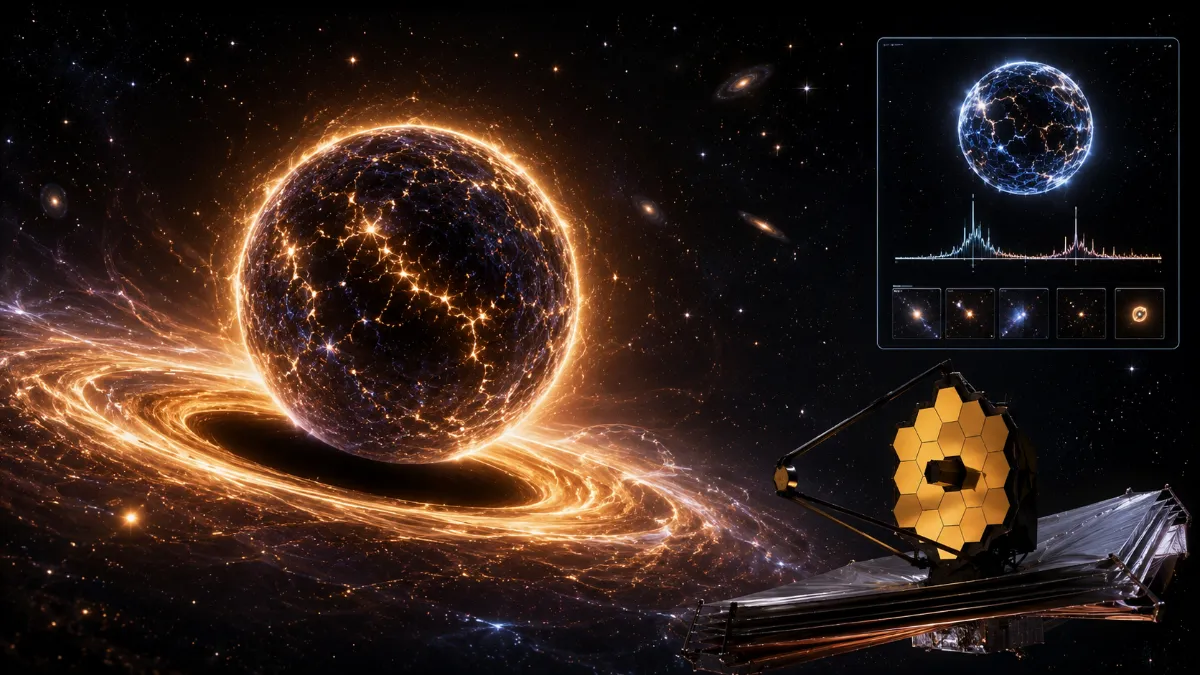

- Subject Overview: Engineering the Ultimate Neutrino Traps for Deep Space Physics — Key developments across Science.
- Technical Context: Detailed analysis of architectural changes, product capabilities, and engineering metrics.
- Industry Impact: Key implications for software developers, startup founders, and enterprise technology adopters.
Executive Overview and Core Hook
Deep beneath the crushing pressures of the South Pole ice sheet and within the soundless, lightless caverns of decommissioned mines, a silent revolution in high-energy physics is underway. Scientists are no longer looking toward the stars with traditional optical telescopes; instead, they are turning toward the Earth itself, transforming massive swaths of our planet into colossal, sensitive particle detectors. The objective is to capture neutrinos, the so-called ghost particles of the cosmos, which stream through our bodies by the billions every second without leaving a trace. Because these particles rarely interact with baryonic matter, they serve as pristine messengers, unaffected by magnetic fields or dense galactic dust, offering an unadulterated view of the most violent phenomena in the universe.
The engineering challenge inherent in this task is staggering. To catch a neutrino, one must construct a trap so large and so optically clear that even a rare, random interaction—a fleeting collision between a neutrino and an atomic nucleus—can be recorded with precision. This requires the development of extreme-environment sensors, ultra-low-noise electronics, and massive data-processing pipelines capable of filtering out petabytes of background noise to find a signal that might occur only a few times a year. This pursuit is not merely an academic exercise; it is a fundamental shift in our observational capabilities, enabling us to peer into the hearts of black holes, map the interior of the Sun, and potentially uncover physics beyond the Standard Model. The success of these neutrino traps defines a new frontier in deep space physics, where the Earth becomes the primary lens for understanding the celestial lifecycle.
Technical Breakdown and Architecture
The architecture of a modern neutrino detector is a masterpiece of environmental engineering. At the heart of systems like the IceCube Neutrino Observatory lies a vast grid of Digital Optical Modules (DOMs). These modules are suspended on strings that reach depths of up to 2,500 meters beneath the Antarctic surface. The ice itself serves as the detection medium; as a neutrino strikes an atom in the ice, it produces a secondary charged particle—a muon—that travels faster than the speed of light in that medium. This generates a faint cone of blue light known as Cherenkov radiation. The DOMs act as high-speed photon counters, capturing this light to reconstruct the trajectory and energy of the original neutrino.
Achieving this level of sensitivity requires solving the problem of signal-to-noise ratios in extreme conditions. The Antarctic ice must be exceptionally transparent, a requirement met only by the immense pressure and extreme cold that creates crystalline ice free of air bubbles. In subterranean or deep-sea detectors, the architecture shifts toward massive tanks of ultra-pure water or liquid argon. These fluids act as a target for incoming neutrinos. When an interaction occurs, the resulting ionization or scintillation light is detected by arrays of Photomultiplier Tubes (PMTs) lining the walls. The electronics must be hardened against the environment—corrosive saltwater or high-pressure subterranean gases—while maintaining clock synchronization across the entire array with nanosecond precision. The computational architecture is equally complex, utilizing distributed computing clusters to analyze trigger signals in real-time to distinguish genuine cosmic neutrinos from the overwhelming flood of atmospheric muons.
Markdown Comparison Table and Key Metrics
| Detector Type | Medium | Primary Target | Sensitivity Focus | Scalability Potential |
|---|---|---|---|---|
| Deep-Ice Array | Antarctic Ice | High-Energy Cosmic | Teravolt Events | High (Expansion) |
| Water Cherenkov | Ultra-pure Water | Solar/Supernova | Low-Energy Flux | Medium (Modular) |
| Liquid Argon TPC | Cryogenic Argon | Dark Matter/Nu | Precision Imaging | High (Complexity) |
| Scintillator Tank | Organic Liquid | Geo-neutrinos | Energy Resolution | Low (Static) |
- Gigaton Scale Volume: Successful detection requires active volumes exceeding one cubic kilometer to increase the statistical probability of a rare neutrino interaction.
- Nanosecond Synchronization: Global arrays must be synchronized to sub-nanosecond levels to allow for precise triangulation of particle trajectories across diverse geographical locations.
- Radiopurity Standards: Construction materials must be sourced from specific, low-background geological deposits to ensure that internal radioactivity does not trigger the sensors.
- Data Throughput: Advanced edge computing is required to discard 99.999% of background noise locally before transmitting event data to central server farms.
Developer and Ecosystem Impact
The development of neutrino detectors is pushing the boundaries of what is possible in software engineering, edge computing, and materials science. For software engineers, the challenge of processing petabytes of data in real-time has necessitated the creation of specialized machine learning models that can identify signal patterns within massive, noisy datasets. This has fueled advancements in anomaly detection and distributed signal processing that are now finding applications in global finance, telecommunications, and cybersecurity. Startups specializing in low-noise optical sensors and high-speed data acquisition boards have gained significant traction by contributing to the bespoke hardware requirements of these observatories.
Furthermore, the collaborative nature of these projects has established a global template for large-scale scientific infrastructure. The integration of cloud-based data repositories allows researchers across the globe to contribute to the analysis of neutrino events simultaneously. This ecosystem has created a unique talent pool of engineers capable of designing hardware that can function autonomously for decades in the most inhospitable environments on Earth. As private aerospace and deep-sea exploration sectors grow, the methodologies pioneered by neutrino researchers—specifically in remote system reliability and autonomous instrumentation—will provide the foundational logic for the next generation of space and oceanic technology.
Strategic Market Outlook and Analysis
The market for high-energy physics infrastructure is shifting from small-scale laboratory experiments to global, long-term civil engineering projects. Competition for funding and deployment sites is intensifying as nations recognize the strategic importance of neutrino research, which is intrinsically linked to nuclear monitoring and fundamental science dominance. While the initial costs are astronomical, the trade-offs are calculated against the potential for revolutionary discoveries in particle physics, which could redefine industrial energy production or materials science.
We are currently observing a transition where private-public partnerships are becoming standard. Enterprise-level cloud providers are increasingly involved in providing the massive storage and compute capabilities required to maintain these observatories. The long-term adoption strategy focuses on modularity, where detector arrays can be expanded incrementally as funding allows, reducing the risk of single-point failure. As we look toward the next two decades, the focus will likely shift toward multi-messenger astronomy, where neutrino detectors work in tandem with gravitational wave observatories. This strategic integration will create a robust, resilient network of detectors that will serve as the eyes and ears of the scientific community, ensuring that no cosmic event goes unnoticed.
Sources
IceCube Neutrino Observatory (icecube.wisc.edu) Deep Underground Neutrino Experiment (dune.fnal.gov) Kamioka Observatory (km.icrr.u-tokyo.ac.jp)